
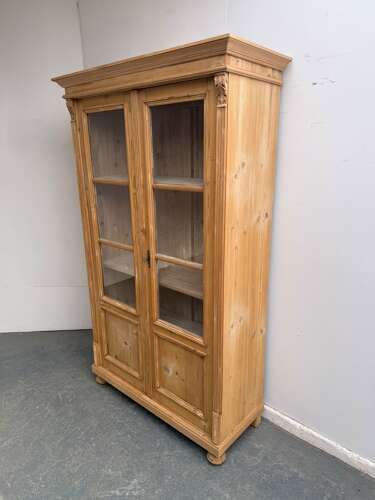
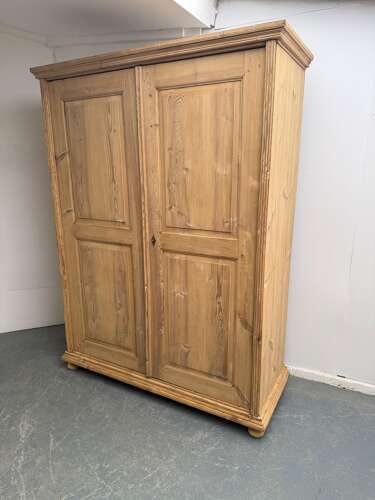
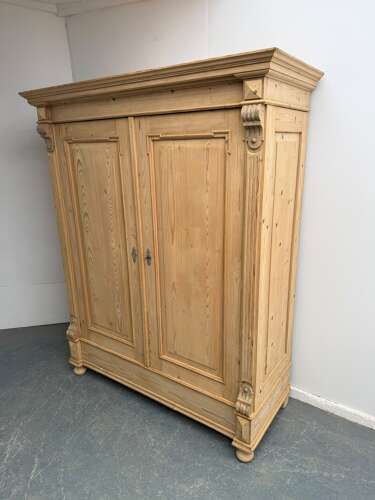
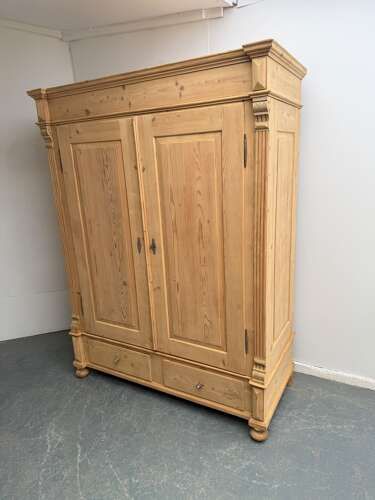



Large Painted Armoire
A large painted armoire offers substantial storage through centuries of craftsmanship, spanning French provincial styles to sturdy British country pine.
Large Painted Armoire
When you search for a large painted armoire, you encounter substantial furniture built to house clothing, linen, and household stores. The selections span major periods from the eighteenth century through the Edwardian era, encompassing diverse regional traditions.
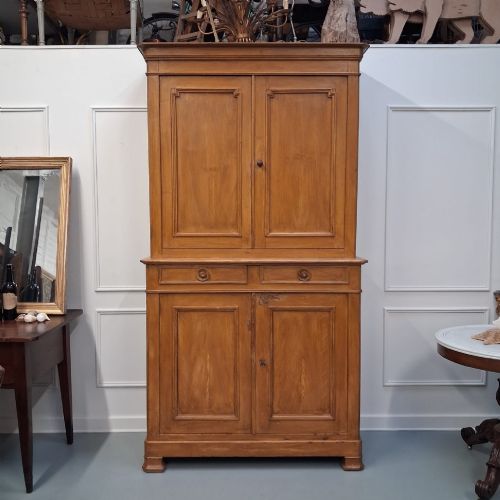
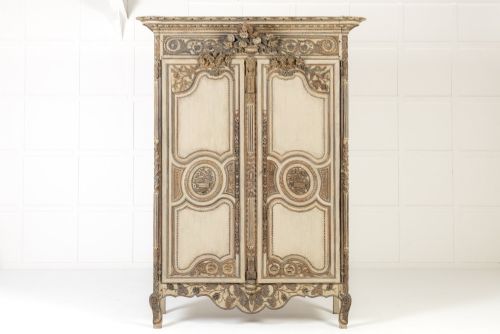
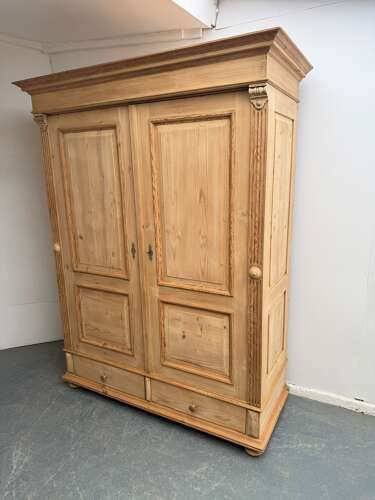
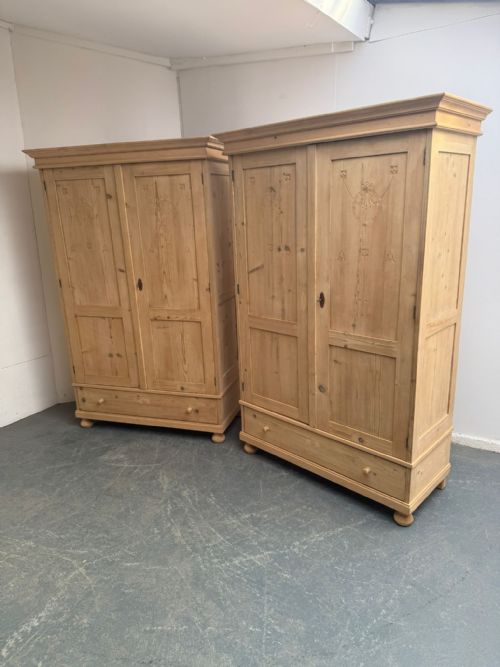
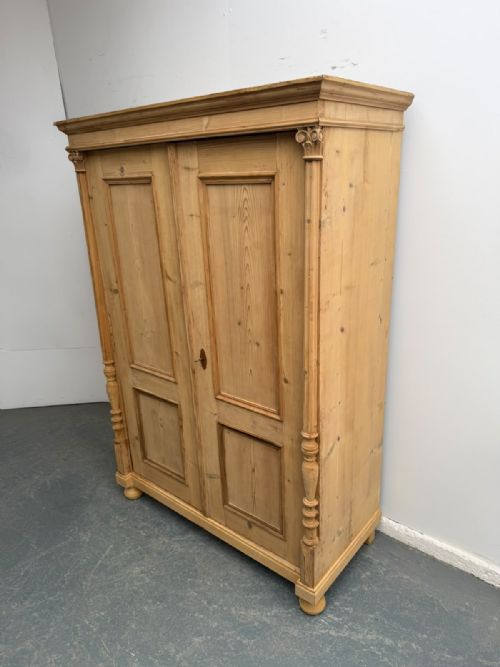
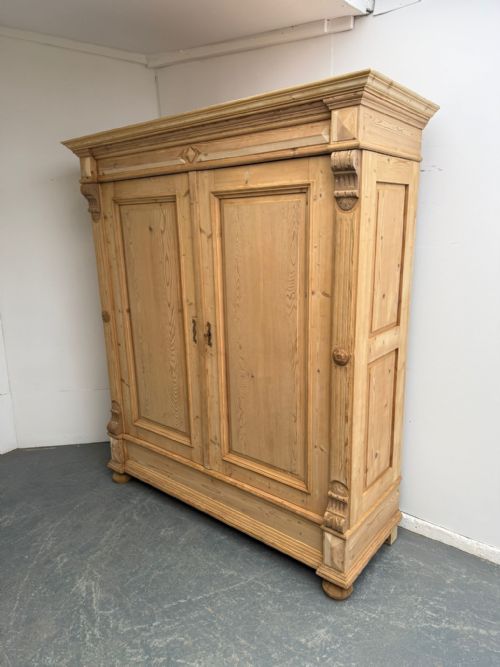
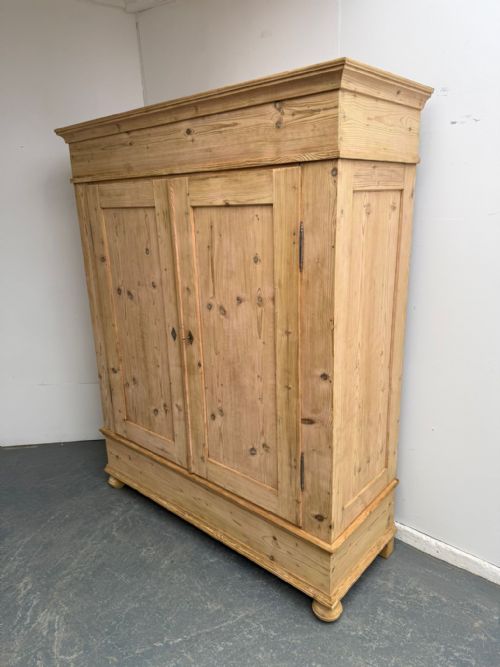
The pieces appearing here include French provincial armoires, Georgian and Victorian pine wardrobes, English country housekeepers cupboards, and substantial bookcases. Many examples arrive in knockdown formats designed for easy transport between rooms.
European country pieces sit alongside British vernacular furniture, reflecting varied domestic needs. Certain items retain their original painted surfaces, whilst others present stripped pine ready for a fresh finish.
Materials and construction methods
Makers relied primarily on solid pine and oak for the robust carcasses required to bear heavy loads. Secondary timbers support internal shelving and backing, whilst iron hinges and brass fittings secure the heavy doors.
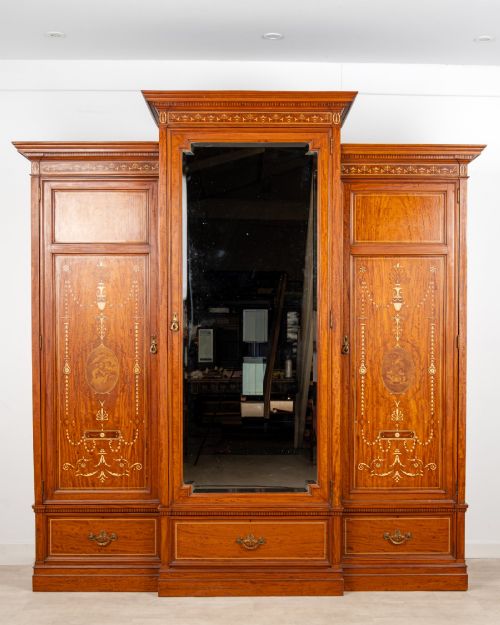
Surface treatments range from historic paint layers to raw wood prepared for wax or paint finishes. Mirrored glass panels and carved detailing appear on select Edwardian and French examples.
Pine, oak, and satinwood form the primary timbers across these listings, spanning the eighteenth to early twentieth centuries.
Distinctions in construction and finish
Superior examples demonstrate careful joinery in their knockdown frames, ensuring stability without permanent gluing. The integrity of the original timber carcass dictates the piece's long-term durability.
The quality of the surface finish significantly impacts character, with undisturbed original paint schemes commanding distinct attention compared to later decorative layers.
The Large Painted Armoire Glossary
- Knockdown
- A piece constructed with modular panels and wedges that dismantle entirely for transport. This method allowed large wardrobes to travel up narrow staircases.
- Housekeepers cupboard
- A large storage cabinet traditionally used in country houses for linens and dry goods. These multi-door cupboards often feature adjustable internal shelving.
- Armoire
- A large wardrobe or cupboard originating in continental Europe. They typically provide deep hanging space or enclosed shelving behind double doors.
- Satinwood
- A hard, durable timber with a natural golden sheen utilised in fine Edwardian cabinetmaking. It provides a smooth surface suitable for delicate inlay work.
- Cornice
- The moulded projection that crowns the top of a large wardrobe or cupboard. It balances the visual weight of the base.
Large Painted Armoire: Frequently Asked Questions
How do I assemble a knockdown wardrobe?
Knockdown wardrobes utilise interlocking joints, wooden pegs, or internal bolts that slot together without complex tools. You typically assemble the base, position the side panels, and drop the cornice over the top.
Marking the corresponding parts during dismantling ensures the panels realign correctly in a new room.
Where should I place a large armoire?
These tall storage units require substantial wall space and sufficient ceiling clearance to accommodate their moulded cornices. Bedrooms and large hallways suit their generous proportions best.
Keep them away from direct heat sources to prevent the timber panels from warping over time.
How do I clean a painted pine surface?
Dust the exterior regularly with a dry, soft cloth to prevent particulate buildup on the paintwork. Avoid harsh chemical cleaners that can strip historic or decorative layers.
Test any mild soap solution on a hidden area before applying it across the main panels.
What is the difference between a wardrobe and an armoire?
A wardrobe specifically denotes British hanging furniture, whereas an armoire originates as the continental European equivalent for storage. Both terms apply to large cabinets equipped for clothes or linen.
French armoires often feature deeper proportions and distinct decorative carving compared to vernacular British pieces.