


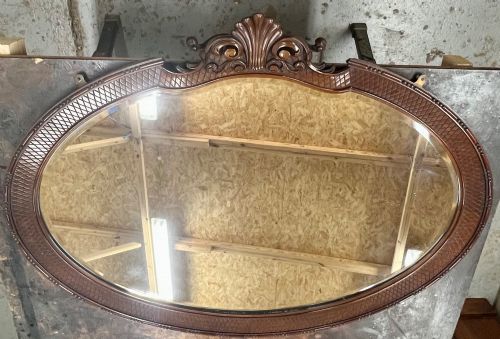




Large Oval Frame
A large oval frame draws the eye immediately, anchoring a room with curved lines that soften architectural corners.
Large Oval Frame
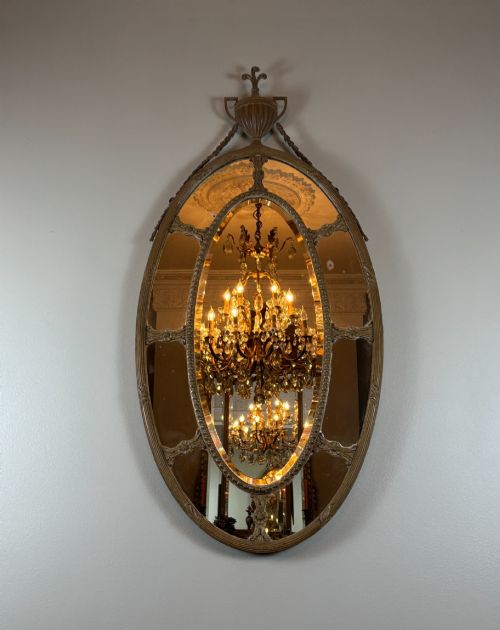
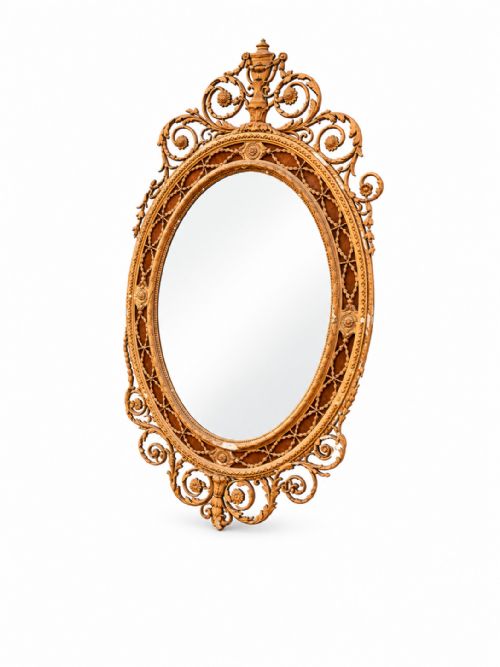
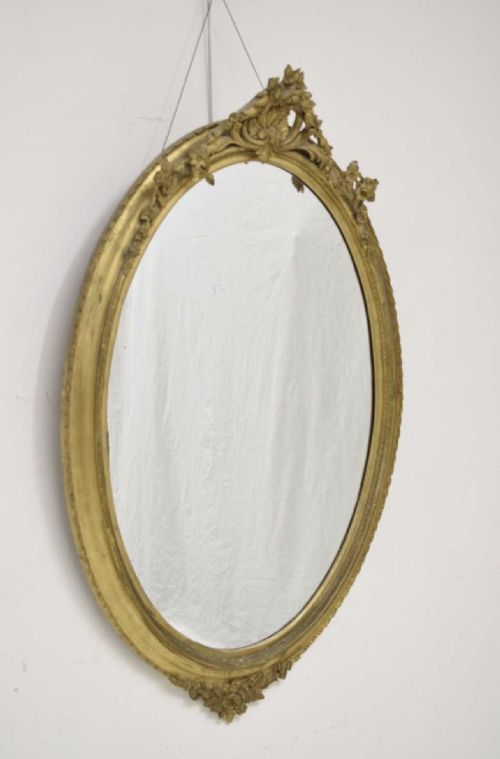
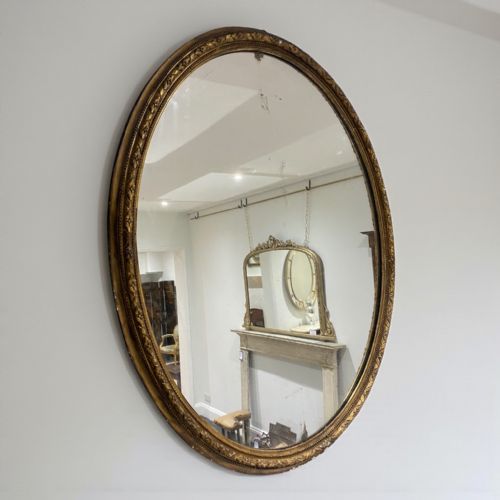
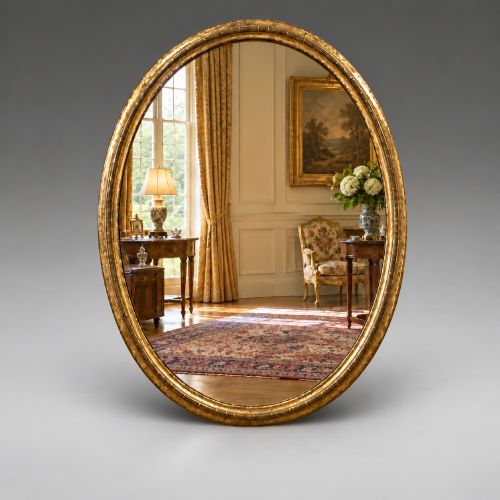
A large oval frame serves primarily as a vessel for mirrors, portraits, and decorative panels. Buyers seeking a large oval frame encounter wall mirrors, oil paintings, and glazed portrait prints spanning from the eighteenth century through the Edwardian period.
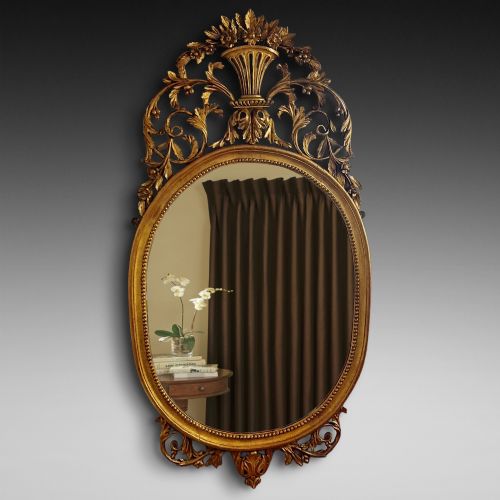
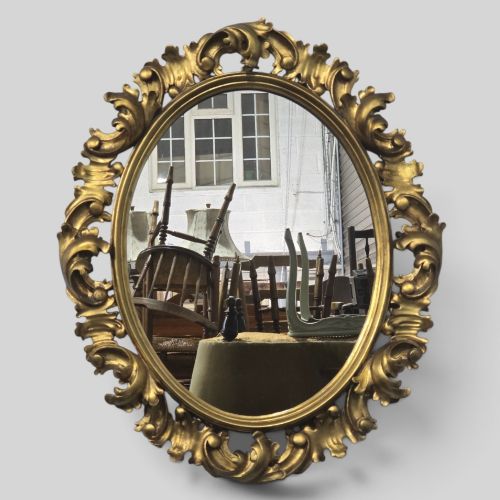
The domestic forms appearing on this page range from heavy Victorian overmantle mirrors to carved giltwood hall mirrors and mahogany country house pieces. French Chateau and Rococo Revival styles sit alongside restrained Georgian and Adams designs.
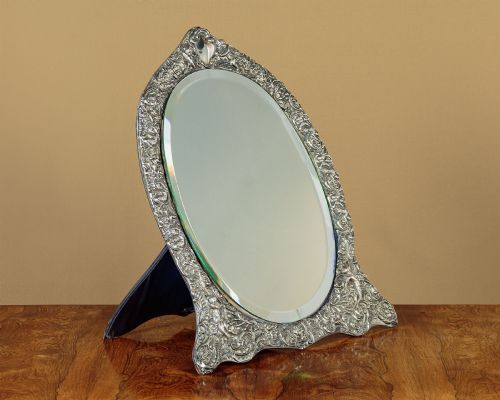
Mirrors dominate the selection, built to hang above mantelpieces or in grand halls where curved perimeters bounce light across wide spaces. Framed pastel drawings, embroidered scenes, and silver photo frames occasionally share the category.
How they were made
Giltwood and gesso form the surface vocabulary for the majority of these pieces, requiring carvers to shape timber before applying fine layers of gold leaf or metallic paint over prepared plaster grounds. Mahogany and ebonised wood appear where makers chose darker exposed grain.
Composition ornamentation, moulded from putty and pressed into shape, frequently supplements hand-carved wooden details on nineteenth-century frames. Glass plates are bevelled or flat depending on the decade, set into rebated frames behind secured wooden backs.
Large Oval Frame Retail Price Guide 2026
Typical asking prices for large oval frame among the pieces listed under this phrase on Sellingantiques today, from the lower quarter to the upper quarter. They describe what is for sale here now, not the wider market.
A young lady wearing a bonnet gazes out from behind glass, watched over by centuries of reflection.
What varies in quality
Depth of carving determines the visual impact of giltwood and gesso pieces, separating flat moulded surfaces from deeply undercut acanthus leaves and scrollwork. The crispness of the modelled gesso reveals whether a workshop rushed the plaster application or preserved sharp detail.
Original mercury or silvered mirror plates carry characteristic age spots that distinguish period glass from later replacements. The integrity of the underlying timber frame and the continuity of the original gilding dictate the historical weight of the object.
The Large Oval Frame Glossary
- Giltwood
- Wood that has been coated with gold leaf. This finish defines the ornate mirrors and frames of the eighteenth and nineteenth centuries.
- Gesso
- A plaster mixture applied to wood frames to create a smooth base for carving or gilding. It accepts fine detail before the metal leaf goes on.
- Overmantel
- A large mirror or painting designed to hang directly above a fireplace mantel. These pieces often feature wide proportions to match the width of the hearth.
- Parcel-gilt
- Woodwork that is partially gilded, leaving areas of natural wood or painted surface exposed. This technique creates contrast against the metallic sections.
- Cushion mirror
- A mirror frame shaped with a convex profile that slopes outward from the glass. The design gives the entire piece a rounded, padded appearance.
Large Oval Frame: Frequently Asked Questions
Where should I hang a large oval mirror?
Position these mirrors above a mantelpiece, sideboard, or in an entrance hall to draw light deep into the interior.
The curved boundary breaks up rectangular wall configurations and fits comfortably above low furniture.
How do I identify a Victorian gilt frame?
Victorian examples often combine carved wood with moulded composition ornament to achieve heavy ornamentation.
Look for deep profiles and rich gilt surfaces designed to dominate high-ceilinged rooms.
Are these frames suitable for heavy walls?
Substantial frames require secure fixings into structural brickwork or stud framing due to the combined weight of wood and glass.
Professional hanging hardware ensures the piece remains stable over time.
What is the difference between gesso and carved wood?
Carved wood involves cutting directly into the timber base to form the decorative relief.
Gesso provides a plaster layer over the timber that can be moulded or scored with finer ornamental details.