
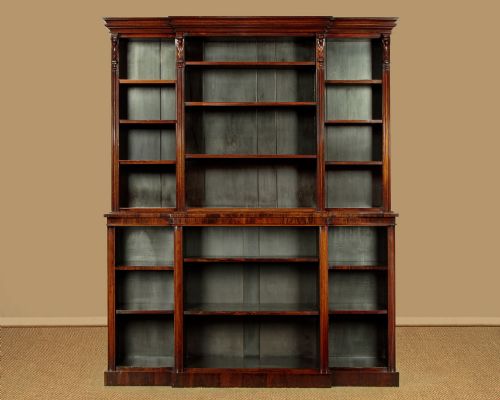
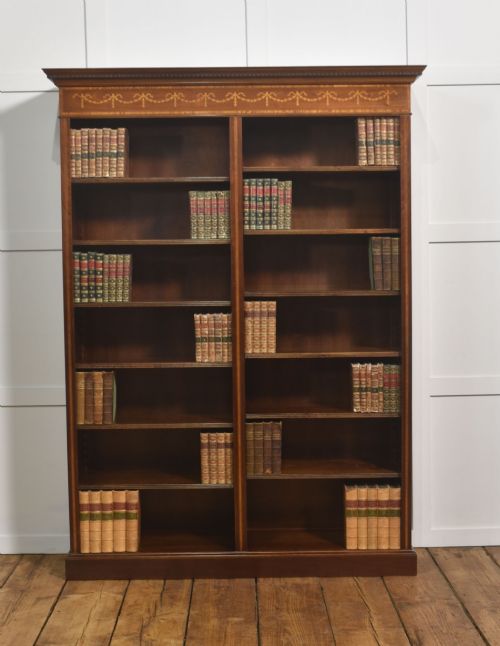
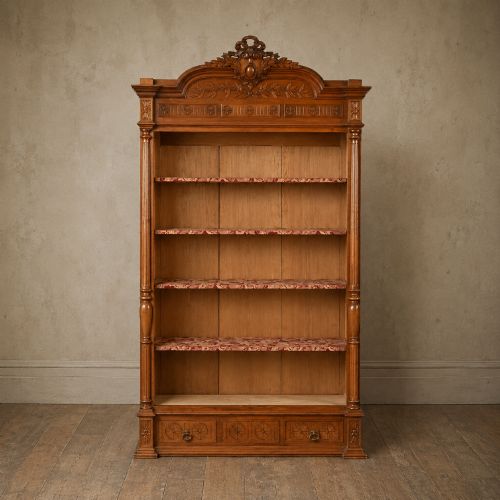
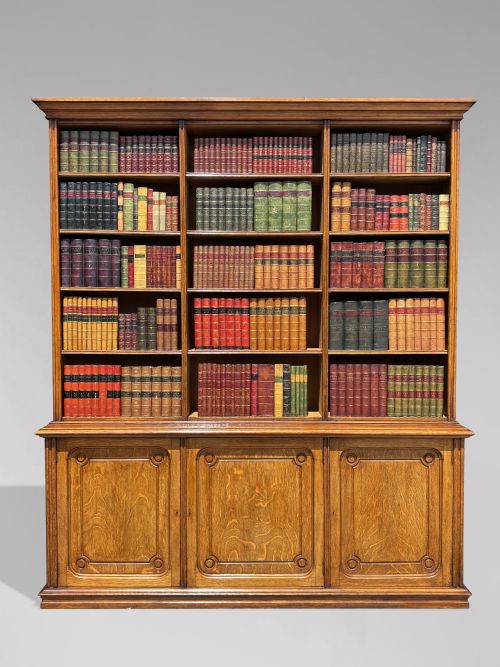
Large Open Library Bookcase
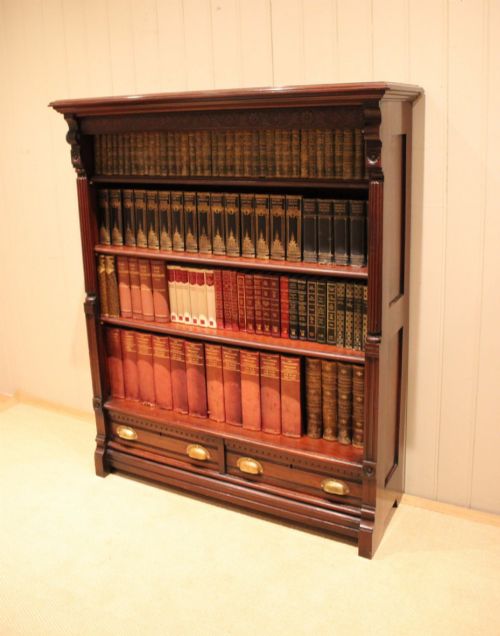
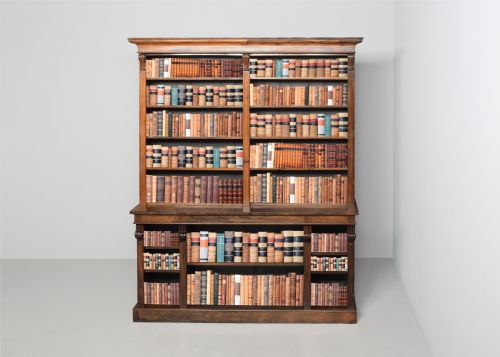
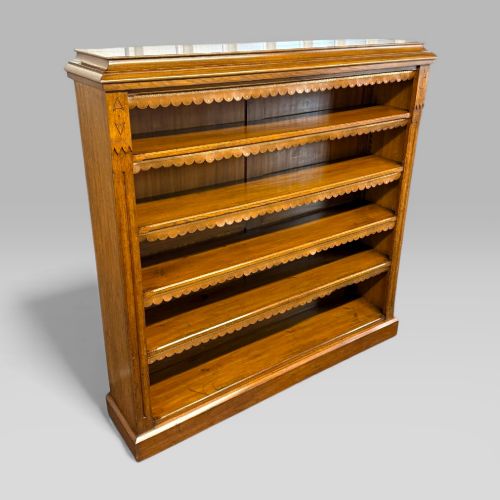
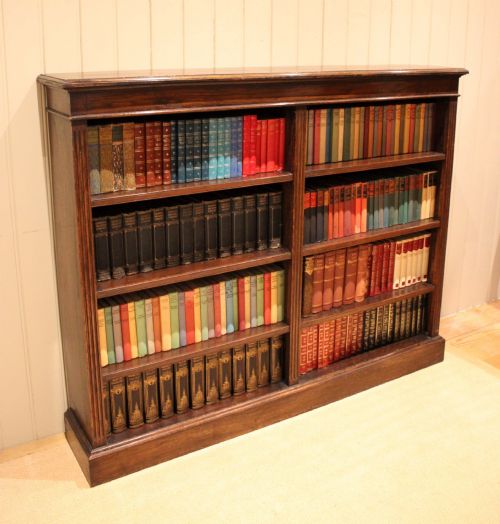
A large open library bookcase brings scale and generous shelf space to a room, holding centuries of volumes behind an unfettered frontage.
Large Open Library Bookcase
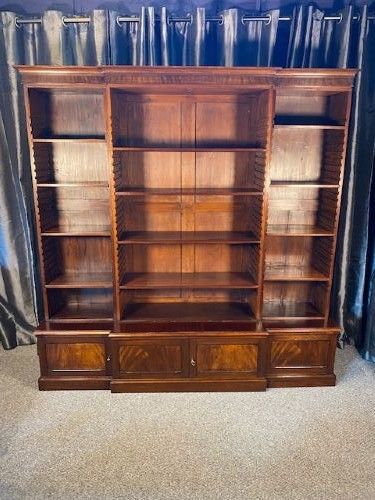
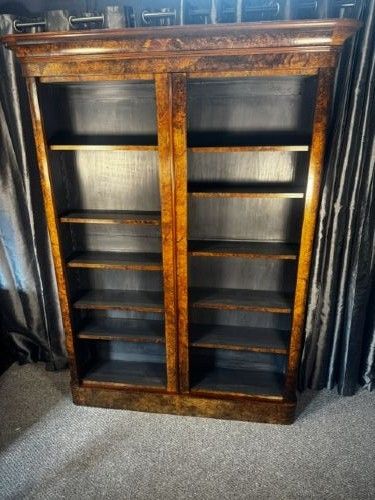
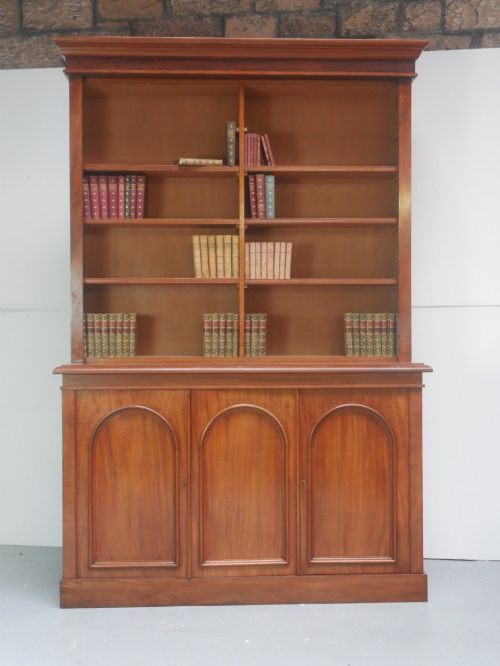
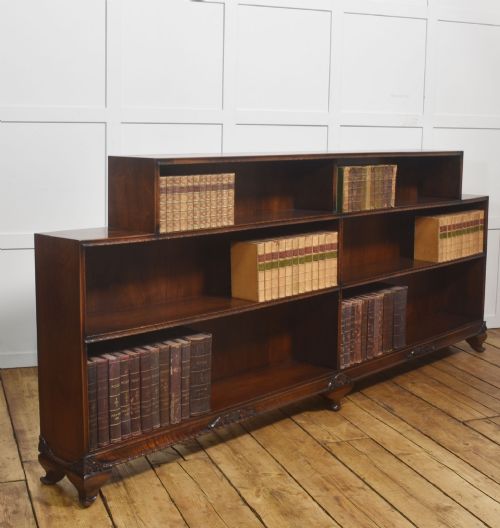
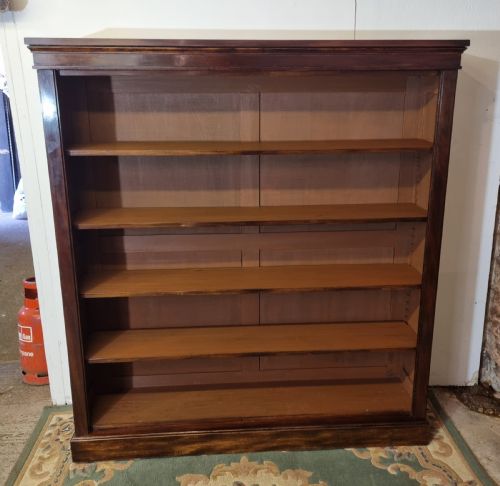
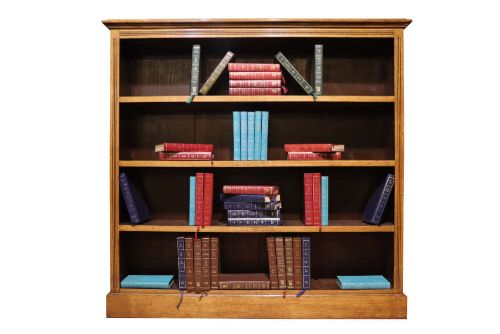
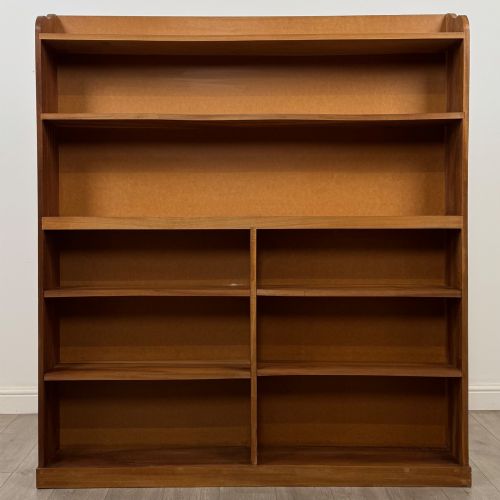
A large open library bookcase provides substantial storage for extensive collections, designed to stand prominently against a wall in a study or drawing room. When searching for a large open library bookcase, buyers encounter pieces primarily originating from the nineteenth and early twentieth centuries, spanning Victorian, Edwardian, William IV, and Regency periods.
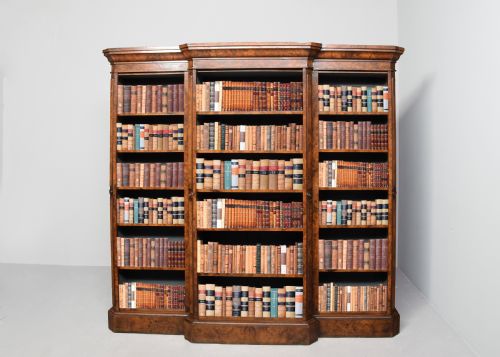
The most common formats on this page are substantial upright pieces and wide breakfront designs featuring multiple sections. These units rely on adjustable shelves to accommodate varying book sizes, combining utility with architectural presence.
Originating from British workshops as well as Continental makers, these bookcases utilise sturdy timbers to support heavy volumes. They serve as both functional furniture and grand display pieces.
Materials and construction
Makers constructed these bookcases using dense hardwoods such as mahogany, oak, walnut, and rosewood, often enhanced with figured veneers like burr walnut or birdseye maple on breakfront facades. Pine and deal served as secondary timbers for internal partitions and backing boards.
Joinery involved sturdy frame-and-panel construction to bear the weight of heavy rows of books without sagging. Decorative details included brass mounts, applied carvings, or inlaid elements in styles ranging from Gothic and Renaissance Revival to Sheraton Revival and Aesthetic Movement.
Judgments of quality
The quality of a piece rests upon the selection of timber and the sophistication of its architectural proportions. Fine examples employ heavily figured veneers, such as flame mahogany or burr walnut, matched across wide breakfront surfaces with deliberate care.
Subtlety of internal mechanics and secondary details also separates standard production from superior cabinet work. High-grade items incorporate well-engineered adjustable shelf mechanisms, solid brass hardware, and crisp hand-carved mouldings rather than cast substitutes.
The Large Open Library Bookcase Glossary
- Breakfront
- A cabinet design where the central section projects forward from the flanking wings. This configuration adds considerable depth and architectural presence to larger library furniture.
- Adjustable shelves
- Shelves that can be moved to different heights using wooden ratchets, peg supports, or metal strips. This system allows the bookcase to accommodate volumes of varying heights.
- Secondary timber
- The structural or internal wood used in a piece that remains hidden from immediate view, such as pine or deal backing boards. Cabinet makers utilised these sturdy utility woods behind primary display veneers.
- Veneer
- A thin layer of highly figured wood applied over a stable core timber to create decorative surfaces. Skilled makers matched grain patterns symmetrically across wide panels.
- Ormolu
- Gilded bronze mounts applied to furniture for decorative accent, frequently seen on mid-nineteenth-century luxury pieces. It provides a bright metallic contrast against dark walnut or mahogany.
Large Open Library Bookcase: Frequently Asked Questions
How do I choose the right size?
Measure your wall space carefully, allowing for the architectural projection of breakfront cornices and plinth bases. Consider ceiling height, as these substantial pieces often demand generous vertical clearance.
Ensure your room can accommodate the visual weight of dense timbers like mahogany, oak, or walnut without overwhelming the surrounding space.
Are the shelves adjustable?
Many examples on this page feature adjustable shelving to accommodate folios, novels, and reference books of different heights. Traditional systems rely on wooden tooth racks or brass support pegs.
Check individual descriptions to confirm whether the shelving mechanism allows for flexible internal configuration.
How do I care for the timber?
Keep wooden bookcases away from direct heat sources and strong sunlight to prevent the timber from drying out and the veneers from lifting. Dust regularly with a dry, soft cloth.
Apply a traditional beeswax polish sparingly when the wood appears dry, buffing it gently to maintain the natural lustre of the polish.
Can these hold heavy books?
These library bookcases were originally built to support large collections of heavy volumes. Solid construction in oak, mahogany, and walnut provides the necessary structural strength.
Ensure shelves are properly seated on their supports to safely distribute the weight of dense rows of books.