




Large Oak Farm Dining Table
A large oak farm dining table anchors a room with timber that has aged through centuries of daily meals.
Large Oak Farm Dining Table
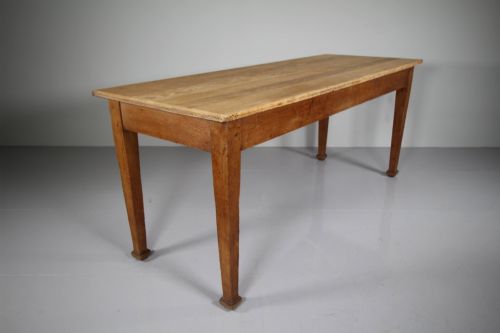
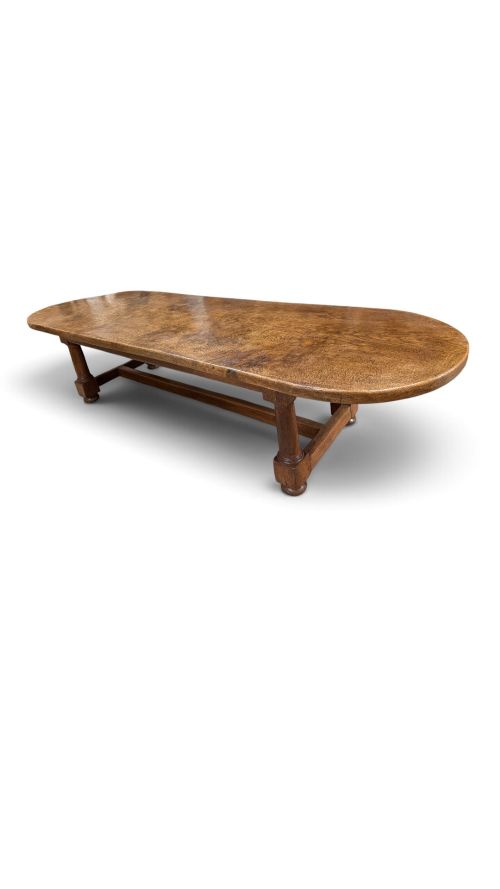
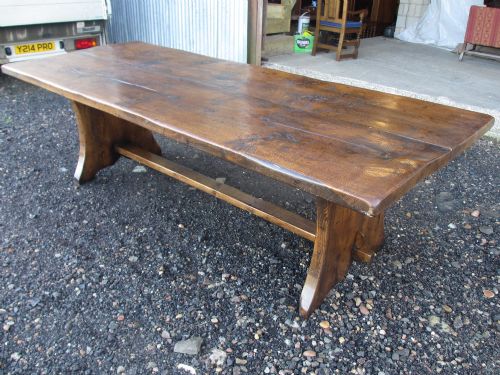
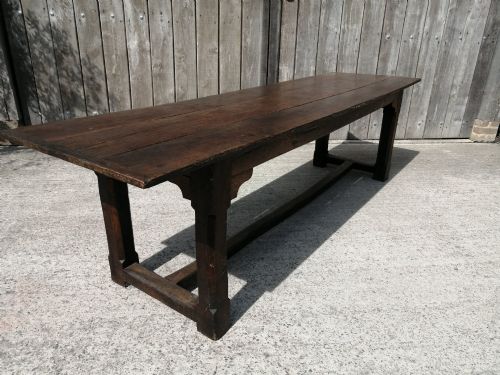
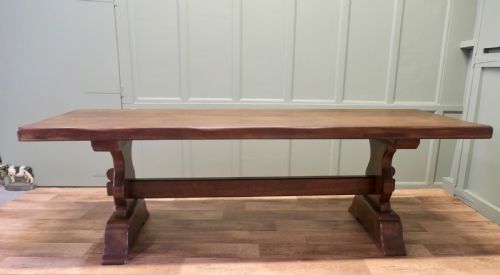
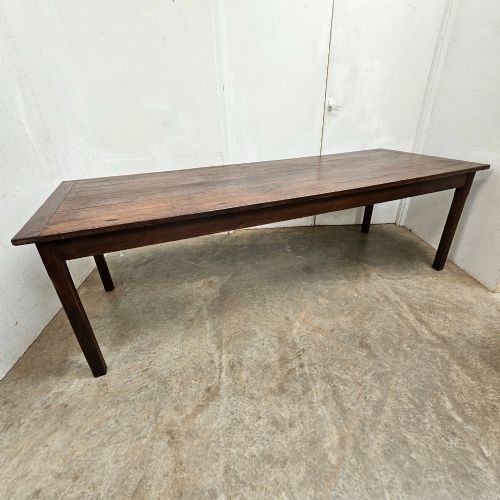
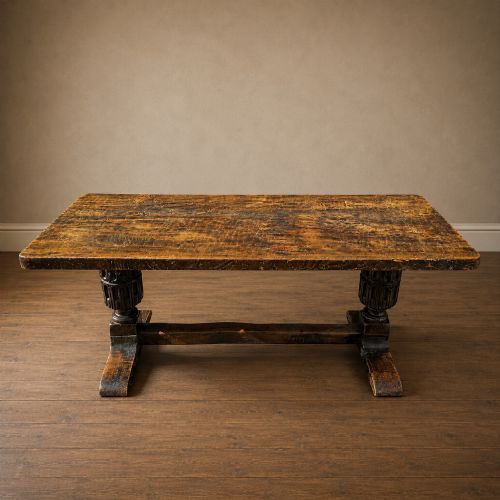
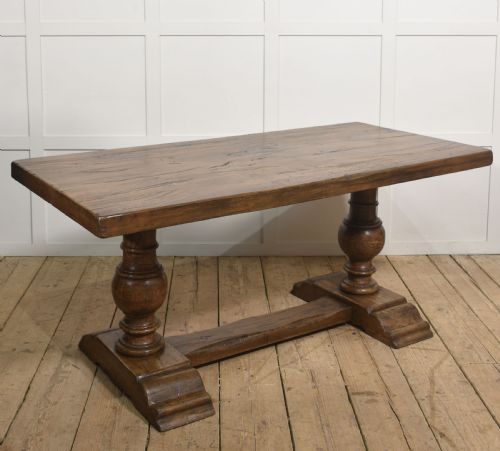
A large oak farm dining table brings generous proportions and sturdy construction into domestic spaces, drawing from vernacular domestic traditions across Britain and continental Europe. When searching for a large oak farm dining table, buyers encounter formats ranging from seventeenth-century refectory designs with trestle or stretcher bases to nineteenth-century French provincial examples and twentieth-century interpretations.
The material palette centres on solid oak, often paired with elm for tops or pine for structural framing, carrying the marks of prolonged use and timber movement. Pieces span centuries of production, including seventeenth-century constructions, eighteenth-century country workshop pieces, and later nineteenth-century French or Scandinavian country iterations.
Materials and construction
Makers built these tables from solid timber planks, frequently utilising single plank oak or elm for the surface and heavy beams for the underframe. Joinery relied on pegged mortise and tenon joints to secure legs, stretchers, and trestles without relying on metal fasteners.
Surfaces received hand-planed finishes that left undulating textures across the timber, alongside natural patination developed from decades of application and wear.
Several tables retain old carpenter's marks carved into the timber joints to help assemblers match the original framing.
What separates the examples
Quality rests in the integrity of the timber selection, such as the width of the boards comprising the top and the density of the grain. Single plank surfaces and substantial timber framing indicate superior original commissioning compared to later composite assemblies.
The sophistication of the joinery and the survival of the original surface patination distinguish vernacular workshop pieces from massed production.
The Large Oak Farm Dining Table Glossary
- Refectory table
- A long, narrow dining table originally used in monastic refectories and later adopted in domestic farmhouses. These tables typically feature prominent side stretchers and substantial legs.
- Trestle table
- A table design where the top rests on two or more supporting uprights rather than four corner legs. This construction allows maximum legroom along the length of the surface.
- Plank top
- A table surface constructed from boards joined edge to edge. Early examples often utilised single wide planks hewn from mature trees.
- Patina
- The surface sheen and colour acquired by wood through age, handling, and wax polishing over generations. It provides a visual record of the piece's history.
- Stretcher
- A horizontal wooden bar connecting the legs of a table to provide structural rigidity. In early designs, stretchers were often positioned close to the floor to serve as footrests.
Large Oak Farm Dining Table: Frequently Asked Questions
How do I seat twelve people?
Tables exceeding two metres in length generally accommodate twelve diners comfortably, particularly refectory and trestle formats without corner legs.
Measuring the clearance beneath the side aprons ensures chairs slide underneath without obstruction.
Are these tables suitable for daily kitchen use?
Solid timber construction handles regular family meals, provided the surface receives appropriate care with wax or oil.
Historic boards already carry decades of use, meaning routine dining adds to the established character rather than harming the material.
How do I tell seventeenth-century tables apart from later ones?
Early seventeenth-century pieces display hand-turned legs, pegged joinery, and heavy framing typical of vernacular oak furniture.
Nineteenth-century interpretations often feature softer pine secondary woods or lighter French provincial styling.
What is a bleached oak finish?
Bleached oak results from a treatment process that lightens the natural tone of the timber while retaining the grain texture.
This finish appears frequently on French provincial and Scandinavian country tables dating to the nineteenth and early twentieth centuries.