

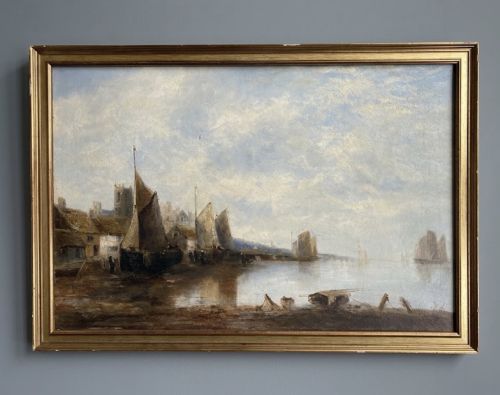
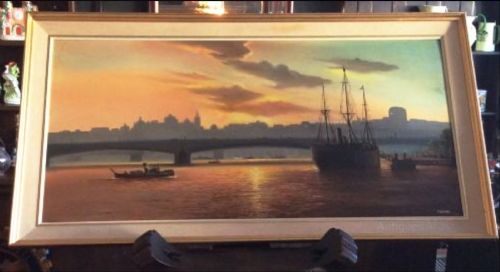
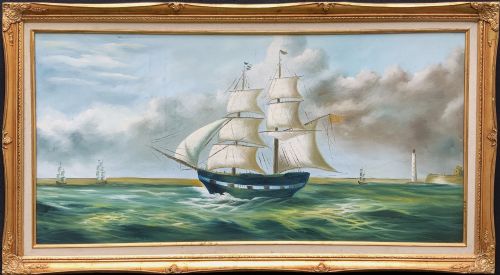
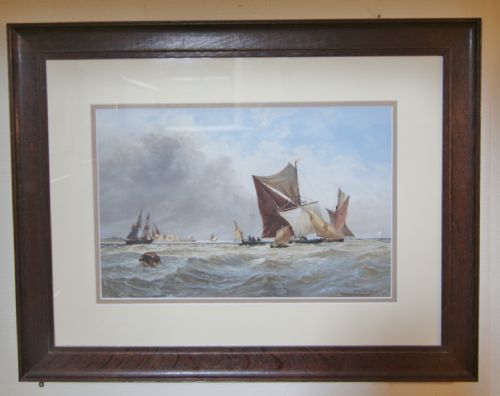
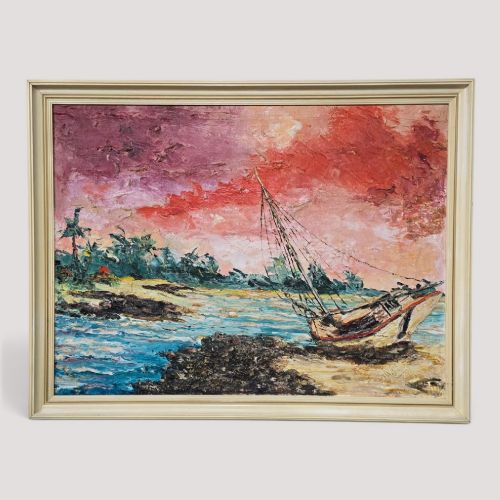
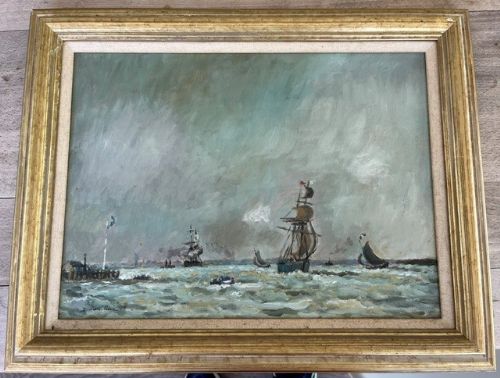
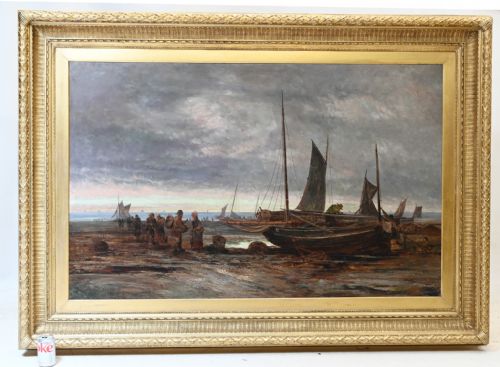
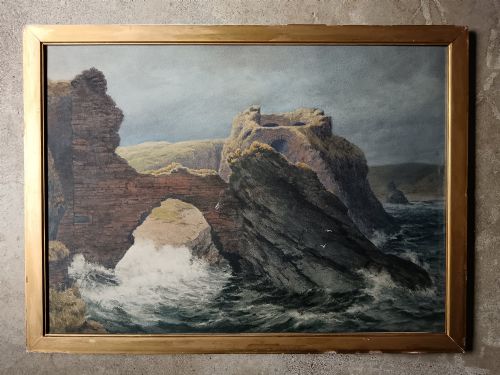


Large Marine Painting
A large marine painting brings the drama of the open sea and coastal harbours directly onto a generous expanse of wall.
Large Marine Painting
A large marine painting captures expansive coastal views, busy harbours, and deep-water shipping scenes across substantial formats.
The selections span the nineteenth century through the mid-twentieth century, encompassing Victorian maritime works, coastal watercolours, and mid-century French seascapes.
Alongside traditional oil paintings on canvas and board, the record includes watercolour works and specific maritime artefacts such as model boats and half hull ship models.
Materials and Techniques
Painters relied principally on oil paint applied to canvas or wood panel, building up rich textures to render turbulent water and shifting skies.
Works on paper utilise watercolour and gouache techniques, often combined to achieve atmospheric coastal light and translucent sea spray.
Gilt frames frequently complement the larger canvases, adding weight and traditional presentation to the maritime subjects.
Large Marine Painting Retail Price Guide 2026
Typical asking prices for large marine painting among the pieces listed under this phrase on Sellingantiques today, from the lower quarter to the upper quarter. They describe what is for sale here now, not the wider market.
The listings span the nineteenth century through the mid-twentieth century, featuring canvas, wood, oil paint, paper, watercolour, and gilt materials.
Factors of Quality
The skill of the brushwork in handling light on water and the accurate depiction of rigging and vessel structure separate accomplished works from routine outputs.
Compositional balance across a wide format dictates whether a large canvas holds the room or merely occupies physical space.
TB Hardy·John Moxon·George Henry Knight·Thomas Rose Miles·Gustave De Breanski·Paul Jean Clays·Herbert James·Harry Wanless·Ralph Hedley·Fred Dade·John William Gilroy
The Large Marine Painting Glossary
- Seascape
- A work of art depicting the sea or marine subjects. These pieces focus primarily on open water, coastal views, or harbour scenes.
- Gouache
- An opaque method of water-based painting. This medium allows artists to introduce dense highlights and solid areas of colour into paper works.
- Half hull model
- A three-dimensional representation of one side of a ship's hull, mounted on a board for display. Such items record naval architecture and shipbuilding designs.
- Board
- A rigid flat support used instead of canvas for painting. Artists frequently utilised wooden panels for oil and mixed media works during various periods.
Large Marine Painting: Frequently Asked Questions
How do I hang a large painting securely?
Heavy canvases and framed works require fixings screwed directly into wall studs or appropriate masonry anchors. Distribute the weight evenly using two points of suspension.
Position the centre of the canvas at approximately eye level to ensure proper viewing proportions within the room.
Where should I place a maritime painting?
Generous wall spaces in living rooms, hallways, or studies provide suitable locations for substantial canvases. Avoid positions exposed to direct sunlight or damp conditions.
Keep oil paintings away from direct heat sources to prevent cracking in the paint layer over time.
How can I tell a Victorian painting from a mid-century work?
Victorian maritime art typically employs detailed academic realism, deep tones, and heavy gilt frames. Subjects often focus on traditional sailing vessels and dramatic coastal weather.
Mid-century pieces lean towards looser brushwork, simplified forms, and brighter palettes reflecting modern artistic movements.