
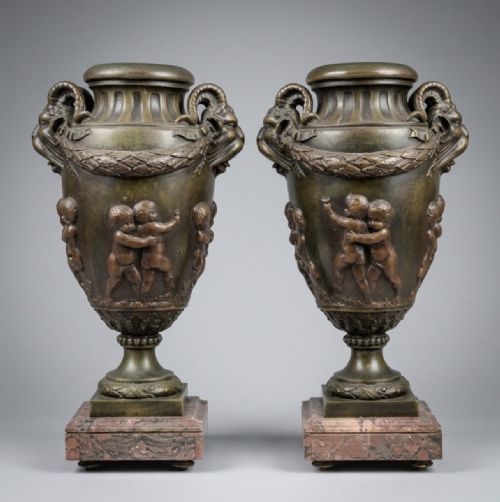
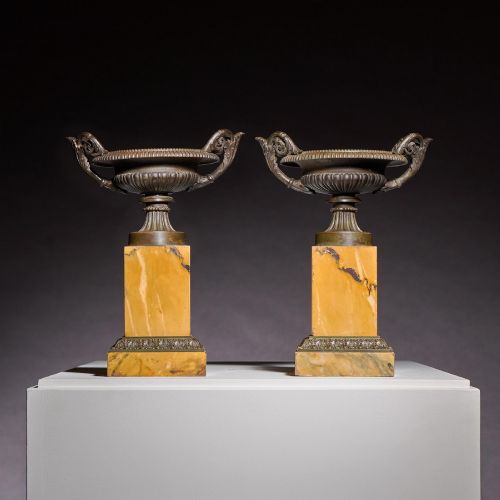
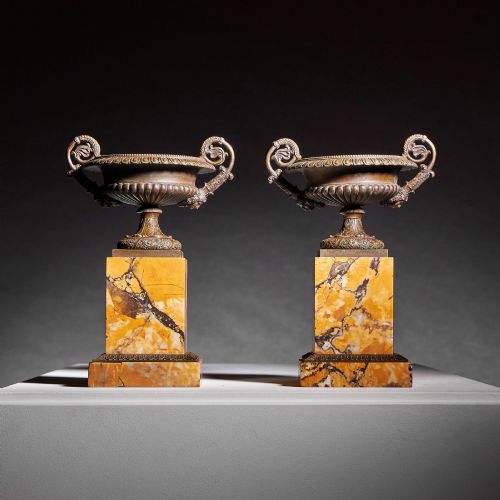
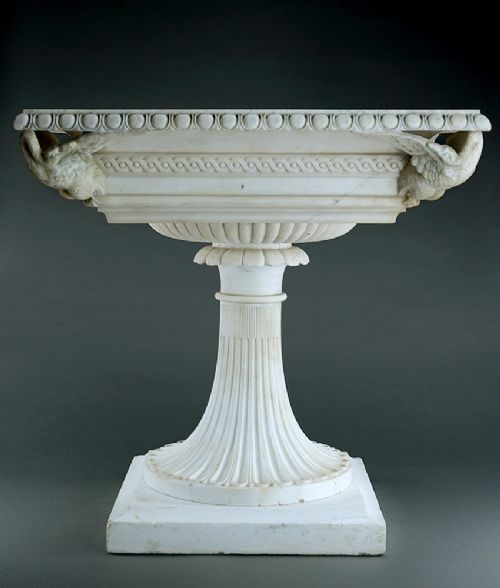




Large Marble Urn
A large marble urn brings monumental classical presence to a room, combining stone and metal in pieces built for display.
Large Marble Urn
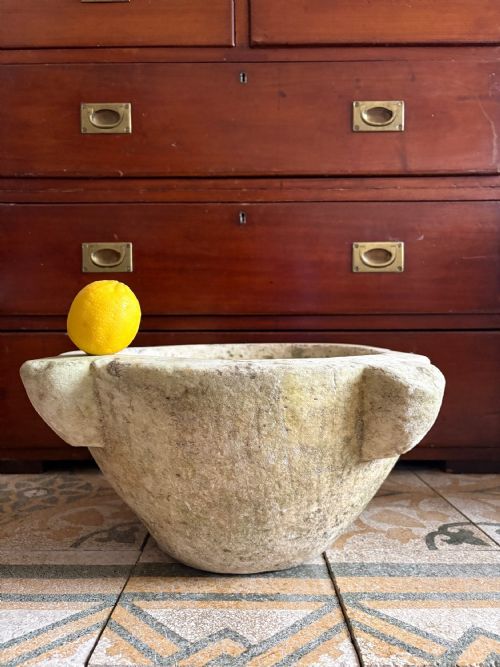
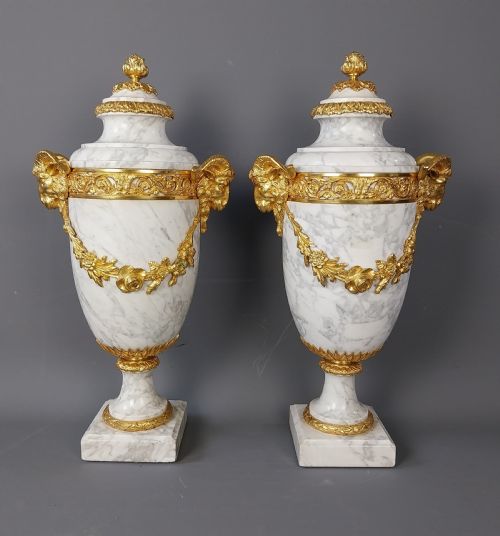
A large marble urn draws upon classical forms, appearing frequently in nineteenth-century interpretations that echo antiquity. These decorative objects often combine white or rouge marble with bronze, ormolu, and spelter mounts.
Buyers encounter architectural vessels, tazzas, and cassolettes designed for formal interiors. Many examples reflect the Grand Tour tradition or French revival styles.
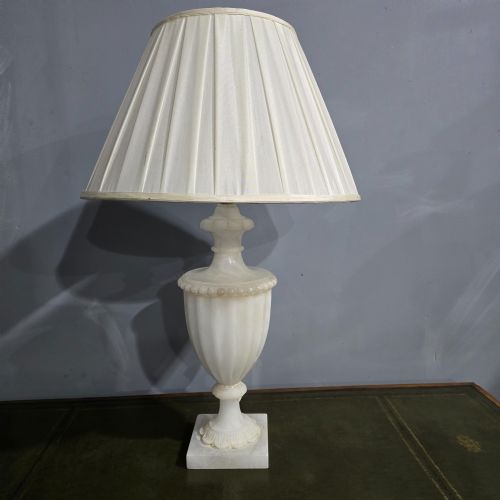
Practical domestic adaptations also emerge, including table lamps and mantel clock sets mounted upon stone bases. Such pieces range from garden ornaments to refined garnitures.
Materials and construction
Craftsmen carved white marble, alabaster, carrara, and rouge marble into classical vessels, frequently pairing the stone with cast bronze and ormolu mounts. Spelter also appears as an alternative metal component in nineteenth-century bases.
Turning and carving shaped the heavy stone bodies, while cast metal enrichment added handles, bezels, and pedestals. Ormolu gilding provided contrast against the polished marble surfaces.
Current listings feature materials including white marble, rouge marble, malachite, alabaster, bronze, ormolu, and hardwood.
Distinctions in quality
The precision of the stone carving and the crispness of the bronze or ormolu chasing define the upper tier of objects. Softer metalwork and simpler turning distinguish standard decorative items from fine sculptural examples.
Integrated garniture sets and matched pairs demonstrate superior initial commission value compared to single converted pieces. The weight and selection of the marble further separate ordinary production from ambitious works.
The Large Marble Urn Glossary
- Cassolette
- A decorative vase featuring a reversible lid that functions as a solid cover or a candle nozzle. This dual purpose was popular in nineteenth-century French interiors.
- Grand Tour
- A cultural journey undertaken by wealthy Europeans to collect classical antiquities and souvenirs. Pieces associated with this movement emulate ancient Greek and Roman sculpture.
- Ormolu
- Gilt bronze produced by applying a gold and mercury amalgam to cast bronze. The technique creates a rich golden surface that resists tarnish.
- Tazza
- A shallow cup or bowl mounted upon a stem and foot. These objects frequently display decorative mineral specimens such as malachite or white marble.
- Garniture
- A set of three or more matching ornamental objects designed for a mantelpiece. Clocks are typically flanked by urns or cassolettes in these arrangements.
Large Marble Urn: Frequently Asked Questions
What is a cassolette?
A cassolette is a decorative urn equipped with a reversible lid. One side acts as a solid top while the other holds a candle.
This dual function allowed nineteenth-century owners to transform ornamental vases into lighting accessories.
How are these urns dated?
Datings rely upon material combinations, mounting styles, and manufacturing techniques. Nineteenth-century examples often incorporate ormolu, cast bronze, and specific marble types associated with revival periods.
Archive records and stylistic cues from Grand Tour productions further clarify the era of manufacture.
Where were they placed?
These vessels historically occupied prominent positions in formal reception rooms and entrance halls. They stood upon mantelpieces, console tables, and dedicated pedestals.
Garden varieties were designed to anchor architectural focal points outdoors.
What is a Grand Tour piece?
Grand Tour objects are sculpture and decorative items acquired by travellers in Italy during the eighteenth and nineteenth centuries. They reference ancient classical architecture and antiquities.
Materials like malachite, bronze, and white marble frequently feature in these souvenirs.
How do lamps differ from urns?
Table lamps utilise classical urn bodies or alabaster forms adapted for electrical wiring. The fundamental vessel remains decorative but serves a functional lighting role.
Original garniture urns retain solid lids or cassolette fittings without electrical alterations.