


Large Library Unit
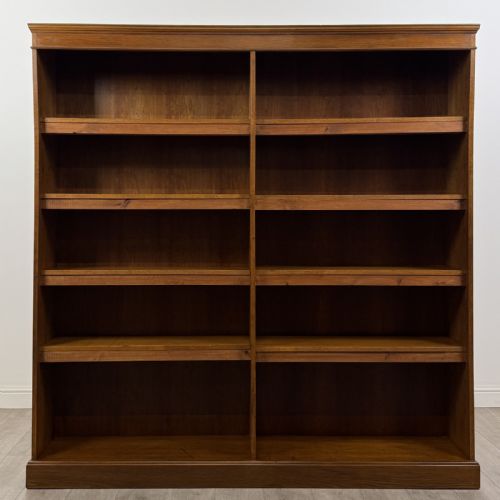
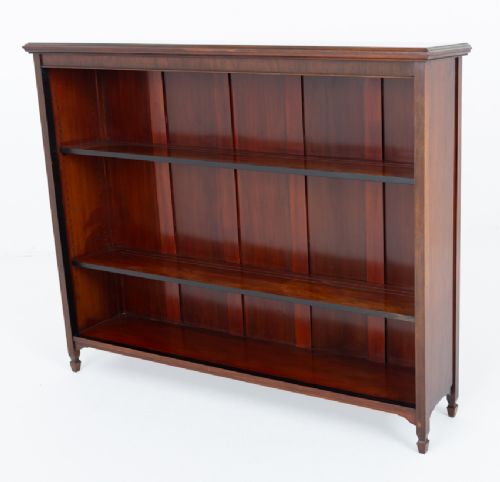
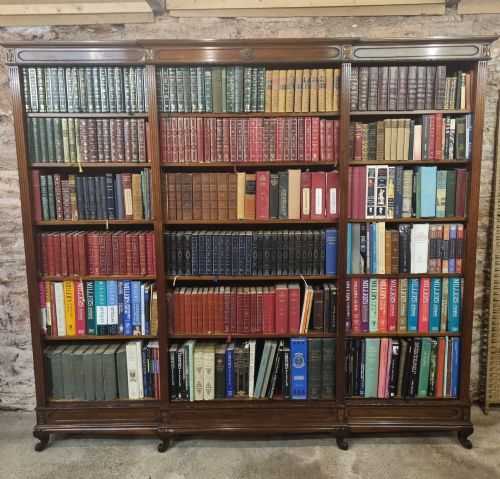
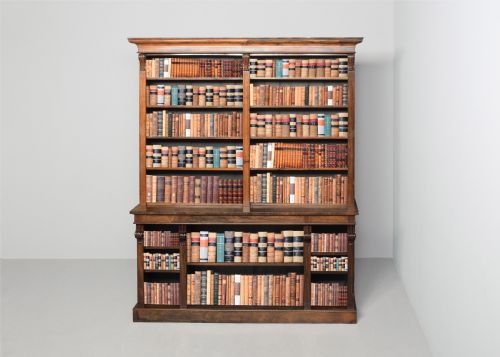
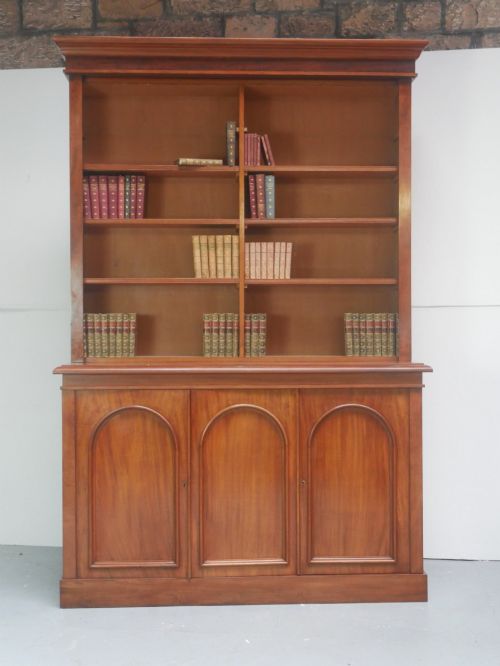
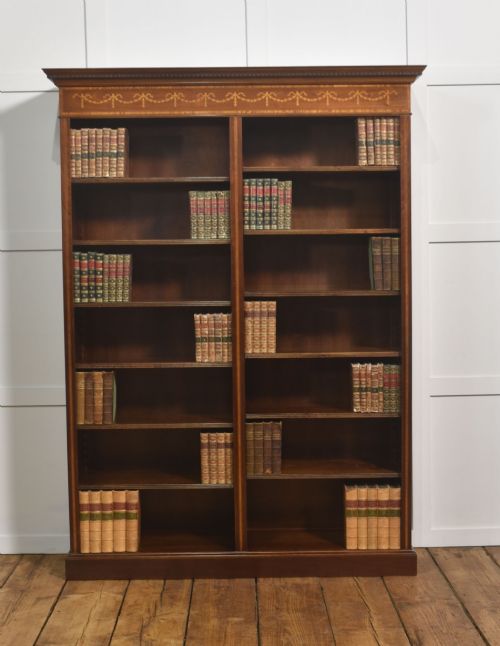
A large library unit is a substantial piece for housing volumes, and you will find these grand open mahogany and walnut bookcases across Victorian and Edwardian periods.
Large Library Unit
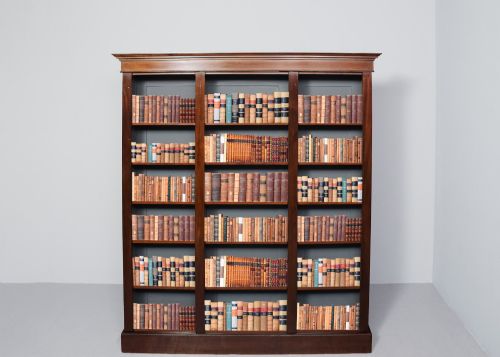
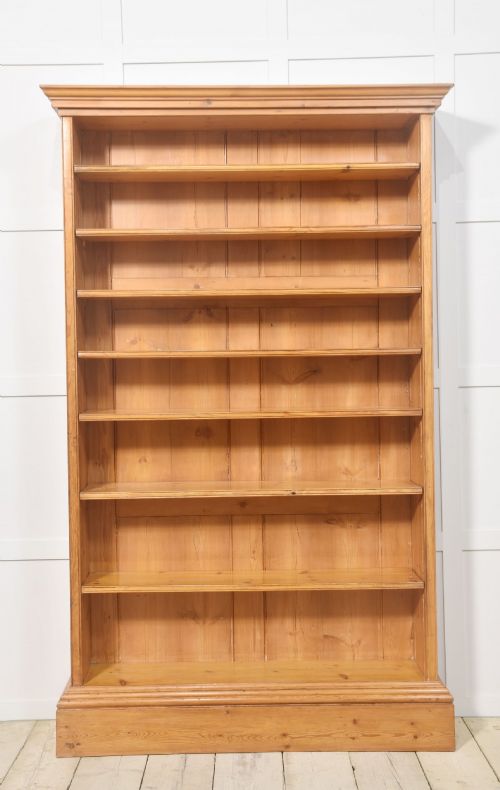
A large library unit is essentially an open bookcase designed to hold extensive collections of books in domestic or institutional settings. When searching this phrase, you encounter substantial storage furniture that dominates a wall and provides immediate access to volumes.
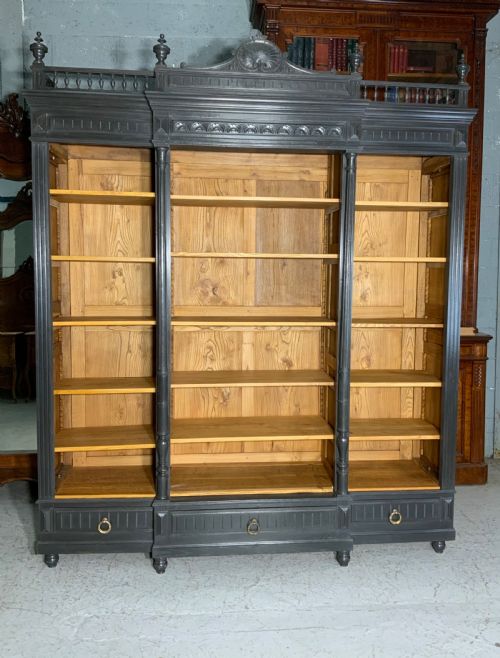
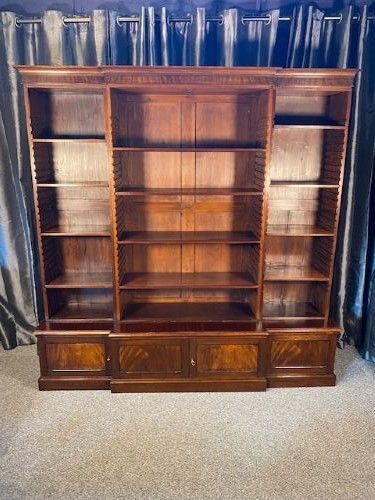
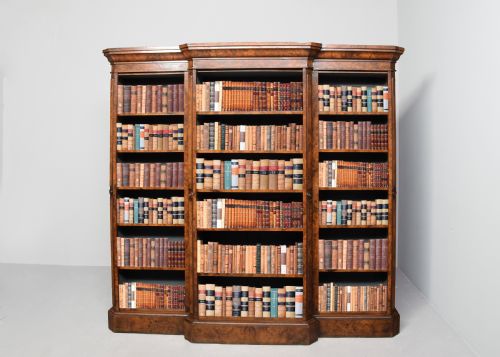
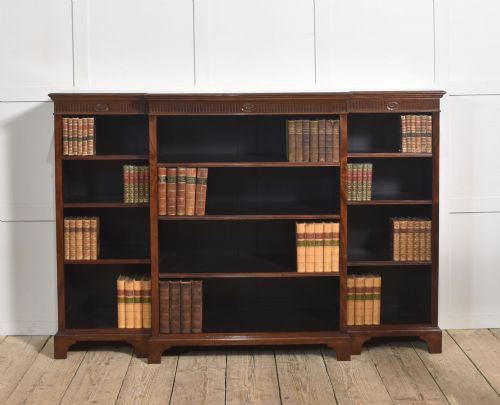
The pieces on this page are predominantly open bookcases from the nineteenth and early twentieth centuries. Mahogany and oak examples dominate the selection, often taking the form of multi-section breakfront units with adjustable shelving.
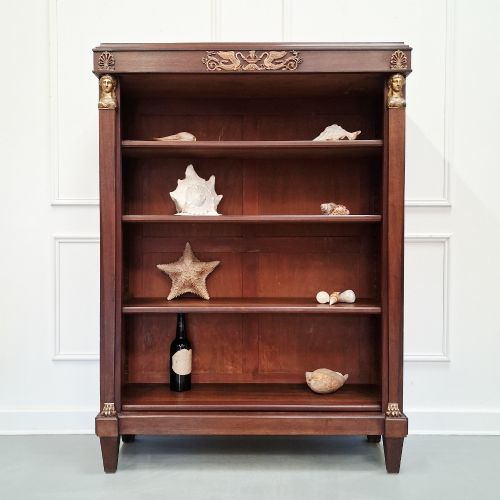
Origins stretch across British workshops as well as French makers, incorporating styles from Victorian and Edwardian eras down to Regency and Arts and Crafts interpretations. The form prioritises capacity and presence, serving as architectural joinery within a room.
How they were made
Makers utilised solid timbers such as mahogany, oak, pine, and rosewood, frequently applying veneers like flame mahogany or burr walnut to prominent surfaces. Carved details, inlay work, and ebonised highlights appeared on late Victorian and Edwardian examples to add visual depth.
Construction relied on heavy plinth bases, adjustable timber shelving systems, and robust backboards to support the weight of dense book collections. Breakfront configurations divided the units into distinct sections, balancing expansive storage capacity with proportioned architectural lines.
Large Library Unit Retail Price Guide 2026
Typical asking prices for large library unit among the pieces listed under this phrase on Sellingantiques today, from the lower quarter to the upper quarter. They describe what is for sale here now, not the wider market.
The listings span the nineteenth and early twentieth centuries, recording woods from native oak and pine to exotic rosewood and flame mahogany veneer.
What varies in quality
Quality in a large library unit rests on the selection of timber and the ambition of its construction. Fine examples employ burr walnut, birdseye maple, or rosewood with careful grain matching, whereas utilitarian pieces rely on simpler deal wood or pine.
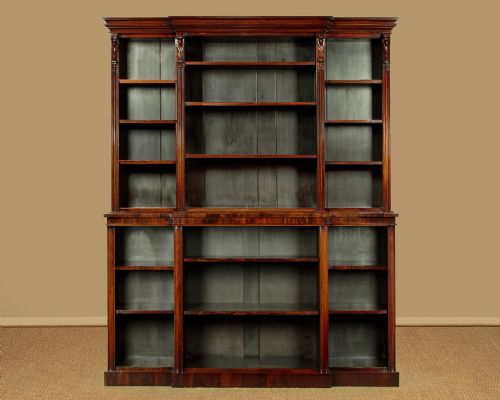
The sophistication of the joinery and detailing separates standard pieces from exceptional ones. Elaborate breakfront layouts, integrated inlay work, and refined cornice mouldings indicate high-tier cabinet making designed for country houses.
Goodhall Lamb and Heighway of Manchester·Sir Charles Barry
The Large Library Unit Glossary
- Breakfront
- A cabinet or bookcase where the central section projects forward from the flanking wings. This configuration breaks up a long facade and creates visual depth.
- Plinth base
- The heavy solid block or projecting platform at the foot of a piece of furniture. It grounds large library units and provides structural stability.
- Adjustable shelves
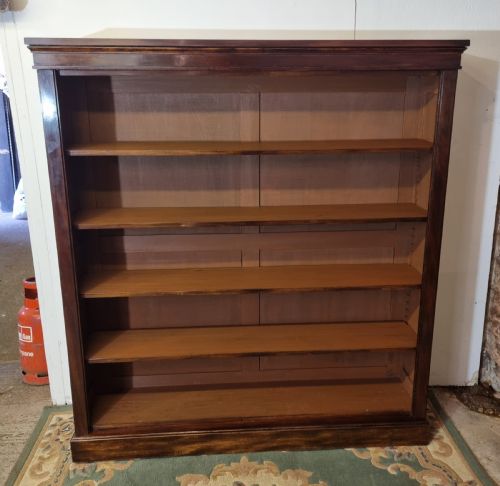
- Shelves that can be moved to different heights using wooden ratchets, metal pins, or sliding brackets. This feature allows the unit to accommodate books of varying sizes.
- Inlaid
- A technique where pieces of contrasting wood, shell, or brass are inserted into recesses within the primary timber surface to create decorative patterns.
Large Library Unit: Frequently Asked Questions
Where should I place a large library unit?
These substantial pieces require a dedicated wall with sufficient clearance and minimal exposure to direct sunlight or damp conditions.
Positioning them in a study, drawing room, or sitting room allows the timber and contents to remain stable over decades.
How do I adjust the shelves?
Most period library units utilise either traditional wooden support strips or metal tracks fitted to the interior uprights. Lifting the shelf slightly allows the retaining pegs or brackets to be repositioned at new heights.
Care should be taken when shifting older timbers to avoid damaging the interior veneer or lining.
How do I distinguish Victorian from Edwardian units?
Victorian examples tend to feature denser timbers, heavier carvings, and darker finishes such as rosewood or deep mahogany. They often display robust Gothic or classical architectural influences.
Edwardian pieces frequently appear lighter in tone, utilising satinwood, lighter oak, or refined inlay work reflecting Sheraton Revival tastes.
Can these units be dismantled for transport?
Many large library units, particularly multi-section breakfront forms, were constructed to break down into modular vertical bays or separate cornices and plinths. This modular design assists with moving heavy furniture through interior doorways.
Inspecting the joints and fixing screws reveals whether a specific piece separates safely into manageable components.