





Large Kitchen Server
A large kitchen server brings monumental proportion and utilitarian charm to domestic spaces, offering heavy-duty preparation surfaces and deep storage.
Large Kitchen Server
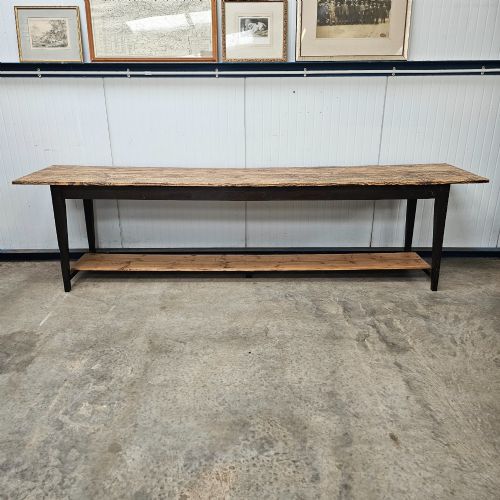
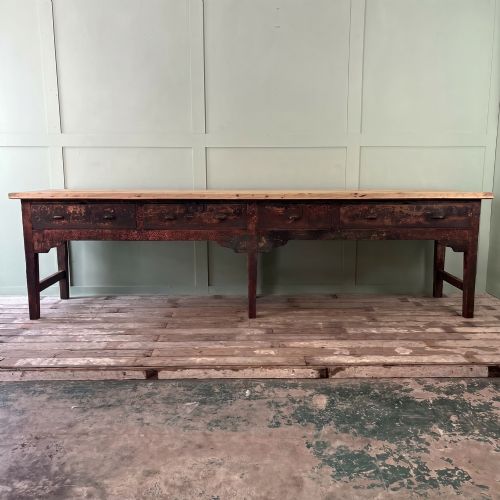
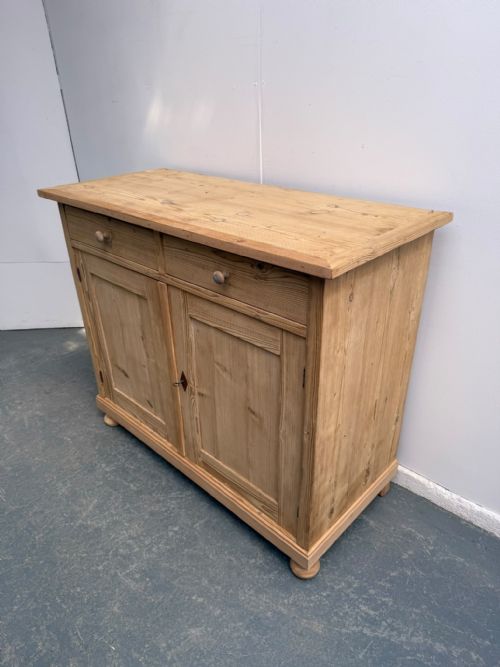
When you search for a large kitchen server, you encounter robust foundational furniture designed for food preparation and storage, spanning Georgian, Victorian, and nineteenth-century periods. These heavy pieces take the form of dresser bases, serving tables, drapers tables, and prep tables originating from English and French country houses.
The version you are most likely to meet on this page is a substantial pine or oak dresser base, frequently featuring multiple drawers, cupboards, and potboards. Such items reflect utilitarian domestic histories, built to handle heavy daily labour in substantial kitchens.
Forms range from long harvest tables and bread slide units to monumental four-metre drapers tables and potboard serving tables. These variations showcase the practical needs of large households across the eighteenth and nineteenth centuries.
Materials and construction methods
Construction relies primarily on heavy timber such as solid pine, oak, and mahogany, chosen for structural strength and resilience under heavy daily use. Surfaces appear in their natural waxed state, bleached, or finished with historical paint and painted timber.
Hardware details involve durable brass and iron fixtures, which secure doors and support heavy drawer mechanisms built for functional longevity. Joinery methods reflect robust workshop traditions intended to withstand continuous kitchen labour and preparation tasks.
Large Kitchen Server Retail Price Guide 2026
Typical asking prices for large kitchen server among the pieces listed under this phrase on Sellingantiques today, from the lower quarter to the upper quarter. They describe what is for sale here now, not the wider market.
Assessing quality and proportion
The top of the range is distinguished by monumental scale and original uncompromised timber surfaces, such as bleached oak or untouched historical paint. Superior pieces retain structural integrity while showing honest patination from decades of heavy domestic service.
Lower tiers of quality involve lesser timber selections, unsympathetic alterations, or heavy modern refinishing that strips away historical character. The finest examples balance exceptional length with robust, unaltered framing and authentic brass or iron hardware.
The Large Kitchen Server Glossary
- Dresser base
- A low cabinetry unit featuring drawers and cupboards, historically used for food preparation and storing kitchen utensils. These items form the backbone of country house utility furniture.
- Potboard
- An open slatted lower shelf fitted beneath a dresser base or serving table, designed to hold heavy pots and pans. This practical feature elevates timber feet off damp flagstone floors.
- Bread slide
- A pull-out wooden board integrated into a dresser base or prep table for kneading dough or slicing bread. It provides an extendable working surface that tucks away neatly when not in use.
- Drapers table
- A long, wide commercial table with open lower storage, originally utilised in fabric shops for measuring textiles before finding secondary life in large kitchens. They offer exceptional surface area.
- Bleached oak
- Timber treated to lighten its natural colour, creating a pale, weathered finish popular in French and English country interiors. This treatment highlights the natural grain while softening the overall tone.
Large Kitchen Server: Frequently Asked Questions
What is a large kitchen server?
A large kitchen server is a heavy-duty utilitarian table or dresser base designed for food preparation and storage in domestic spaces.
These pieces originate mainly from the eighteenth and nineteenth centuries, incorporating sturdy timbers like pine and oak.
How were these servers used?
They served as central workspaces for kneading bread, preparing meats, and organising heavy kitchen equipment.
Open potboards and deep drawers accommodated large pots, utensils, and provisions for bustling households.
How do I live with a large server?
Position the piece as a central island or anchor against a dining room wall to provide generous surface area and practical storage.
Pair the robust timber surfaces with contemporary or antique seating to balance the heavy architectural proportions.
How do I date these tables?
Dating relies on assessing construction techniques, hardware materials, and historical timber patination typical of Georgian and Victorian eras.
Tool marks, timber species like bleached oak or old pine, and regional styles help determine the approximate period.