
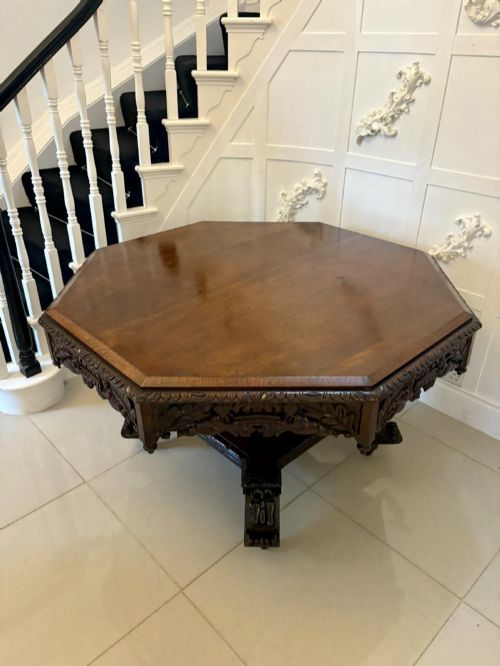
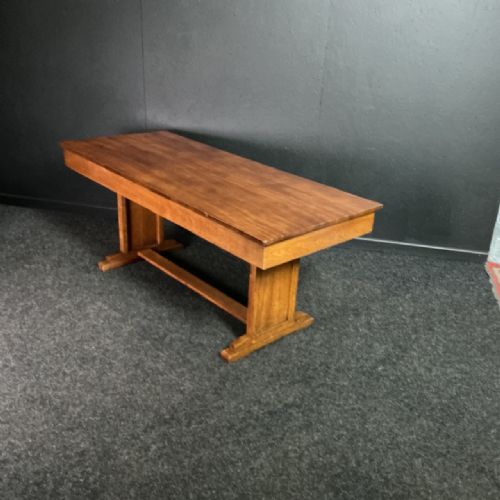
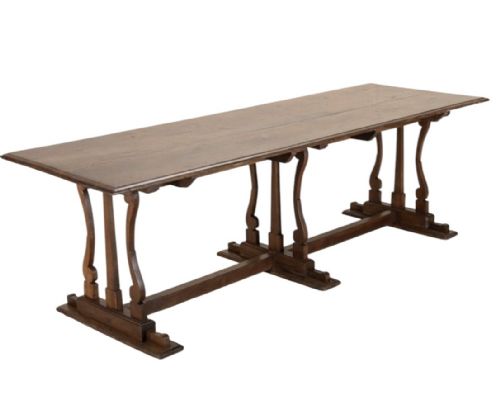


Large Gothic Dining Table
A large gothic dining table brings unmistakable architectural gravity to a room, offering substantial timber boards and medieval revival detailing.
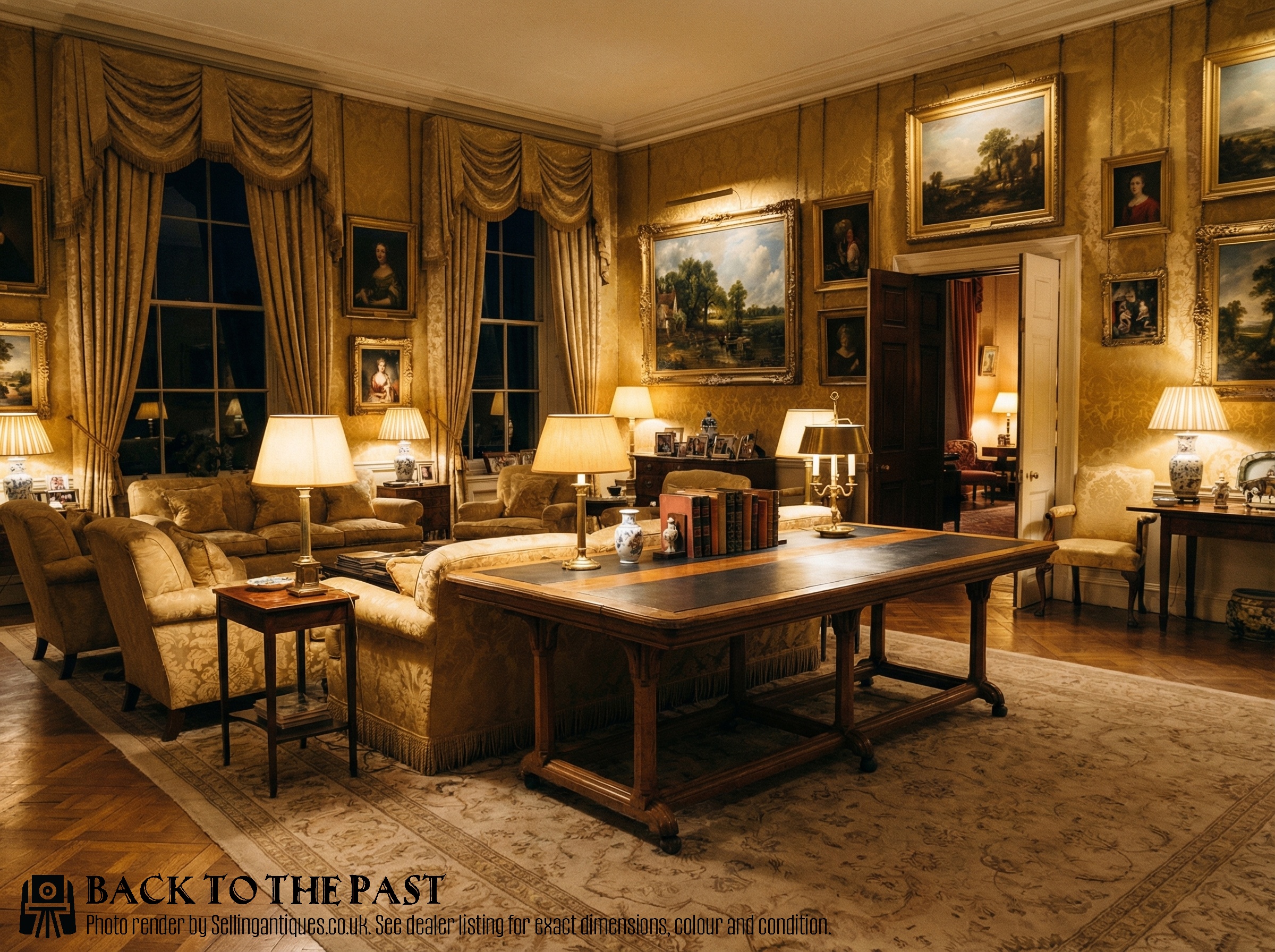
Large Gothic Dining Table
When you search for a large gothic dining table, you find heavy timber furniture rooted in nineteenth-century revivals, often taking the form of refectory, monastery, or trestle designs. These pieces draw on medieval ecclesiastical and domestic architecture, translating pointed arches and robust framing into functional dining furniture.
The versions you are most likely to meet on this page date primarily from the nineteenth century, including Victorian interpretations and Arts and Crafts examples. They range from long extending formats designed to seat ten to fixed monastery boards.
Makers and designers of the period looked to historical precedents, resulting in pieces reflecting Reformed Gothic principles or the scholarly vision associated with figures like Pugin. These tables served grand public school libraries, country houses, and substantial kitchen dining spaces.
How they were made
Carpenters relied principally on solid oak, alongside walnut and mahogany, selecting timber for its density and striking grain pattern. Tables frequently feature thick plank tops supported by heavy trestle bases, chamfered framing, or carved legs.
Metalwork played a structural and decorative role, with iron and brass brackets, bolts, and stretcher fixings securing the heavy framework. Some examples incorporated extending mechanisms to accommodate larger gatherings while maintaining structural integrity.
Surface finishing ranged from deep natural polish to bleached oak treatments, depending on the specific nineteenth-century revival movement and the domestic or institutional setting for which the table was commissioned.
Materials span native oak, bleached oak, walnut, mahogany, iron, and brass.
What varies in quality
Quality rests upon the selection and thickness of the timber, particularly the single-piece or well-matched multi-board construction of the top. Superior examples exhibit tightly fitted joinery that accommodates natural wood movement without compromising stability.
The ambition and execution of the carved detail separate standard production from exceptional pieces. Refined work displays crisp tracery, thoughtful chamfering, and harmonious proportions rather than heavy-handed ornamentation applied without regard for architectural scale.
The Large Gothic Dining Table Glossary
- Refectory table
- A long, narrow dining table originally used in monastic dining halls. These pieces typically feature sturdy stretcher bases to maintain stability over long spans.
- Gothic Revival
- An architectural and decorative style spanning the eighteenth and nineteenth centuries. This movement revived medieval forms, including pointed arches and heavy timber framing.
- Trestle table
- A table consisting of two or more support frames connected by a horizontal beam or stretcher. This construction provides robust support for heavy top boards.
- Reformed Gothic
- A nineteenth-century design approach that favoured simpler, more structural interpretations of medieval forms. It rejected excessive ornamentation in favour of honest construction.
- Arts and Crafts
- A design movement promoting traditional craftsmanship and simple forms. Tables from this tradition emphasise the natural qualities of the oak and visible joinery.
Large Gothic Dining Table: Frequently Asked Questions
How do I seat ten people?
Many large gothic dining tables come in extending formats or generous refectory lengths designed specifically for large gatherings. Measuring the knee clearance beneath the frieze and the distance between the legs ensures comfortable seating.
Placing chairs carefully around trestle bases or refectory stretchers maximises legroom without obstructing guests. Selecting benches or appropriately scaled dining chairs completes the arrangement.
What is a monastery table?
A monastery table is a heavy, solid timber dining table inspired by medieval monastic refectories. These pieces feature thick plank tops and robust underframes built for communal dining.
Nineteenth-century makers adopted this form to satisfy a Victorian appetite for historicism and solid construction. They remain practical centerpieces for large contemporary dining spaces.
How do I care for oak?
Solid oak requires simple maintenance, primarily dusting with a dry cloth and avoiding excessive moisture. Using placemats and coasters protects the polished timber surface from heat and spills.
Applying natural wax periodically helps nourish the wood and maintain its finish. Keeping the table away from direct heat sources prevents timber splitting.
What distinguishes Pugin style?
Pugin-style furniture reflects the architectural principles of Augustus Pugin, emphasising structural truth and medieval Gothic motifs. These pieces avoid superficial decoration, integrating ornament directly into the construction.
Such tables display precise chamfering, sturdy joinery, and ecclesiastical detailing. They connect domestic dining furniture to the broader Gothic Revival movement.