






Large Glazed Planter
A large glazed planter brings architectural weight to a room or terrace, uniting robust earthenware with a durable vitreous surface.
Large Glazed Planter
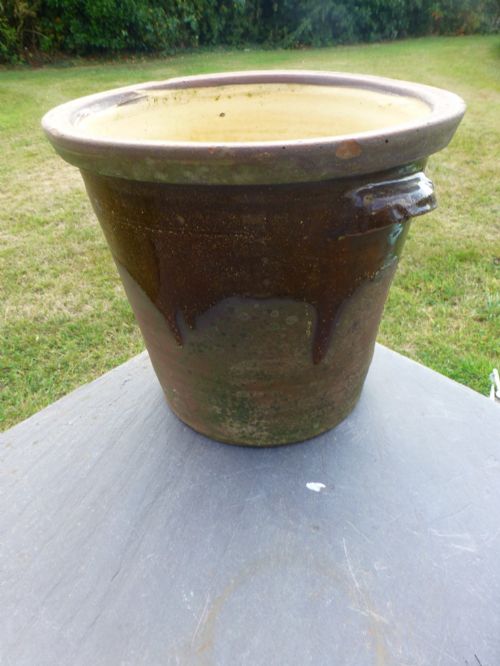
A large glazed planter serves primarily as a substantial vessel for substantial flora, manifesting across various forms including jardinieres, dairy salting crocks, and garden urns. These pieces bridge interior display and exterior cultivation through generous proportions.
The objects gathered here span multiple centuries, from eighteenth-century delft garden urns to nineteenth-century terracotta pots and twentieth-century majolica wares. Buyers encounter diverse stylistic influences such as Italian Renaissance Revival, French Country, and Victorian tastes.
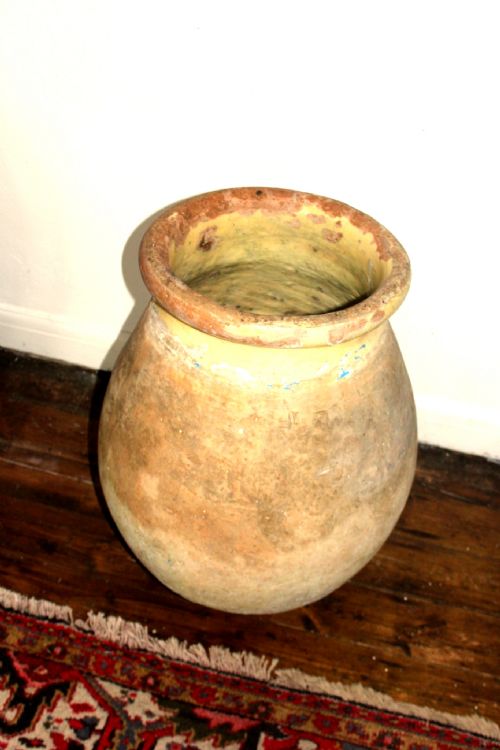
Vessel types range from floor-standing jardinières on figural or pedestal bases to rustic olive jars and wine cisterns. Each format was originally engineered for utilitarian holding or ornamental garden placement before entering the decorative sphere.
Materials and construction
Makers utilised dense earthenware and terracotta as the primary structural bodies, shaping large forms by hand or within heavy moulds to support heavy soil loads. Stoneware also appears where higher firing temperatures were required for frost resistance.
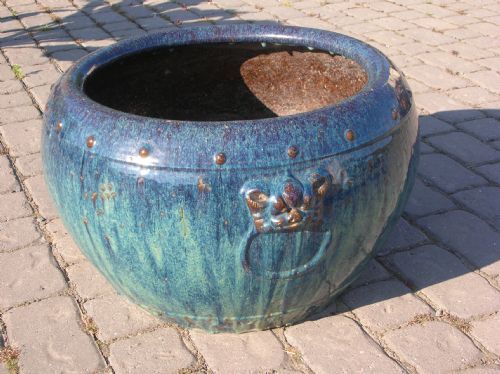
Glaze application provided both porosity sealing and decorative colour, utilising tin-glazes, rich majolica lead glazes, or simple salt-glazes. These vitreous layers were fired over the clay body to lock in moisture and create lustrous surface sheens.
Large Glazed Planter Retail Price Guide 2026
Typical asking prices for large glazed planter among the pieces listed under this phrase on Sellingantiques today, from the lower quarter to the upper quarter. They describe what is for sale here now, not the wider market.
Some nineteenth-century vessels previously held wine or salted dairy before trading their utilitarian duties for a quiet retirement holding logs.
Evaluating the standard
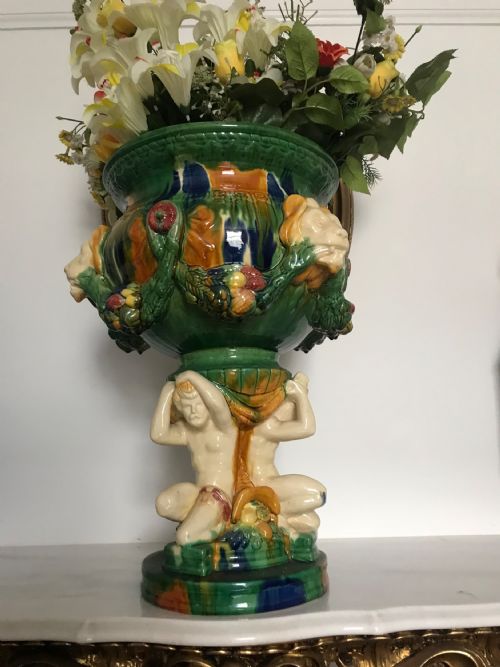
Quality rests in the harmony between the boldness of the ceramic form and the richness of the glaze application, where deep majolica coloration or aged terracotta patina displays depth and character. The crispness of moulded relief details, such as lions head decorations, distinguishes superior studio or factory output.
The integrity of the heavy body dictates durability, separating vessels with stable, thick-walled construction from those showing structural compromises. Provenance and attribution to established makers elevate certain pieces above anonymous utilitarian examples.
Minton·George Jones·Lipscombe And Co
The Large Glazed Planter Glossary
- Jardiniere
- A large ornamental pot or stand for holding plants or flowers. These vessels often sit directly on the floor or upon dedicated pedestals.
- Majolica
- A type of earthenware decorated with opaque coloured glazes over a tin-enamel ground. This technique produces vibrant hues and glossy finishes popular during the nineteenth century.
- Terracotta
- Fired unglazed or glazed clay of a brownish-red colour. It provides the porous, breathable body typical of traditional garden pots and olive jars.
- Delft
- Tin-glazed earthenware originating from the Netherlands, known for its distinctive white surface and blue painting or monochromatic glaze effects.
- Stoneware
- A robust, vitrified pottery fired at high temperatures until semi-vitreous and impermeable to liquids. It offers superior strength for heavier utility vessels.
Large Glazed Planter: Frequently Asked Questions
Can large glazed planters stay outside in winter?
Many earthenware and terracotta vessels absorb moisture that can expand and crack during freezing temperatures. Moving sensitive glazed ceramics indoors or under cover during harsh frosts protects the body.
Stoneware and denser fired bodies handle cold climates better, but checking for adequate drainage holes prevents water accumulation and subsequent frost damage.
What is majolica and how do I spot it?
Majolica is a nineteenth-century earthenware style characterised by brightly coloured lead glazes applied over an opaque tin-opacified white slip. The finish is typically glossy and rich in tone.
Look for moulded relief decorations featuring naturalistic motifs, mythological figures, or animal elements like lion heads, often paired with figural pedestals.
How do I clean an antique glazed planter?
Gentle washing with warm water and a soft cloth removes surface dust without harming historic glazes or aged patinas. Avoid abrasive pads or harsh chemical cleaners that can scratch soft earthenware.
Allowing the piece to dry thoroughly prevents trapped moisture from interacting with old interior lime deposits or mineral residues.