
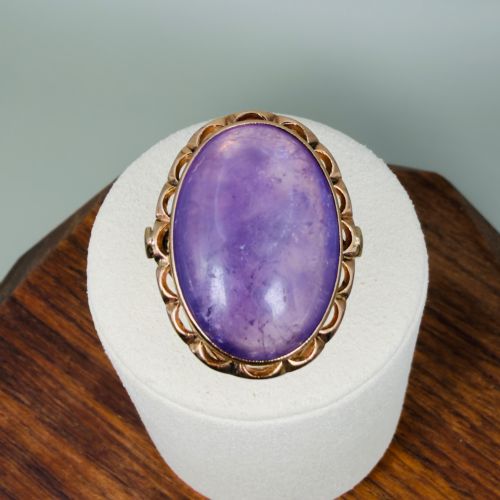
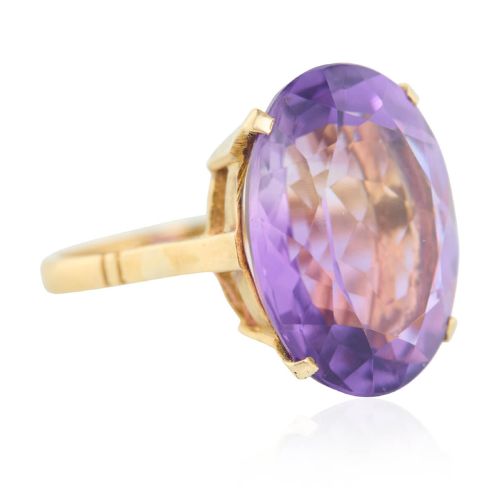
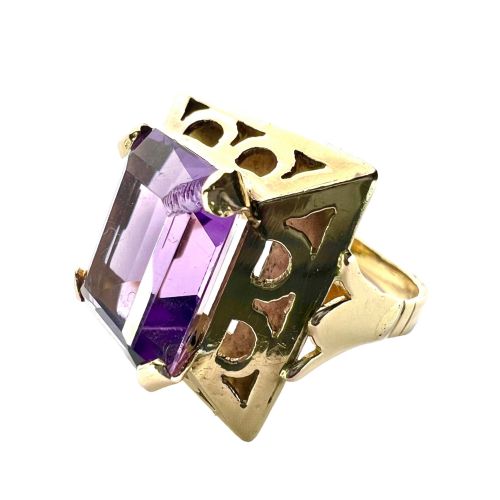
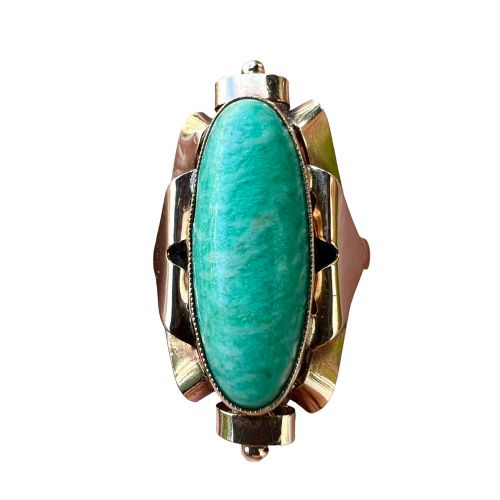


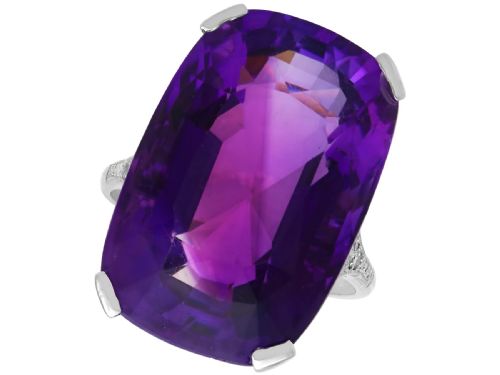
Large Gemstone Dress Ring
A large gemstone dress ring commands the hand with substantial carat weight and bold historical character.
Large Gemstone Dress Ring
A large gemstone dress ring is a statement piece designed to draw the eye through impressive central stones and substantial metalwork. You will find that pieces on this page span from the Victorian and Edwardian eras through Art Deco and Mid-Century designs.
The selections feature prominent cocktail rings and solitaire settings showcasing sizeable coloured stones. These range from deep amethysts and vivid aquamarines to rubies, sapphires, and opals set in gold or platinum.
Materials and construction
Metals span 9ct and 18ct gold, rose and yellow varieties, alongside durable platinum and white gold settings designed to secure heavy stones. Gemstones are cut in cushion, oval, and cabochon forms, often accented by small brilliant-cut diamonds.
Construction techniques involve secure prong, bezel, and cluster settings that anchor massive carat weights safely to the finger. Goldsmiths utilised heavy gauge metals to support stones scaling upwards of twenty carats without losing structural integrity.
Listings feature prominent amethysts, aquamarines, and sapphires set across platinum, white gold, and yellow gold.
Evaluating quality and presence
Quality rests in the natural clarity and saturated colour of the primary gemstone, alongside the proportion of the setting to the stone. Superior examples balance immense carat weight with meticulous claw work and balanced proportions that sit comfortably on the hand.
The integrity of the metal mounting dictates durability, particularly where heavy quartz, aquamarine, or amethyst are secured. Finer pieces demonstrate superior stone selection with minimal inclusions and thoughtful secondary diamond placement that enhances the central focal point.
The Large Gemstone Dress Ring Glossary
- Cabochon
- A gemstone shaped and polished with a smooth, rounded surface rather than faceted. This style highlights the inner depth of opaque or translucent stones like opal and jade.
- Cocktail Ring
- A large, prominent ring featuring substantial gemstones designed to draw attention. These pieces gained immense popularity during the mid-twentieth century.
- Cluster Ring
- A setting where a central gemstone is surrounded by a ring of smaller accent stones, typically diamonds. This arrangement maximises overall visual impact and perceived scale.
- Solitaire
- A ring featuring a single prominent gemstone without accompanying side stones. This minimalist approach allows the natural colour and scale of the central mineral to dominate.
Large Gemstone Dress Ring: Frequently Asked Questions
How do I wear a cocktail ring daily?
A large gemstone dress ring makes a powerful standalone statement on the hand, requiring minimal accompanying jewellery. Pairing it with simple bands allows the prominent central stone to remain the focal point.
Because these pieces feature substantial carat weights, consider reserving them for evening wear or special occasions to protect the setting from accidental knocks.
What periods do these rings represent?
The selection encompasses styles from the nineteenth century through the mid-century modern era, including Victorian, Edwardian, and Art Deco designs. Each period brings distinct metal colours and stone-cutting techniques to the genre.
Art Deco pieces favour geometric platinum arrangements, while mid-century examples lean towards massive aquamarines and amethysts set in heavy yellow gold.
How can I tell an Art Deco ring apart?
Art Deco rings feature sharp geometric lines, symmetrical patterns, and extensive use of platinum or white gold alongside calibré-cut accent stones. The focus centres on architectural structure and high contrast between the central gemstone and surrounding diamonds.
This aesthetic moves away from the softer, organic floral motifs typical of earlier Victorian and Edwardian craftsmanship.
Are these gemstones natural?
Many vintage and antique rings incorporate natural earth-mined stones such as Ceylon sapphires, aquamarines, and amethysts characteristic of their respective historical periods. Certification is often available to verify the origin and treatment status of significant minerals.
Examining the internal inclusions under magnification typically reveals the natural growth patterns unique to antique gems.