





Large Garden Jars
Large garden jars are heavy, weathered vessels that bring warmth to a courtyard, and the examples found here span French, Italian, and English traditions.
Large Garden Jars
Large garden jars encompass heavy terracotta vessels, olive jars, and amphorae used historically for storage and now placed in patios and gardens. When searching for large garden jars, buyers encounter rustic Mediterranean pots alongside Victorian English examples.
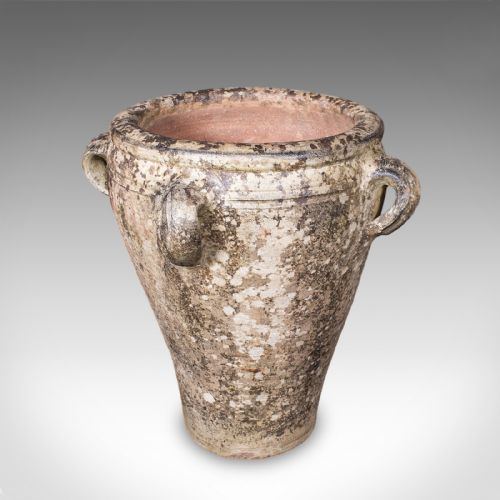
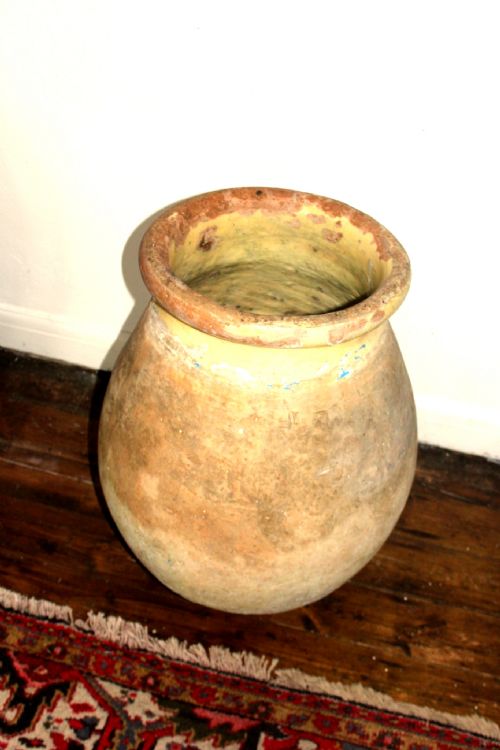
The selection ranges from French Biot jars with aged patina to Turkish olive vases and Italian planters. Many pieces show the marks of age, weather, and lime wash.
Forms include tall oil jars, amphorae, and wide planters designed to sit on stands or directly on the ground. These vessels serve as focal points in gardens, orangeries, and courtyards.
How they were made
These vessels are shaped from earthenware clay and terracotta, utilising traditional throwing and moulding techniques suited to heavy utilitarian ceramics. Makers built them to hold olive oil, grain, or water before their transition to garden ornaments.
Surfaces frequently show natural weathering, applied lime wash, and historical glazes that record decades of exposure to the elements. Some pieces incorporate wrought iron fittings or sit upon iron stands.
Large Garden Jars Retail Price Guide 2026
Typical asking prices for large garden jars among the pieces listed under this phrase on Sellingantiques today, from the lower quarter to the upper quarter. They describe what is for sale here now, not the wider market.
Listings feature items from the nineteenth century through the 1920s, utilising terracotta, earthenware clay, glass, and wrought iron.
What varies in quality
Quality rests in the depth of the patination, the integrity of the clay, and the balance of the proportions. Weathered surfaces that show genuine age outrank smooth or uniform finishes.
Provenance and origin dictate distinction, with documented French Biot jars and Italian terracotta carrying particular historical weight. The presence of original stands or matched pairs elevates the piece.
The Large Garden Jars Glossary
- Terracotta
- Fired clay containing iron oxide, which gives the material its characteristic reddish-orange colour. This porous ceramic is fired at moderate temperatures and remains a primary medium for garden vessels.
- Amphora
- A two-handled jar with a narrow neck used in antiquity for transport and storage. These vessels often feature pointed bases or sit within dedicated stands.
- Biot Jar
- A heavy earthenware storage jar originating from the French town of Biot. These pots are historically known for their olive oil storage and characteristic aged surfaces.
- Lime Wash
- A traditional coating made from slaked lime applied to exterior surfaces. It weathers over time, leaving a soft, chalky residue on older terracotta.
- Rhubarb Forcer
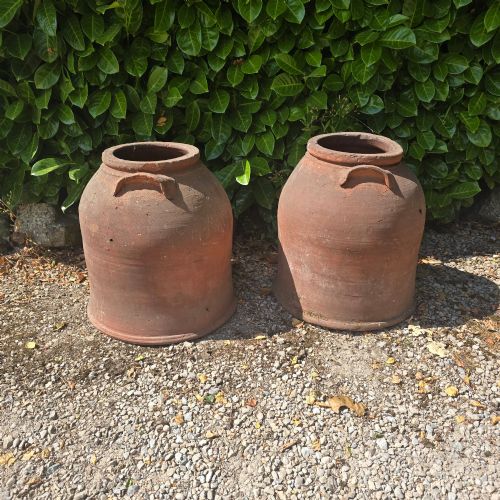
- A specialised ceramic vessel placed over rhubarb plants to encourage early growth by blocking out light. These tall pots feature removable lids.
Large Garden Jars: Frequently Asked Questions
Are these garden jars frost proof?
Many older terracotta jars are porous and can crack if water freezes inside them during freezing weather. Moving them indoors or protecting them during winter helps preserve the clay.
Listing details often indicate the specific firing density and material resilience of each individual pot.
How do I clean an old terracotta jar?
Gentle brushing with water removes loose dirt while preserving the accumulated patina and lime wash. Avoid harsh chemical cleaners that strip away historical weathering.
Allowing the natural surface marks to remain maintains the character gathered over the decades.
Can these jars be left outside year round?
Most of these vessels suit outdoor placement in patios, gardens, and orangeries. Elevating them slightly off the ground prevents moisture from rising through the base.
Severe winter conditions require careful monitoring of heavy earthenware and terracotta pieces.
What is an olive jar?
Olive jars are deep, heavy vessels historically utilised around the Mediterranean for storing and transporting oil. Their thick walls helped maintain stable internal temperatures.
Today they function as sculptural garden ornaments and large planters.