


Large Fusee Wall Clock
A large fusee wall clock brings precision timekeeping and architectural presence to a room, driven by a dependable fusee movement.
Large Fusee Wall Clock
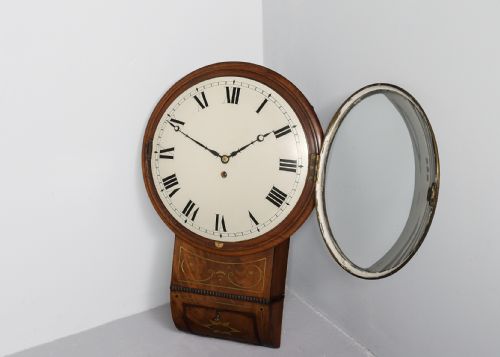
A large fusee wall clock is a striking horological piece designed to hang prominently in public spaces, commercial boardrooms, or grand domestic hallways. When searching for a large fusee wall clock, buyers encounter robust nineteenth-century Victorian examples alongside early twentieth-century Edwardian pieces.
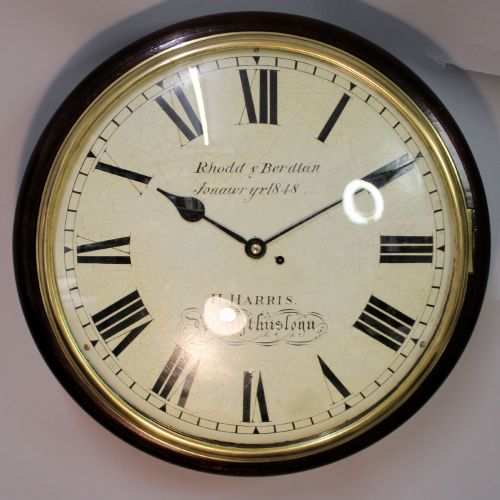
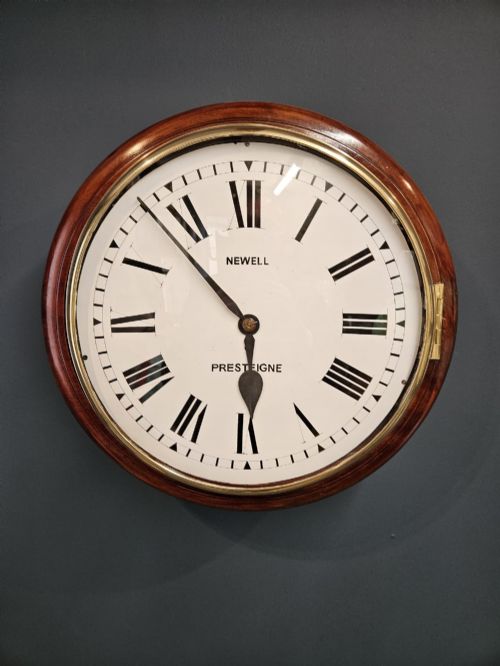
The form typically presents a clear painted dial protected by heavy glass within a timber surround, sometimes featuring an extended drop case below. Most pieces originating from this selection display solid proportions designed to be read easily from across a large room.
How they were made
Maker workshops built these sturdy timber cases predominantly from mahogany, rosewood, or other dense hardwoods, often incorporating brass bezels and inlaid details. The signature mechanical feature is the fusee, a conical pulley paired with a chain or cord that equalises the mainspring's pull as it unwinds.
Dials received careful hand-painted numerals on steel or wood backings, sealed behind glass and fitted with dark metallic hands. Cabinetmakers shaped the surrounds to house the deep movements securely while presenting a clean architectural face to the wall.
Recorded dial materials across the archive include traditional painted metal alongside unusual wooden faces.
What varies in quality
Quality rests upon the crispness of the timber case carving, the structural integrity of the dial backing, and the refined execution of the brass movement inside. Maker signatures inscribed on the dial or movement plates elevate certain pieces through documented provenance.
The clarity of the painted numerals and the preservation of original bezels and glass distinguish standard utilitarian timepieces from exceptional boardroom or station instruments.
Henry Harris·John Walker·Camerer Cuss·Barrauds·Gillett and Johnston·Anthony Furnace·Grimshaw and Baxter·Toleman of Carnarvon
The Large Fusee Wall Clock Glossary
- Fusee
- A conical pulley connected to the mainspring by a chain or cord, designed to maintain even power to the gear train as the spring runs down. This mechanism ensures consistent timekeeping across the duration of the wind.
- Drop dial
- A clock case featuring a circular dial at the top and an extended wooden trunk below, sometimes used to house a pendulum or weights. The shape became a staple of Victorian railway and office timepieces.
- Dial
- The visible face of the clock where the hours and minutes are marked. These surfaces were frequently painted on metal or wood and signed by the maker.
- Bezel
- The brass or wooden ring that holds the glass door protecting the dial. It usually hinges open to allow hand adjustments.
Large Fusee Wall Clock: Frequently Asked Questions
How do I wind a large fusee wall clock?
Winding requires inserting a dedicated key into the dial aperture and turning it steadily clockwise until the mechanism resists further motion. Care must be taken not to overwind the chain or spring.
Most eight-day movements require this attention roughly once a week to maintain accurate timekeeping without putting undue strain on the historic metal components.
Where should I hang a heavy wall clock?
These heavy timepieces demand secure fixing directly into solid masonry or substantial internal wall studs using appropriate load-bearing fixings. Hanging them from standard plasterboard alone risks structural failure.
The location should also remain free from excessive vibration and dampness to protect the antique wood case and delicate internal brass gear train.
How do I tell a Victorian clock from an Edwardian one?
Victorian examples tend to display heavier mahogany cases, prominent brass bezels, and traditional dial layouts associated with mid-nineteenth-century offices and railway stations. Edwardian pieces often present slightly lighter proportions while maintaining the robust fusee mechanism.
Examining the timber finish, dial lettering style, and any recorded maker details helps clarify the exact decade of manufacture.
Did these clocks hang in homes or public buildings?
While large models served predominantly in institutional settings such as railway stations, boardrooms, and municipal offices, grand domestic hallways also accommodated them. Their clear dials ensured accurate time was visible to large groups.
Commercial premises required dependable timekeeping, which explains why many surviving examples bear council or station provenance.