




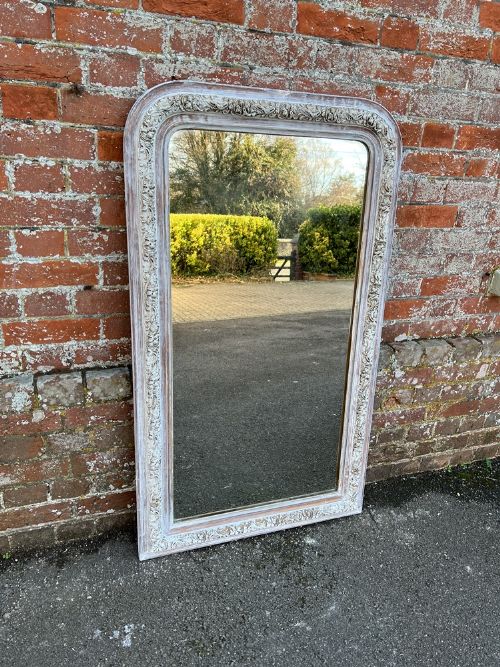
Large French Leaning Mirror
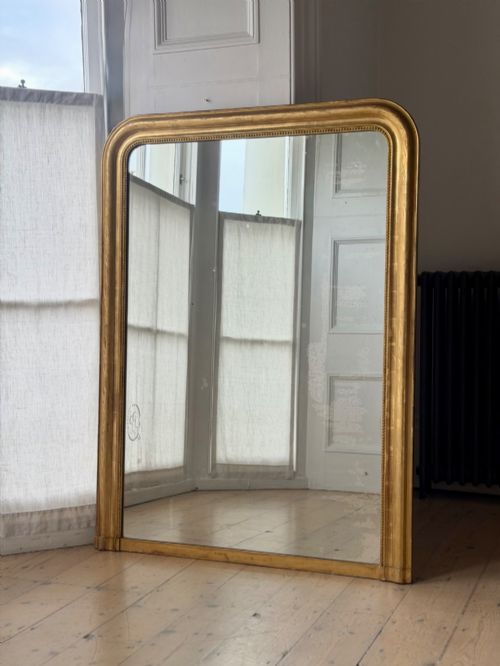
These large french leaning mirror examples bring height and presence to a room, offering grand proportions designed to lean against a wall.
Large French Leaning Mirror
When searching for a large french leaning mirror, you are looking at substantial wall and floor dressing glasses dating predominantly from the nineteenth century, including the Louis Philippe period, alongside some early twentieth-century examples. These tall pieces often measure around six feet in height, designed specifically to lean against a wall or function as overmantle and pier mirrors.
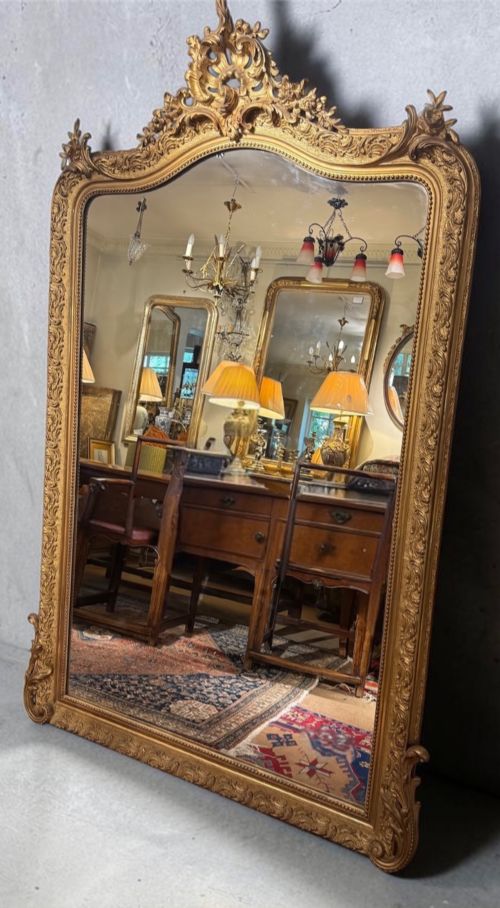
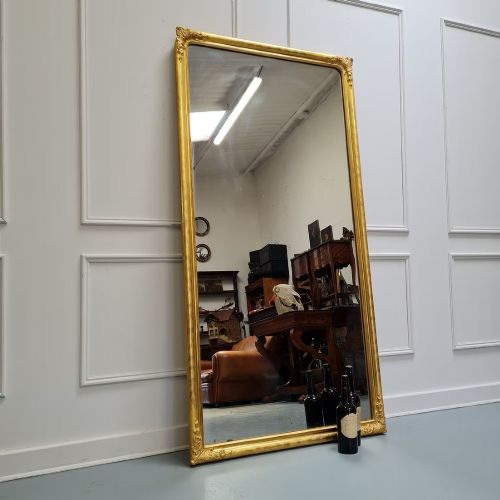
You are most likely to meet heavily decorated giltwood or painted gesso frames featuring arched or shaped tops, as well as simpler rectangular bistro designs. The selection draws on French provincial, Rococo revival, and Second Empire styles, alongside nineteenth-century English interpretations of the form.
The objects serve primarily as tall dressing or full-height wall mirrors, frequently utilising pine as a base timber for carved wood elements. Their scale commands attention in interiors, combining practical reflection with ornate decorative framing.
What varies in quality
The depth and execution of the carved wood and gesso ornamentation separate standard decorative frames from pieces with superior sculptural definition. Highly ornate designs require meticulous hand-carving and careful application of leaf or paint to maintain crisp botanical and scroll motifs across a tall surface.
The integrity of the original gilt or painted surface, alongside the preservation of early glass, dictates the character of each piece. Variations appear in how cleanly the arched and shaped wooden tops join and how well the primary pine structure supports the substantial weight of the glass.
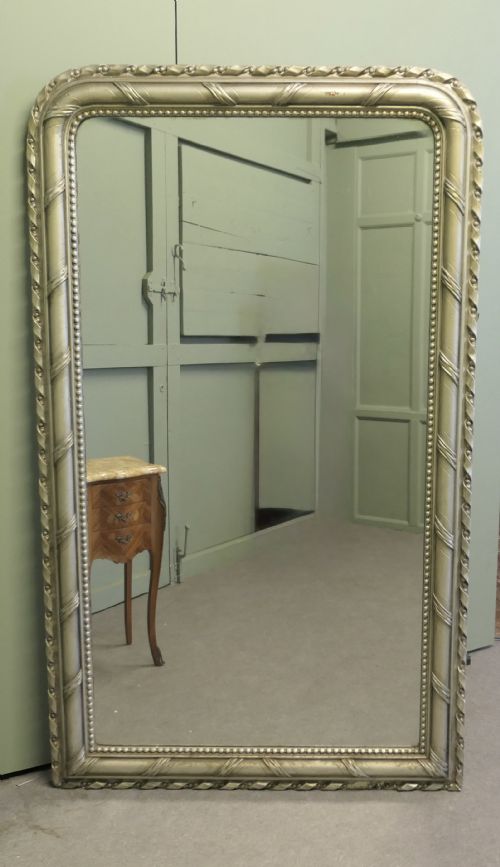
Listings feature pieces spanning from 1860 through the early twentieth century, utilising materials such as gesso, giltwood, and silver leaf.
The Large French Leaning Mirror Glossary
- Gesso
- A plaster-like mixture applied to wood frames to create a smooth surface for gilding or painting. It allows carvers to achieve fine decorative relief.
- Giltwood
- Timber coated with a thin layer of gold leaf or gold paint. This finish creates a luminous, reflective frame surface.
- Louis Philippe
- A mid-nineteenth-century French style characterised by restrained classical proportions and often featuring gently rounded upper corners. It bridges ornate revival styles and simpler domestic furniture.
- Overmantle
- A large mirror designed to sit directly upon a mantelpiece or chimney breast. These pieces often feature arched tops to fit architectural spaces.
- Pier glass
- A tall, narrow mirror traditionally hung on the wall space between two windows. They reflect additional light into period interiors.
Large French Leaning Mirror: Frequently Asked Questions
How do I safely lean a heavy mirror?
These tall frames require careful positioning against a stable wall, often secured with discreet fixings at the top to prevent tipping. The substantial weight of the wood and glass demands solid structural support.
Ensuring the floor surface is level helps distribute the downward load evenly across the frame base and protective pads.
What is a Louis Philippe mirror?
A Louis Philippe mirror is a nineteenth-century French design known for cleaner lines and a slightly rounded upper arch compared to heavily ornate Rococo pieces. They blend well into modern and traditional interiors alike.
These frames often feature subtle decorative motifs rather than dense carving, focusing instead on elegant proportions.
Can these mirrors be hung on a wall?
While many examples are designed as leaning floor mirrors, others function as wall-hung overmantle or dressing mirrors. Their considerable height and weight require professional installation and appropriate wall fixings.
Checking the original backboards and hanging points helps determine whether wall mounting is suitable for a specific piece.
How do I identify a nineteenth-century frame?
Nineteenth-century pieces typically show hand-carved wooden construction combined with gesso ornament over a pine base. Examination of the timber and the silvering on the glass reveals age-related characteristics.
Original gilt and painted surfaces display natural wear patterns that distinguish period manufacturing from later reproductions.
What is the difference between silver-gilt and giltwood?
Giltwood uses gold leaf applied to the prepared frame, producing a warm golden tone. Silver-gilt incorporates silver leaf, sometimes toned down to achieve a softer metallic lustre.
Both finishes interact differently with light and age with distinct patinas depending on the underlying gesso and wood.