


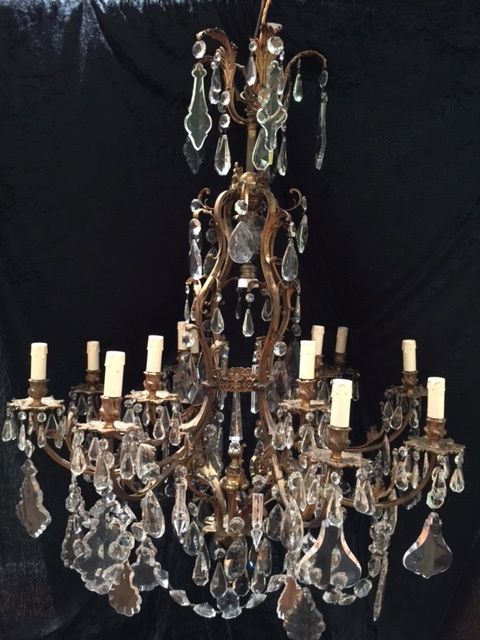
Large French Cage Chandelier
These large french cage chandelier examples bring grand illumination and distinctive metalwork to a high ceiling.
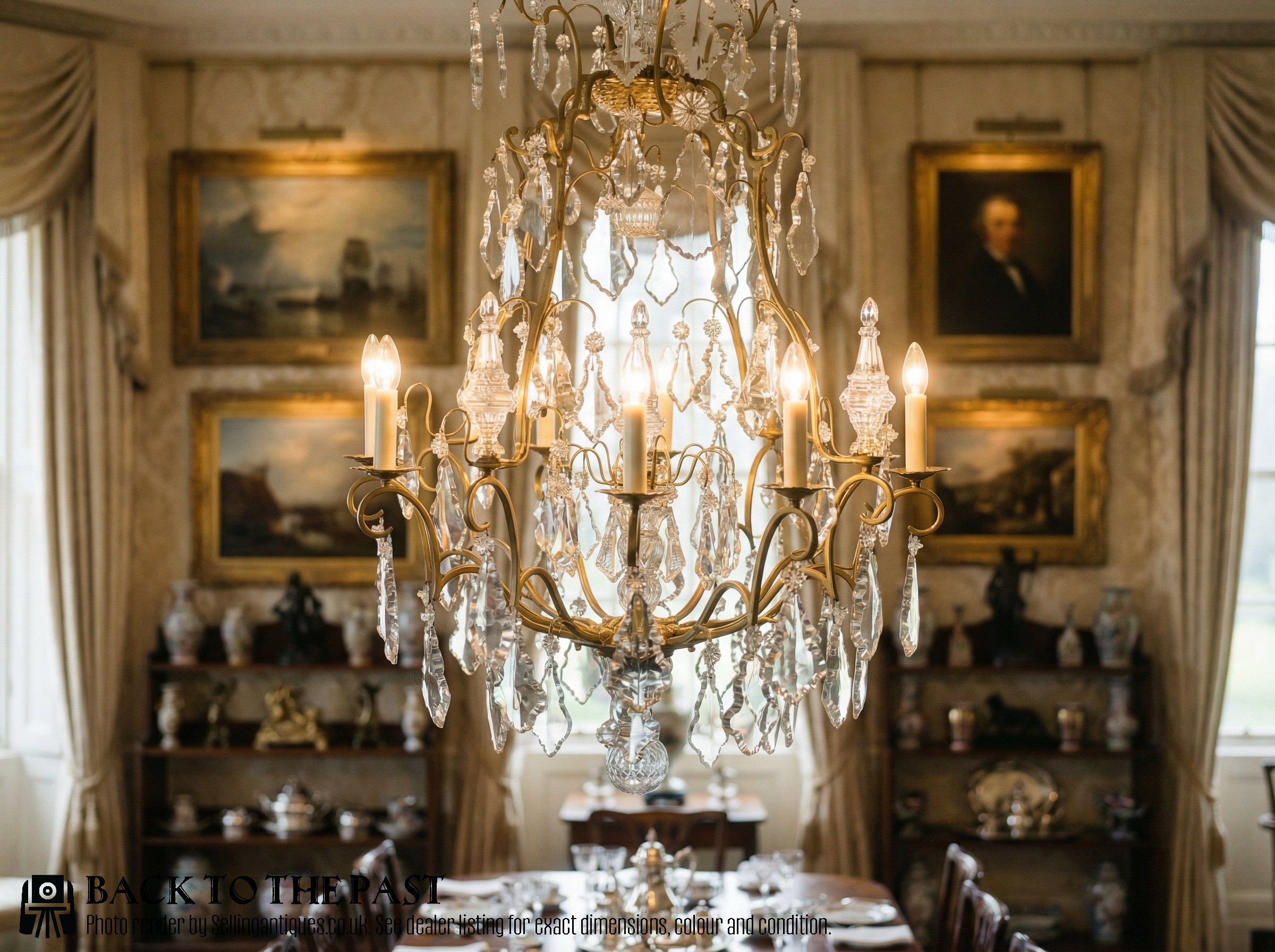
Large French Cage Chandelier
A large french cage chandelier brings vertical presence and intricate framework to a high interior space. When you search for this phrase, you meet multi-tiered lighting structures originating from the nineteenth and early twentieth centuries. The form typically incorporates an open metal skeleton draped with glass or crystal drops.
The selections on this page span the late nineteenth century through to the nineteen-twenties, incorporating Edwardian interpretations alongside continental iterations. Brass, gilt metal, and silvered bronze form the primary structural frameworks seen in these listings. Many pieces utilise multiple candle arms arranged across one or two tiers inside the cage.
While French chateau and Rococo styles dominate the record, Florentine and Italian baroque variations also appear among the offerings. These pieces function as dramatic overhead focal points, originally designed to disperse candlelight and later adapted for electrical wiring.
How they were made
The construction relies on a skeletal armature of brass, iron, or gilt metal shaped into an open cage framework. Artisans assembled these frames to support numerous light arms and extensive draperies of glass or crystal elements.
Cut glass and bevelled glass components were hand-wired to the metal structure to maximise light refraction from internal bulbs or candles. Gilt and silvered finishes were applied to the bronze and brass foundations to enhance the luminous quality of the metal.
Birdcage designs cleverly turn the idea of confinement into a glittering cage of light.
What varies in quality
The quality of a large french cage chandelier rests on the complexity of its metal armature and the density of its crystal drops. Heavier cast bronze or brass frameworks demonstrate superior durability compared to lighter pressed metal alternatives.
The precision of the glass cutting and the completeness of the original crystal swags distinguish standard production from exceptional examples. Furthermore, the finesse of the gilding or silvering on the bronze elements dictates the visual depth of the piece.
The Large French Cage Chandelier Glossary
- Cage chandelier
- A lighting fixture featuring a central metal skeleton that encloses or supports internal lights and glass drops. This open framework creates a volumetric silhouette suspended from the ceiling.
- Crystal drop
- A small piece of shaped and faceted glass hung from the metal armature to reflect light. These elements vary from simple tear shapes to complex prismatic beads.
- Gilt metal
- Base metal treated with a thin layer of gold leaf or gilt paint to simulate solid gold. This finish provides a warm, reflective surface suited to formal reception rooms.
- Bevelled glass
- Glass panes featuring angled edges that catch and refract light differently than flat panes. They appear frequently in lantern-style variants of the cage form.
- Arm
- The individual branch extending from the central body to hold a light source. Multiple tiers often organise these arms into structured radial patterns.
Large French Cage Chandelier: Frequently Asked Questions
How do I clean a cage chandelier?
Maintenance requires gentle dusting of the metal framework using a soft cloth, alongside careful wiping of individual crystal drops.
Many collectors remove detachable glass elements for cleaning in warm soapy water before reattaching them to the cleaned frame.
Are these chandeliers wired for modern electricity?
Most surviving examples undergo rewiring to meet contemporary electrical standards while preserving their historical framework.
Professional installation is recommended due to the substantial weight of the brass, bronze, and crystal components.
How do I determine the period of a chandelier?
Dating relies on examining the construction methods of the metal armature, the profile of the casting, and the style of the glass drops. Edwardian and early twentieth-century examples often display lighter brass framing compared to nineteenth-century bronze counterparts.
What ceiling height do I need?
These large fixtures require substantial vertical clearance to hang properly without dominating the circulation space of a room.
They function best in properties with high ceilings, typically suspended over dining tables or in grand hallway settings.