




Large Floral Woven Carpet
A large floral woven carpet anchors a room with scale, pattern and history, bringing centuries of regional weaving traditions straight to your floor.
Large Floral Woven Carpet
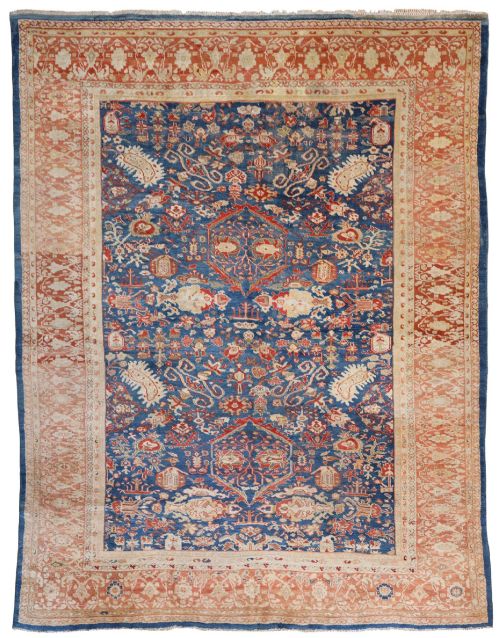
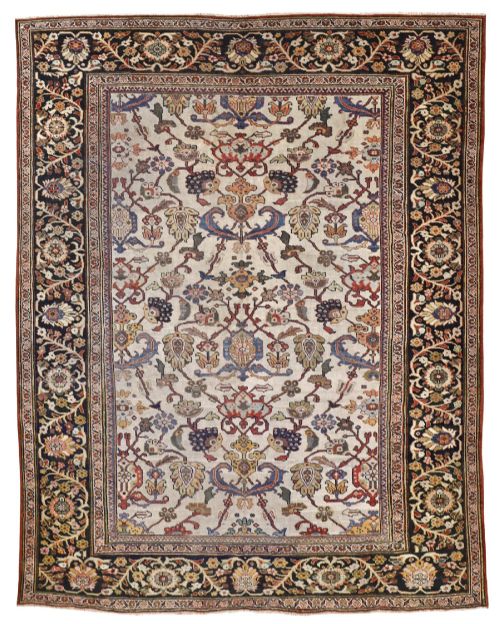
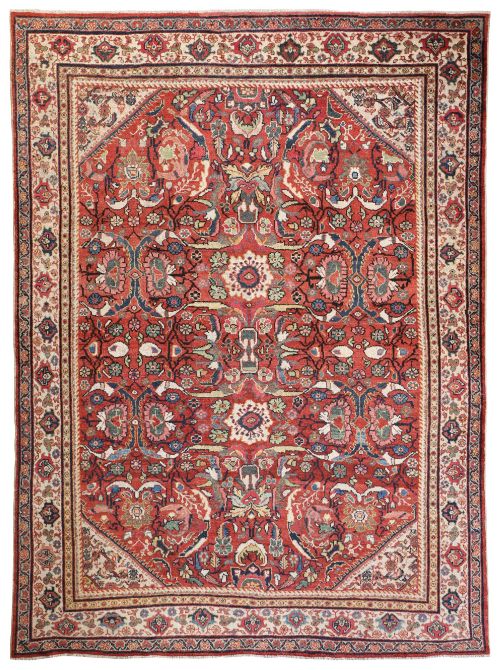
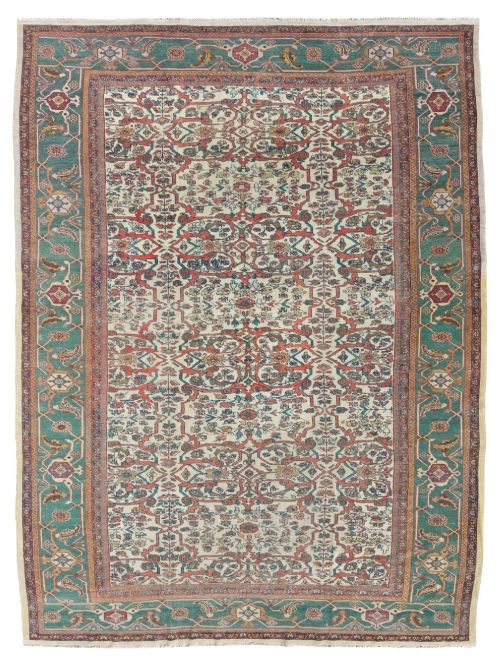
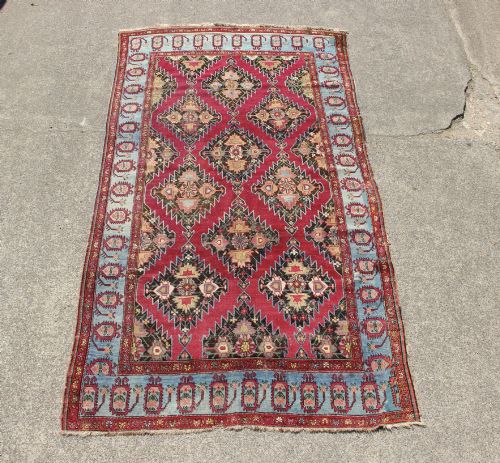
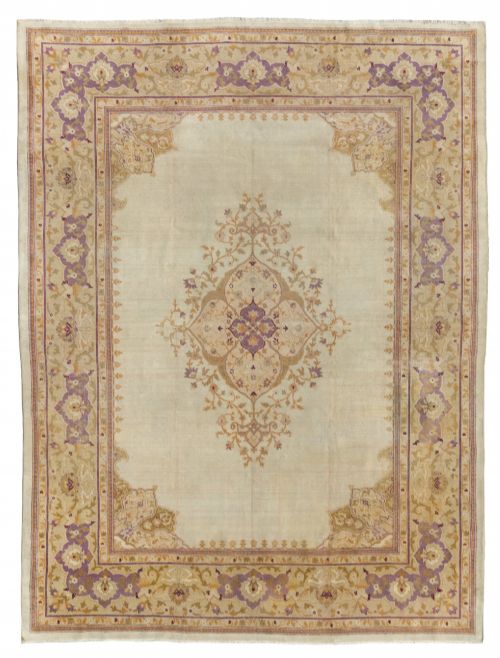
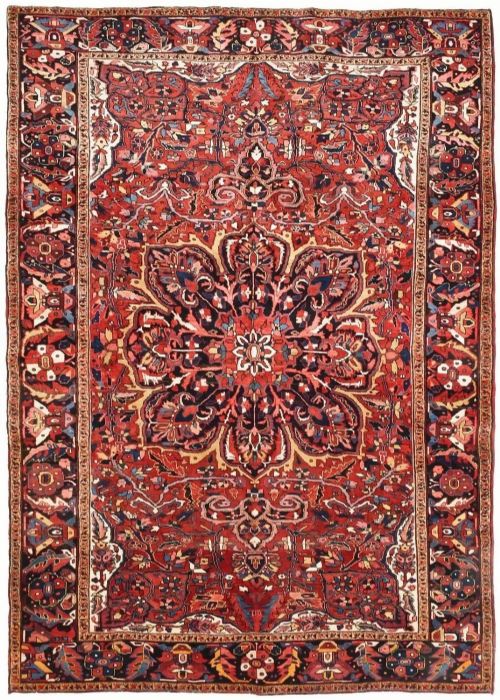
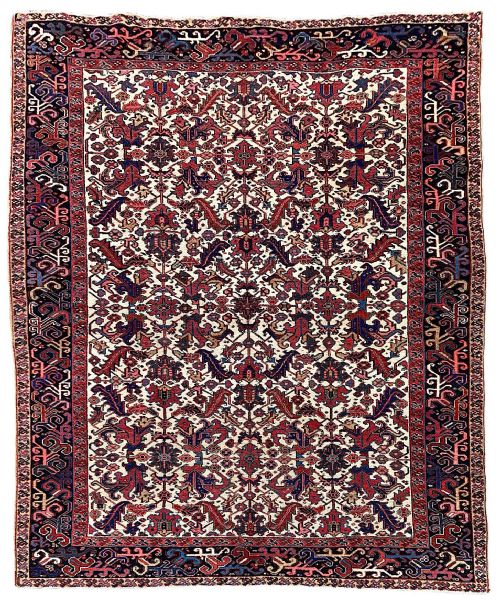
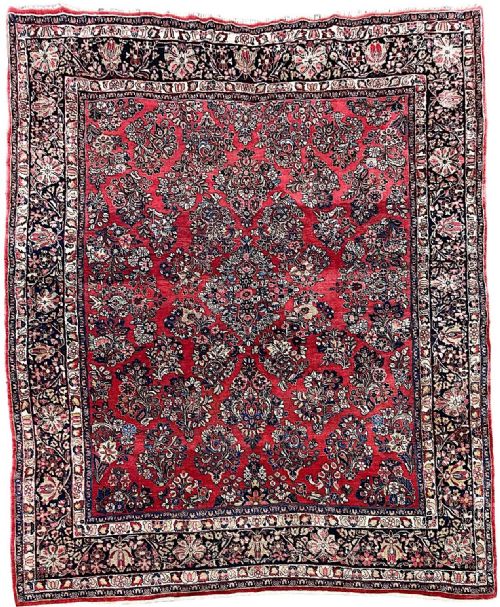
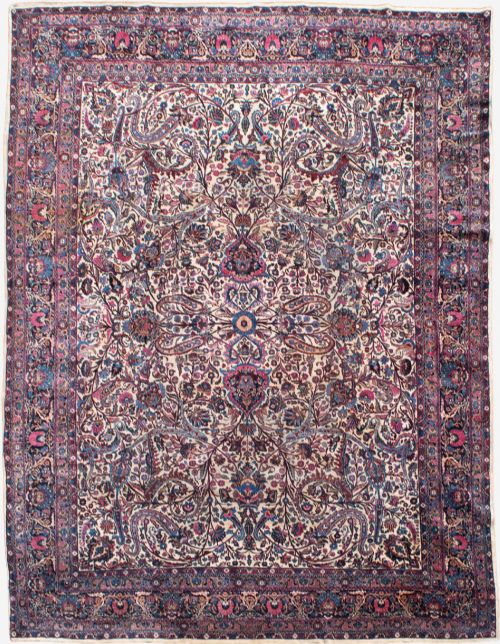
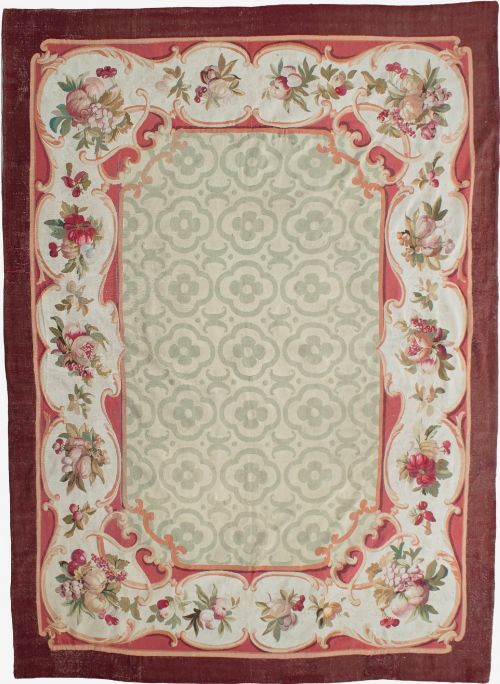
A large floral woven carpet represents grand-scale floor coverings produced across Persia, Europe and the Caucasus during the nineteenth and early twentieth centuries. These floor coverings span specific regional weaving styles including Mahal, Sultanabad, Tabriz, Heriz, Kirman and Bessarabian kilims, dating from the mid-nineteenth century up to the 1930s.
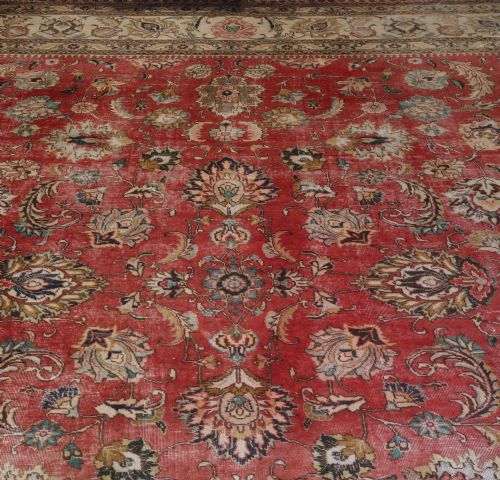
The most common format encountered on this page is the room-sized antique Persian carpet, dominated by traditional floral motifs, medallion layouts and botanical border designs. Alongside Persian works, French Aubusson and Ukrainian flatweaves appear, offering alternative floral interpretations executed in wool, cotton and silk.
How they were made
Makers constructed these pieces using natural fibres, predominantly relying on wool for the pile, supported by cotton foundations in many Persian and Anatolian works. Silk also appears in specific finer examples, while flatwoven kilims from Bessarabia and Ukraine utilise wool and cotton tapestry weaving techniques without a raised pile.
Dyers employed natural colourants derived from plants and minerals to achieve the rich terracotta, ivory, red and blue grounds seen across the inventory. Hand-knotting or flatweaving methods demanded months or years of skilled labour by traditional weavers working on vertical or horizontal looms.
Large Floral Woven Carpet Retail Price Guide 2026
Typical asking prices for large floral woven carpet among the pieces listed under this phrase on Sellingantiques today, from the lower quarter to the upper quarter. They describe what is for sale here now, not the wider market.
Country house rugs often bear accidental stray tufts where a weaver changed wool dye lots mid-afternoon.
What varies in quality
Quality rests primarily on the fineness of the knot density and the precision with which the floral and geometric cartoons were translated onto the loom. Tighter knots and balanced compositions deliver greater durability and visual depth, distinguishing master workshops from standard village production.
The condition of the wool pile and the integrity of the cotton or wool foundation dictate the structural soundness of each textile. Examples retaining their original border proportions and saturated natural dye palettes command greater interest than heavily restored or faded specimens.
Benlian
The Large Floral Woven Carpet Glossary
- Pile
- The cut loop surface of a carpet formed by individual knots tied to the warp threads. This soft upper layer cushions the tread and holds the intricate pattern.
- Warp
- The stationary vertical threads stretched onto the loom before weaving begins. Weavers tie the knots directly around these foundational strands.
- Weft
- The horizontal threads passed alternately over and under the warp threads to bind the knots in place. Proper tension here ensures the carpet maintains its rectangular geometry.
- Kilim
- A flatwoven textile made without a pile by tightly interweaving warp and weft strands. These pieces offer lightweight versatility and graphic floral or geometric designs.
- Medallion
- A large central ornamental motif set in the middle of the carpet field. This focal point often dictates the symmetry of the surrounding floral sprays and vines.
Large Floral Woven Carpet: Frequently Asked Questions
How do I clean a large antique carpet?
Professional specialist cleaning is essential for antique textiles to protect delicate wool, cotton and silk fibres from harsh chemicals and shrinkage. Regular gentle vacuuming without a rotating power brush helps remove surface grit.
Avoid DIY steam cleaning or harsh detergents, which can destabilise natural dyes and rot the foundation. Consult a conservator if the carpet sustains heavy foot traffic or shows signs of wear.
Where should I place a large floral carpet?
These expansive floor coverings suit principal reception spaces, dining rooms or studies where their scale and botanical patterns can anchor the furniture layout. Allowing a border of exposed wooden flooring around the edges helps frame the textile.
Keep such pieces away from direct, harsh sunlight to prevent fading of the natural red, blue and ivory dyes over time. Using an appropriate underlay prevents slipping and cushions the weave against hard subfloors.
How do I tell different regional styles apart?
Regional attribution relies on examining the specific drawing style, palette and structural materials. For instance, Heriz carpets often feature bold geometric medallions, whereas Kirman and Tabriz works showcase refined, curvilinear floral sprays.
Examining the knotting density and the choice of foundation yarns provides further clues to whether a piece originated in Northwest Persia, the Caucasus or Europe.
What is the difference between a carpet and a kilim?
Carpets feature a thick, tactile pile created by thousands of individual hand-tied knots clipped to an even height. Kilims are flatwoven without a pile, resulting in a lighter, tapestry-like fabric with smooth surfaces on both sides.
While pile carpets provide heavy floor insulation and plush comfort, kilims offer crisp graphic clarity and versatile layering options for modern interiors.