



Large Dog Figurines
These large dog figurines bring substantial presence to a room, ranging from Staffordshire pairs to French bronzes and continental ceramics.
Large Dog Figurines
When you search for large dog figurines, you encounter substantial animal sculptures spanning the nineteenth and early twentieth centuries. These pieces cross several distinct aesthetic movements, from Victorian Staffordshire pottery to Art Deco metalwork and continental ceramics.
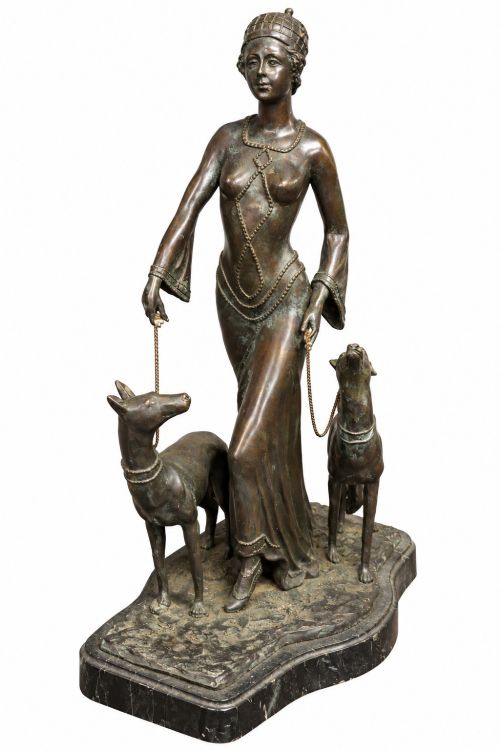
The version you are most likely to meet on this page is the Staffordshire spaniel or greyhound, alongside French animalier bronzes and Royal Dux groups. Such works served primarily as mantelpiece ornaments or floor-standing decorations in period homes.
How they were made
Makers shaped these large dog figurines using earthenware, porcelain, terracotta, and cast metals including bronze and spelter. Ceramic pieces relied on moulded clay finished with hand-painted enamel colours and glossy glazes.
Large Dog Figurines Retail Price Guide 2026
Typical asking prices for large dog figurines among the pieces listed under this phrase on Sellingantiques today, from the lower quarter to the upper quarter. They describe what is for sale here now, not the wider market.
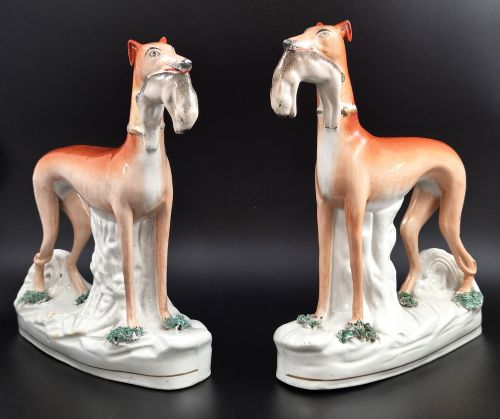
Several Victorian greyhounds proudly guard their captured hares, while Staffordshire spaniels peer out with attentive glass eyes.
What varies in quality
The sophistication of the glaze or patina also dictates the upper tier of the range. Early Staffordshire and continental foundry work achieves a depth of colour and finish that lesser commercial pottery simply bypasses.
Georges Gori·C Masson·Masaaki·Christophe Fratin·Bernard Bloch
The Large Dog Figurines Glossary
- Staffordshire figures
- Pottery figures produced in the Staffordshire potteries of England, commonly depicting animals and human subjects for domestic display. These typically feature hand-painted details over an earthenware body.
- Animalier
- A nineteenth-century artistic movement dedicated to the realistic portrayal of animals, particularly in sculpture. Practitioners focused on capturing authentic movement and anatomical precision.
- Spelter
- An alloy of zinc and lead used as a cheaper alternative to bronze in decorative metalwork. It was frequently painted to simulate bronze during the Art Deco period.
- Okimono
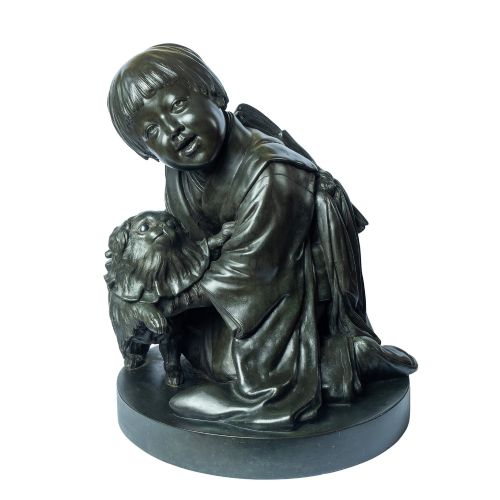
- A Japanese decorative object designed for display on a shelf or in a tokonoma alcove. These sculptures often represent animals or figures rendered in bronze or ivory.
Large Dog Figurines: Frequently Asked Questions
Are these figures solid or hollow?
Ceramic and terracotta versions are generally hollow-cast to facilitate even drying and firing in the kiln.
Metal sculptures vary, with some cast hollow to manage weight and others utilising solid bronze for smaller components.
How do I identify a Victorian Staffordshire dog?
Staffordshire pottery dogs often feature moulded clay bodies with hand-painted facial expressions and distinct glazed markings.
They commonly appear as seated spaniels or greyhounds with hares, dating from the nineteenth century.
What is an animalier bronze?
An animalier bronze is a nineteenth-century sculpture focused specifically on the realistic depiction of animals in various poses.
These pieces were cast in foundries by specialised sculptors capturing accurate anatomy and movement.