



Large Delft Dishes
These large delft dishes are tin-glazed earthenware chargers and platters that bring bold seventeenth and eighteenth-century ceramic artistry straight to your wall or table.
Large Delft Dishes
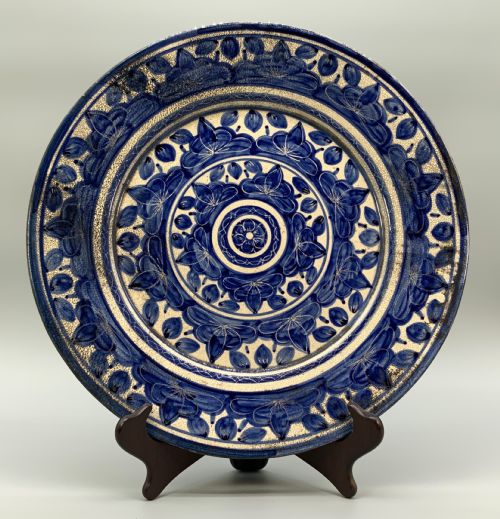
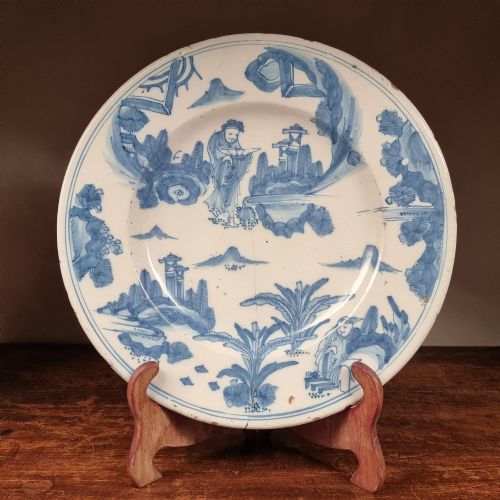
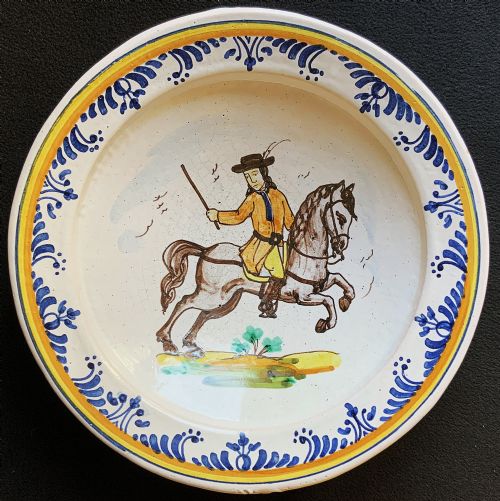
When you search for large delft dishes, you encounter substantial chargers and wall plates originating from seventeenth and eighteenth-century traditions. These forms primarily include chargers and decorative plates created across English, Dutch, and Spanish workshops.
The most common examples you meet on this page are eighteenth-century Dutch and Spanish chargers featuring traditional blue and white painting alongside richer polychrome glazes. Forms range from deep bowls to broad decorative plates and wall plaques.
Moorish style interpretations and seventeenth-century Dutch Kraak plates also appear among the selections, demonstrating the broad geographical spread of tin-glazed earthenware production. Each piece displays the generous proportions and decorative presence typical of large-scale historical chargers.
Materials and construction
Potters formed these pieces using basic earthenware covered in a specialised tin glaze that provided an opaque white surface for subsequent painting. Artisans then applied cobalt pigment and cobalt oxide directly onto the unfired glaze.
Colour decoration often involved geometric floral motifs, blue and white pigments, or polychrome palettes depending on whether the workshop followed English, Spanish, or Dutch conventions. Firing fixed the metallic oxides into the glossy ceramic surface.
Listings feature tin-glazed earthenware spanning from the seventeenth century through to 1940, utilising cobalt pigment, ceramic bodies, and faience glazes.
Quality and execution
The distinction between standard domestic production and superior execution lies in the sharpness of the painted brushwork and the stability of the tin glaze. Tighter control over the cobalt pigment application results in crisper geometric floral motifs and clearer linework.
Depth of colour and complexity in polychrome palettes separate simpler utility wares from ambitious decorative chargers. Spanish and Dutch pieces demonstrate varying degrees of ambition in their painted designs, from restrained blue and white to elaborate multi-coloured compositions.
The Large Delft Dishes Glossary
- Tin-Glazed Earthenware
- Earthenware pottery covered with a lead glaze made opaque by the addition of tin oxide. This creates the characteristic white background required for painted decoration.
- Charger
- A large decorative plate or platter typically displayed on a wall or sideboard rather than used for serving food. These items formed central display pieces in historical interiors.
- Polychrome
- Decoration employing several colours rather than a single hue like blue and white. In these collections, it refers to multi-coloured painted designs.
- Faience Glaze
- European tin-glazed earthenware akin to delftware, often associated with continental production centres. It provides the smooth, glossy surface essential for painted pottery.
Large Delft Dishes: Frequently Asked Questions
How were large delft dishes used?
These large chargers and decorative plates were primarily intended for display on sideboards, walls, or dresser shelves rather than everyday dining.
Their substantial size and painted designs made them status symbols in wealthy seventeenth and eighteenth-century homes.
How do I care for tin-glazed earthenware?
Keep these historic ceramics away from direct sunlight, moisture, and sudden temperature changes to protect the fragile earthenware body and tin glaze.
Dust them gently with a dry, soft cloth and avoid washing them in water.
What is the difference between Dutch and Spanish delft?
Dutch examples often lean towards classic blue and white schemes or distinct geometric floral patterns, while Spanish production frequently incorporates polychrome palettes and Moorish influences.
Both traditions rely on the same foundational tin-glazed earthenware technique.
How can I tell the period of a charger?
Dating relies on stylistic clues such as the painting palette, the specific floral or geometric motifs, and the regional traditions of the workshop.
Seventeenth-century pieces often feature Kraak influences, while eighteenth-century works showcase varied Dutch and Spanish polychrome styles.