



Large Delft Dish
A large delft dish brings bold hand-painted tin-glazed earthenware into a room, offering centuries of decorative presence.
Large Delft Dish
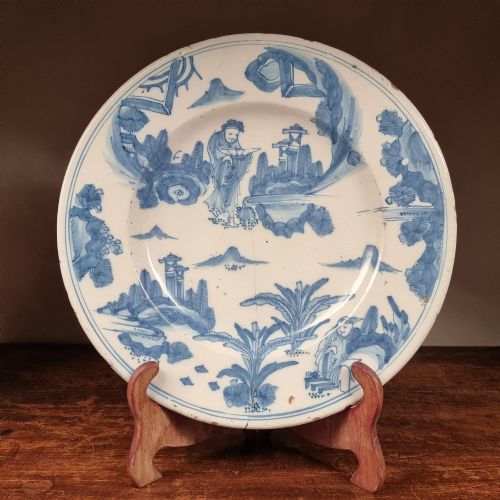
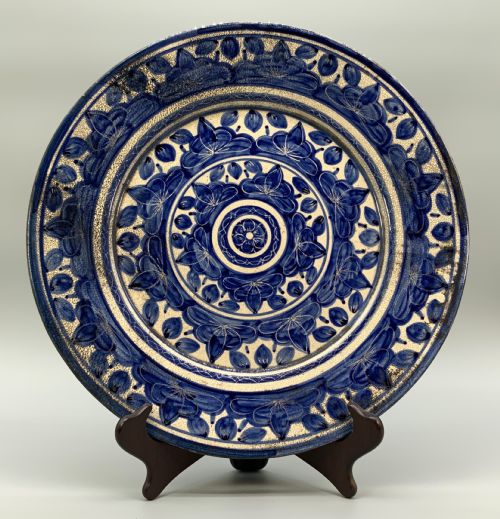
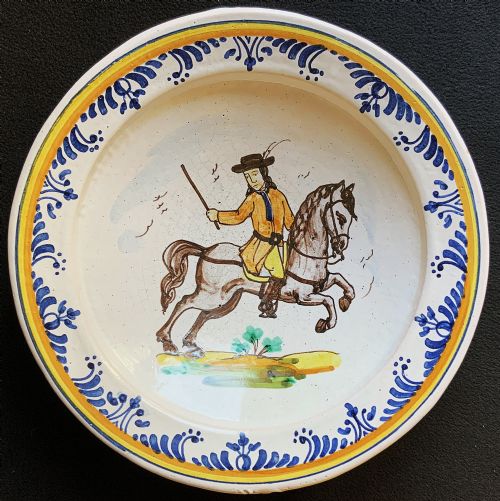
When you search for a large delft dish, you encounter expansive charger plates, wall plates, and platters created for display rather than daily dining. These pieces arrive from various European centres spanning the seventeenth and eighteenth centuries, alongside twentieth-century interpretations.
The versions you meet most frequently on this page date from the eighteenth century, often rendered in Dutch blue and white or vibrant polychrome palettes. Forms range from deep bowls to broad charger plates featuring geometric, floral, and Kraak-inspired motifs.
Origin points stretch across English, Dutch, and Spanish kilns, with Moorish styling also appearing in the record. Each piece demonstrates the generous scale required to serve as a principal wall decoration or sideboard centrepiece in historic interiors.
How they were made
Potters shaped earthenware bodies on the wheel or pressed them into moulds before applying an opaque tin glaze that provided a smooth, milky white canvas for the artist. Cobalt pigment and metallic oxides formed the basis for the hand-painted designs brushed directly onto the unfired glaze.
Firing in traditional kilns fixed the pigments into the surface, yielding the characteristic gloss and slight surface undulations typical of early ceramic production. Artisans balanced rapid brushwork with careful control of cobalt oxide and polychrome pigments to achieve distinct botanical and geometric scenes.
Listings span seventeenth-century Dutch pieces to mid-twentieth-century examples, utilising tin-glazed earthenware, cobalt pigment, and faience glaze across charger plates and bowls.
What varies in quality
The distinction between standard domestic wares and superior examples lies in the confidence of the brushwork and the complexity of the painted composition. Crisp control over cobalt pigment and harmonious distribution of polychrome glazes separate master potters from routine production workshops.
Depth of glaze coverage and the crispness of the earthenware body further define the upper tier of these pieces. Survival of the original surface finish without extensive re-glazing preserves the authentic visual impact intended by the maker.
The Large Delft Dish Glossary
- Charger
- A large broad plate, typically measuring over twelve inches across, intended for decorative display on walls or sideboards rather than table service. These substantial plates anchor historical room displays.
- Tin-Glaze
- A pottery glaze made opaque by the addition of tin oxide, creating a white surface suitable for painted decoration. This technique underpins the entire delft tradition.
- Kraak
- A style of Chinese porcelain decoration featuring panelled borders and central motifs of birds, flowers, or landscapes, which European delft makers enthusiastically copied. This aesthetic defines several notable seventeenth-century plates.
- Polychrome
- Decoration employing multiple colours rather than a single pigment like blue and white. These palettes often incorporate rich orange, yellow, and green tones.
- Faience
- European tin-glazed earthenware produced in imitation of imported porcelain and majolica. The term links continental workshops sharing similar glazing traditions.
Large Delft Dish: Frequently Asked Questions
What is a large delft dish?
A large delft dish is an expansive earthenware plate or charger coated in a white tin glaze and hand-painted with cobalt or polychrome pigments. These pieces were primarily manufactured in European workshops during the seventeenth and eighteenth centuries.
Historically, households utilised these broad dishes as wall decorations or sideboard centrepieces to display wealth and artistic taste. Their substantial scale allows the painted floral, geometric, and figurative scenes to command visual attention in a room.
How were large delft dishes used?
These pieces served mainly as decorative wall plates, chargers, and display platters within historic domestic interiors. Their generous proportions made them ideal for mounting on walls or arranging upright on dressers.
While constructed from earthenware, their primary function was aesthetic rather than utilitarian dining service. Owners showcased them to reflect contemporary European taste and an appreciation for imported porcelain styles.
How do I date a delft dish?
Dating relies on examining the characteristics of the earthenware body, the tone of the tin glaze, and the specific style of the painted motifs. Seventeenth-century examples often feature dense Kraak borders or stark blue and white palettes.
Eighteenth-century pieces frequently introduce broader floral arrangements and polychrome colouring, while later twentieth-century interpretations display different potting weights and pigment qualities. Comparing stylistic markers helps place a piece within its historical manufacturing period.
Where were delft dishes made?
Production centres for these pieces were established across various European regions, most notably in the Netherlands, England, and Spain. Each region developed distinct local variations in clay preparation, glaze opacity, and decorative painting.
Dutch kilns produced immense quantities of blue and white wares, while Spanish and English workshops often incorporated unique polychrome glazes and Moorish design influences. These geographic origins contribute significantly to the character of each individual piece.