



Large Delft Chargers
Large delft chargers are broad earthenware display dishes with tin glazes that bring centuries of hand-painted blue and white or polychrome craft into a room.
Large Delft Chargers
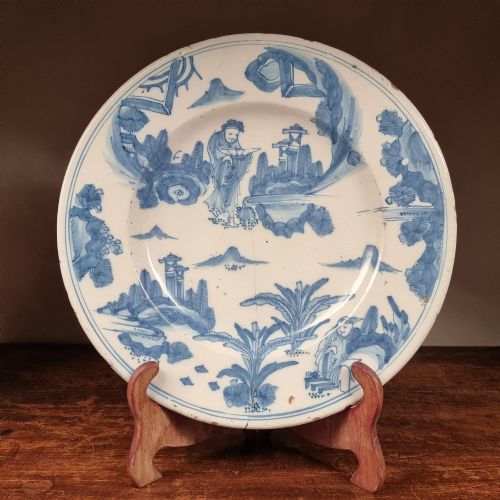
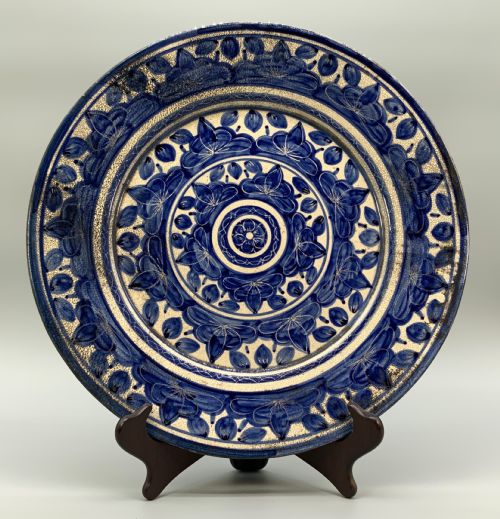
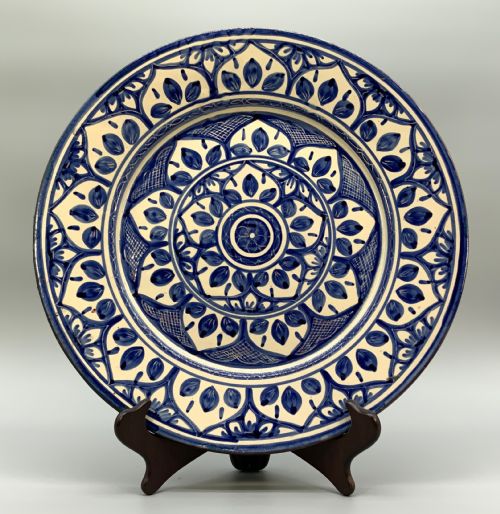
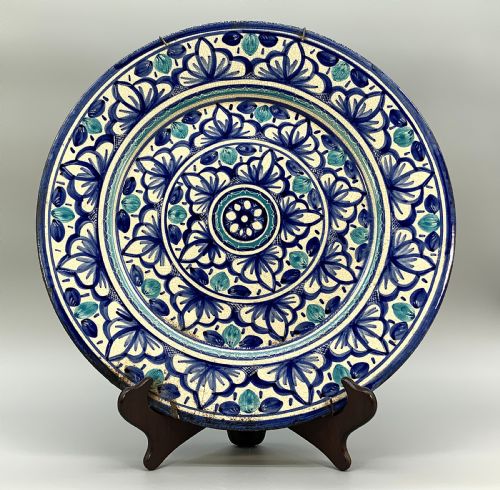
Large delft chargers are wide decorative plates and platters made across several centuries, appearing in forms such as deep charger plates, wall plates, and decorative dishes. These expansive pieces served primarily for display on walls or sideboards rather than everyday dining.
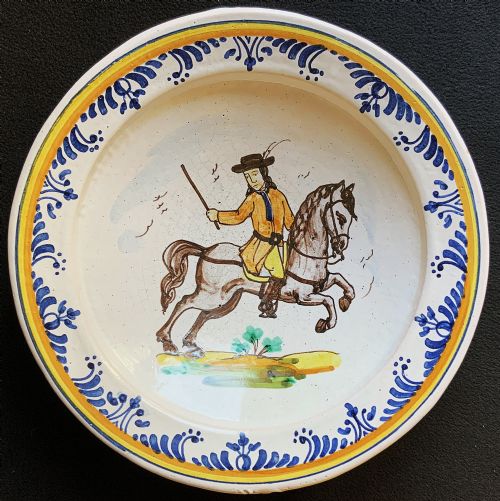
The versions met most frequently on this page originate from the seventeenth and eighteenth centuries, with specific examples spanning English, Dutch, and Spanish workshops. Pieces range from classic blue and white geometric floral layouts to vibrant polychrome and manganese compositions.
Moorish revival interpretations dated to nineteen-forty also appear, alongside Kraak-influenced designs and grand feu pieces. Each object carries the distinct visual weight of tin-glazed earthenware shaped by historical European traditions.
How they were made
Makers shaped these expansive dishes from earthenware, coating the clay body in an opaque tin glaze or faience glaze to create a smooth, white canvas for painting. Cobalt pigment and cobalt oxide provided the deep blues, whilst manganese and other mineral pigments added polychrome range.
Painters applied brushwork directly onto the unfired or absorbent glaze surface, a technique requiring immense skill because the porous material absorbed pigment instantly without room for correction.
Materials documented across the inventory include earthenware, tin glaze, cobalt pigment, faience glaze, and cobalt oxide.
What varies in quality
Quality rests in the crispness of the hand-painted brushwork and the complexity of the design, distinguishing hurried output from assured artistic execution. The depth and smoothness of the tin glaze also determine the visual presence of the surface.
Purity of the cobalt pigment and richness of the polychrome or manganese tones separate standard workshop pieces from superior examples that retain strong chromatic contrast after firing.
The Large Delft Chargers Glossary
- Charger plate
- A large decorative plate traditionally used for display rather than service. These wide vessels provide a generous surface area for elaborate painted scenes.
- Tin glaze
- An opaque white glaze made by adding tin oxide to a lead glaze base. It forms the classic background for painted delftware decoration.
- Grand feu
- A firing technique where pigments are applied to the raw glaze and fired at high temperatures. This method fuses the colours permanently into the glossy surface.
- Polychrome
- Decoration utilising multiple colours rather than a single hue. In these ceramics, it typically involves a palette of contrasting mineral pigments.
- Kraak plate
- A style of ceramic design inspired by imported Chinese porcelain featuring panelled motifs. Dutch and European potters adapted these arrangements onto local earthenware.
Large Delft Chargers: Frequently Asked Questions
Were large delft chargers used for food?
These wide dishes were designed primarily for decorative display on walls or tables rather than everyday dining. Their substantial size made them ideal centerpieces for grand rooms.
Historical domestic inventories suggest they functioned chiefly to display wealth and artistic taste in formal settings.
How do I hang a heavy charger safely?
Wall mounting requires specialised wire display hangers equipped with protective rubber tips that distribute pressure evenly across the rim. Ensure the chosen wall fixture supports the substantial weight of earthenware.
Avoid setups that pinch the edges too tightly or rely on adhesive discs attached to the unglazed base.
How do I tell Dutch delft from English delft?
Dutch examples often exhibit brilliant white glazes and sharp cobalt painting influenced by Asian porcelain imports. English pieces frequently show softer glaze tones and distinct local floral interpretations.
Examination of the foot ring and underlying fabric helps clarify the specific regional workshop origin.
What is the difference between blue and white and polychrome?
Blue and white pieces rely exclusively on cobalt oxide underglaze painting to create stark monochrome designs. Polychrome examples incorporate additional mineral colours like manganese, yellow, and green.
Both styles demand high technical proficiency from the painter working on absorbent tin glaze.