
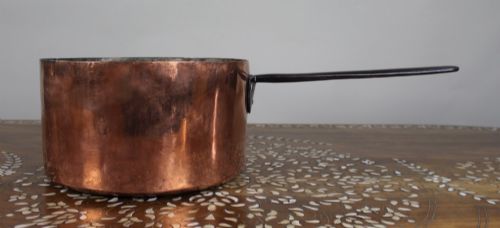


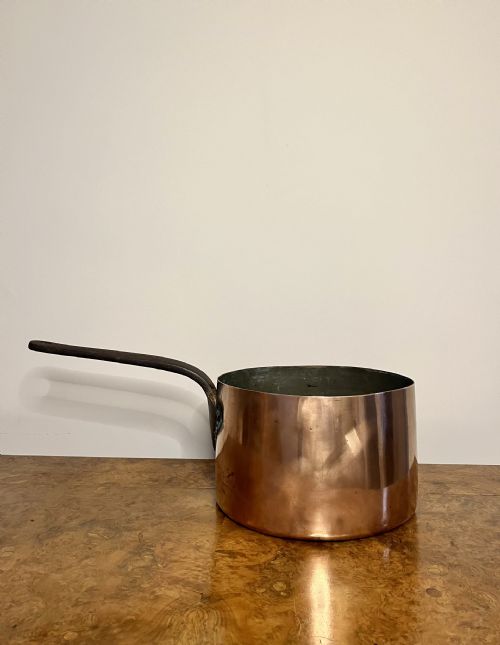


Large Copper Cooking Pot
A large copper cooking pot brings heavy metal warmth and genuine kitchen utility to a room.
Large Copper Cooking Pot
These items are robust culinary vessels designed for serious kitchen work, appearing here in forms such as saucepans, preserve pans, cauldrons, and lidded pots. When you search for a large copper cooking pot, you encounter heavy kitchenware dating principally from the Georgian and Victorian eras.
The pieces on this page span the nineteenth century, including specific years like eighteen hundred, eighteen fifty, and eighteen sixty. They arrive with handles of iron or brass, often showing the marks of active use over generations in rustic farmhouse and Victorian country settings.
How they were made
Maker construction relies heavily on hammered or sheet copper, paired with iron handles or brass fittings. Many interiors retain a lining of tin to prevent food from reacting with the metal.
Vessels feature riveted joints and heavy casting where handles attach to the body. Some examples incorporate embossed brass details or hand-forged wrought iron components.
Listings feature items from the Georgian and Victorian periods, utilising copper, iron, brass, and tin.
What varies in quality
The thickness of the metal sheet dictates the substance and durability of the vessel. Heavier gauge copper retains shape better and distributes heat evenly across the base.
Maker marks and stamps indicate workshop origin, elevating the standing of a piece. Original patinas and intact linings reflect how carefully a pot has been preserved or used.
Hodges And Sons·Liptons·Jones Brothers
The Large Copper Cooking Pot Glossary
- Preserve pan
- A wide, shallow vessel traditionally utilised for boiling fruit and sugar. These pans feature sloped sides to allow easy stirring and evaporation.
- Cauldron
- A deep round pot equipped with handles or feet for open hearth placement. They are typically cast with thick walls to withstand direct flame.
- Patina
- The surface sheen developed through age, handling, and polishing. It shows the natural oxidation of copper over time.
- Tin lining
- A protective interior coating applied to copper cookware. This layer stops copper from leaching into acidic foods during cooking.
Large Copper Cooking Pot: Frequently Asked Questions
Can I still cook with a antique copper pot?
Many of these vessels remain physically capable of kitchen duty. You should check the interior tin lining before preparing food.
If the tin is worn away, a professional retinning service makes the pot safe for modern cooking use again.
How do I clean a large copper pot?
Gentle washing with warm soapy water removes everyday dust and grease. Avoid harsh abrasives that strip away the historic surface.
Specialist copper cream restores brightness if you prefer a shiny finish. Many collectors prefer to leave the natural dark patina untouched.
Were these pots used on open fires?
Georgian and Victorian kitchen vessels were built to withstand intense heat sources. Many hung over hearths or sat directly upon coal ranges.
Iron handles and heavy brass attachments were engineered to bear the weight of heavy stews and preserves.
How do I date a copper cooking pot?
Construction methods offer clear clues to the manufacturing era. Hand-beaten seams and dovetail joints usually point towards Georgian or early nineteenth-century workshops.
Later Victorian pieces often show standardised rolled edges and machine stamps. Maker marks also help narrow down the exact decade.