





Large Coal Scuttle
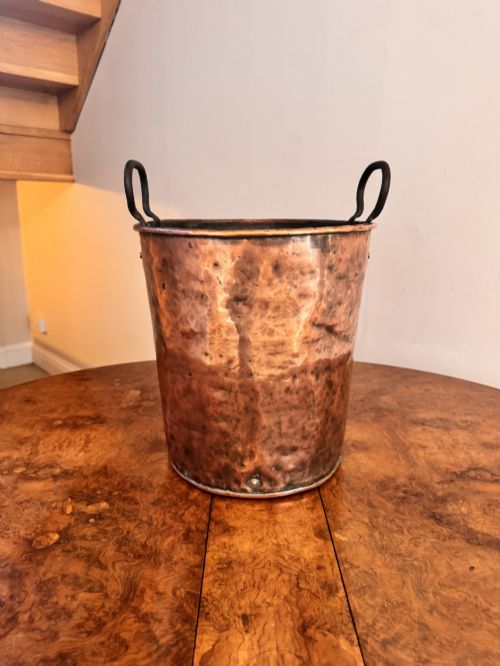
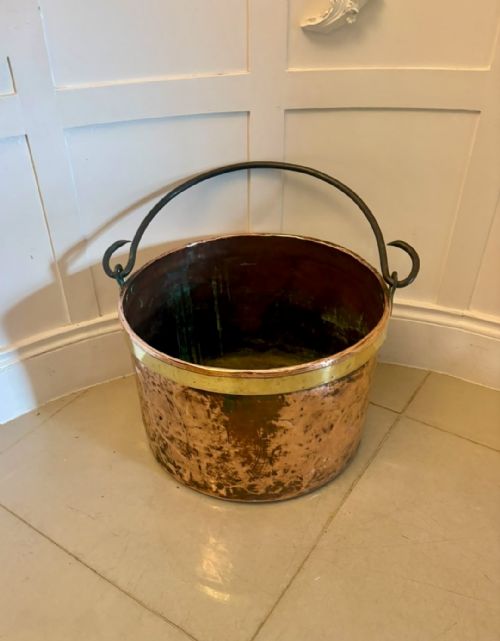
These large coal scuttle pieces are heavy hearth vessels in copper, brass, and timber, built to hold fuel beside the fire.
Large Coal Scuttle
A large coal scuttle encompasses sturdy fireside containers and log bins designed to hold solid fuel by the hearth. The examples found here span from the Georgian period through the Victorian era and into the early twentieth century.
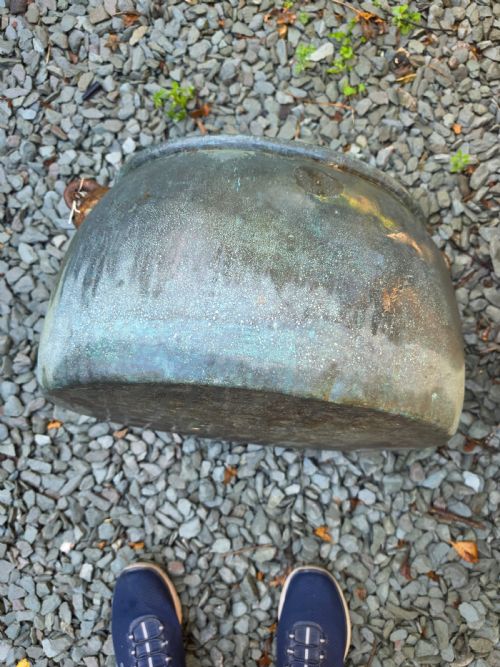
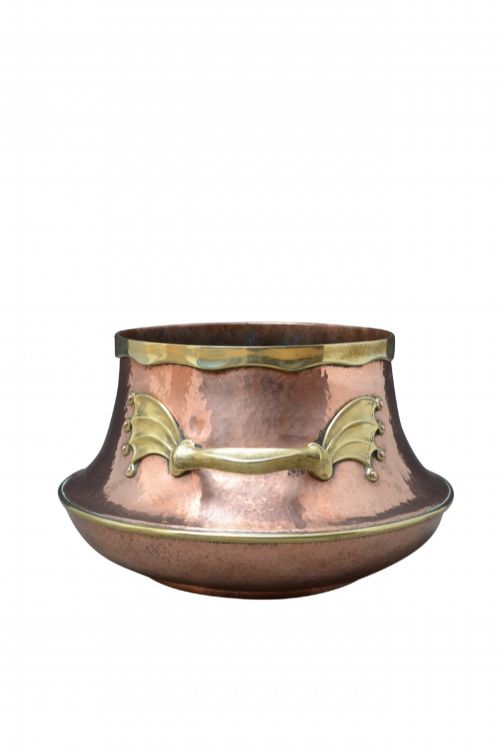
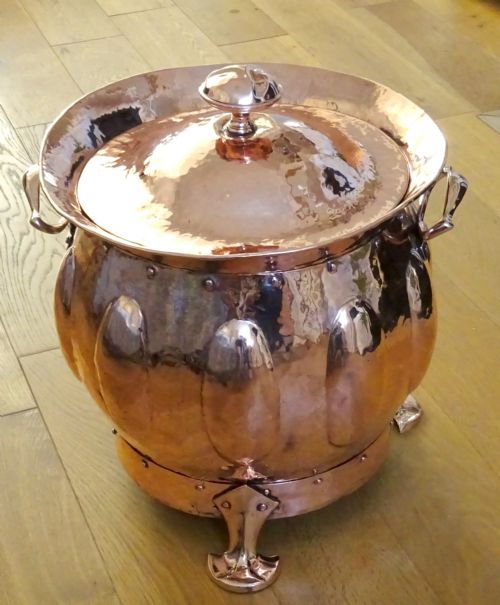
Most pieces on offer take the form of heavy copper cauldrons, riveted buckets, and brass vessels, occasionally adapted over time to serve as planters or jardinieres. They bring domestic metalwork and timber cooperage from past centuries directly into modern rooms.
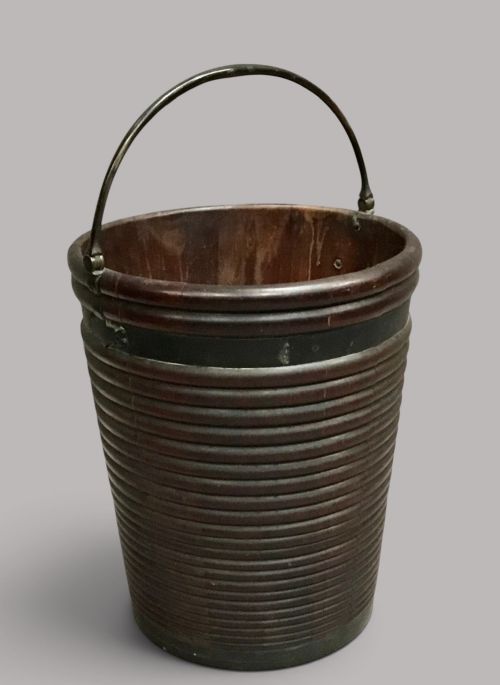
Forms range from simple riveted cylindrical pails to shaped vessels set within original iron frames or mounted on three-footed bases. Alongside traditional coal storage, the selection includes oak and mahogany log bins with metal banding.
Materials and construction methods
Timber pieces utilise traditional cooperage techniques, employing staves of oak and mahogany bound with tight metal hoops. These wooden buckets often feature integrated vertical ribbing or turned wooden elements suited to holding peat and logs.
Large Coal Scuttle Retail Price Guide 2026
Typical asking prices for large coal scuttle among the pieces listed under this phrase on Sellingantiques today, from the lower quarter to the upper quarter. They describe what is for sale here now, not the wider market.
Many a Victorian coal bucket has spent its retirement trading coal dust for damp potting soil as a grand living-room planter.
Distinctions in craftsmanship and form
Quality rests in the heaviness of the gauge metal and the integrity of the hand-riveted joints that hold the body together. Superior examples display careful hammering, original swing handles, and uncompromised structural frames.
The presence of untouched surfaces and original timber patination elevates a piece above standard utility items. Maker-applied decorative details, such as shaped brass mounts and iron fittings, separate utilitarian vessels from finer parlour examples.
The Large Coal Scuttle Glossary
- Cauldron
- A round metal vessel with a wide opening, traditionally used over fires or as a large container for fuel and water.
- Dinanderie
- The historical art of working decorative brass, copper, and bronze objects, often associated with beaten surface patterns and vessels.
- Coopered
- Built from curved wooden staves fitted together and held tightly by metal hoops, much like a traditional cask or barrel.
- Perdonium
- A traditional household container or scuttle designed specifically for holding domestic coal near a fireplace.
- Jardiniere
- An ornamental pot or receptacle, usually made of metal or ceramic, originally intended to hold live plants and flowers.
Large Coal Scuttle: Frequently Asked Questions
What were large coal scuttles used for originally?
These vessels served to transport coal or peat from outdoor stores to the hearth and keep it ready beside the fire.
Their substantial capacity meant fewer trips outdoors during cold weather while containing soot and debris within a solid metal or wooden container.
How do I clean an antique copper coal bucket?
Most collectors prefer to leave natural patination and dark oxidisation untouched, as it shows the age of the metal.
If cleaning is necessary, use a mild soapy cloth and avoid harsh chemical polishes that strip away the historical surface character.
Can these metal buckets be used as plant pots?
Many of these vessels are already utilised as indoor planters and jardinieres for large house plants and decorative foliage.
Placing a plastic liner inside protects the historic copper or brass interior from prolonged moisture exposure and soil contact.
Are these pieces suitable for everyday fireside use?
Their heavy-gauge metal and robust iron handles make them durable enough to hold heavy logs and coal next to a working fireplace.
Checking that the riveted seams and handles remain secure ensures safe daily handling of heavy fuel loads.