





Large Clay Vessel
These large clay vessel options bring tactile warmth and history to your home or garden through rustic forms shaped in terracotta, earthenware, and clay.
Large Clay Vessel
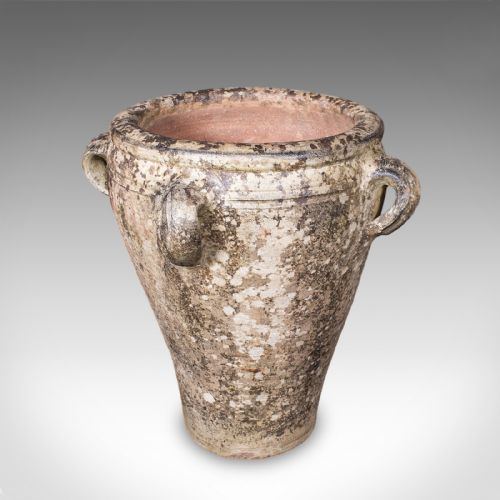
When you search for a large clay vessel, you are looking at substantial jars, urns, and planters designed for practical storage or garden use. These objects originate from Mediterranean and European traditions, spanning from the Victorian era into the early twentieth century.
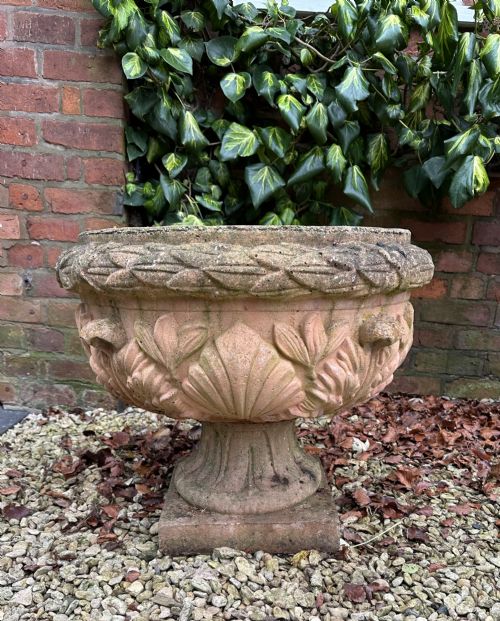
The pieces you are most likely to meet on this page include terracotta oil jars, olive jars, and garden planters finished with lime wash or oil paint. Many carry the marks of weathering and age, reflecting their functional past in Tuscan, Portuguese, and Turkish settings.
Forms range from amphora-style vases to heavy garden urns and pots. Each large clay vessel serves as a striking focal point for interior spaces or outdoor courtyards, carrying distinct historical provenance.
How large clay vessel items were made
Potters shaped these items from natural terracotta and earthenware using traditional wheel-throwing or coiling methods. The porous clay bodies were then fired at lower temperatures to achieve the characteristic earthy texture and warm tone.
Surface treatments often included protective or decorative applications of lime wash, oil paint, or a light glaze. Some utilitarian forms were fitted with wrought iron details for lifting and transport during their working life.
Large Clay Vessel Retail Price Guide 2026
Typical asking prices for large clay vessel among the pieces listed under this phrase on Sellingantiques today, from the lower quarter to the upper quarter. They describe what is for sale here now, not the wider market.
What varies in quality
The distinction between ordinary and exceptional examples lies in the integrity of the form and the natural patination acquired over decades. Weathered surfaces and remnants of original paint or lime wash add authenticity and visual depth to the object.
Structural balance and the harmonious distribution of weight across large proportions distinguish finer pieces. Maker attribution, such as Compton poppy pots, introduces an extra layer of craftsmanship that elevates the piece beyond standard utilitarian ware.
Paul Jean Clays
The Large Clay Vessel Glossary
- Terracotta
- A porous, unglazed or lightly glazed fired earthenware of a brownish-red colour. It forms the primary material base for the majority of traditional garden planters and oil jars.
- Amphora
- A two-handled ancient jar with a narrow neck used for storing oil or wine. Later nineteenth-century versions emulate this classic Mediterranean silhouette.
- Earthenware
- Pottery fired at relatively low temperatures that remains porous unless glazed. This traditional material defines the construction of heavy rustic jars and pots.
- Lime wash
- A traditional coating made from slaked lime applied to exterior surfaces. It weathers naturally over time to create a soft, chalky patina on antique pots.
- Olive jar
- A large, bulbous storage vessel historically utilised for holding and transporting olive oil across Mediterranean trade routes.
Large Clay Vessel: Frequently Asked Questions
What were large clay vessels used for originally?
These utilitarian objects primarily served to store, transport, and preserve agricultural goods such as olive oil and grain across the Mediterranean. Their thick walls helped maintain stable internal temperatures for the contents.
Over time, many of these functional containers transitioned into decorative garden ornaments and architectural accents as modern storage methods replaced traditional earthenware jars.
How do I care for a terracotta garden pot?
Terracotta is a porous material that absorbs moisture, which means it can crack if water freezes inside the clay during harsh winter frosts. Protect your vessel by emptying damp soil and moving it under cover during freezing weather.
Avoid sealing the interior with modern waterproof coatings, as the clay needs to breathe naturally to prevent surface flaking and salt efflorescence.
Can I use an antique oil jar indoors?
These substantial pieces anchor interior spaces effectively when placed in hallways, living rooms, or large fireplaces as sculptural elements. Their earthy tones and weathered textures complement both contemporary and traditional interior design schemes.
Ensure you place a protective pad or saucer underneath if the base is unglazed or damp, and avoid dragging heavy vessels across delicate wooden floors.
How can I tell the age of a terracotta jar?
Look closely at the surface for signs of natural weathering, such as worn lime wash, flaking paint, and mineral deposits accumulated from decades of ground contact. Hand-thrown potting irregularities and minor kiln scars also point towards older, traditional manufacturing techniques.
Comparing the rim profile, weight, and clay composition against known period examples helps narrow down the manufacturing era to the nineteenth or early twentieth century.