




Large Chinoiserie Vase
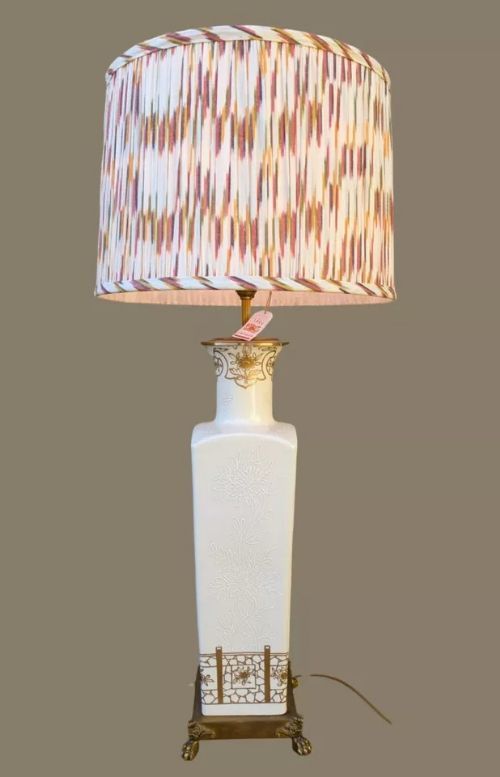
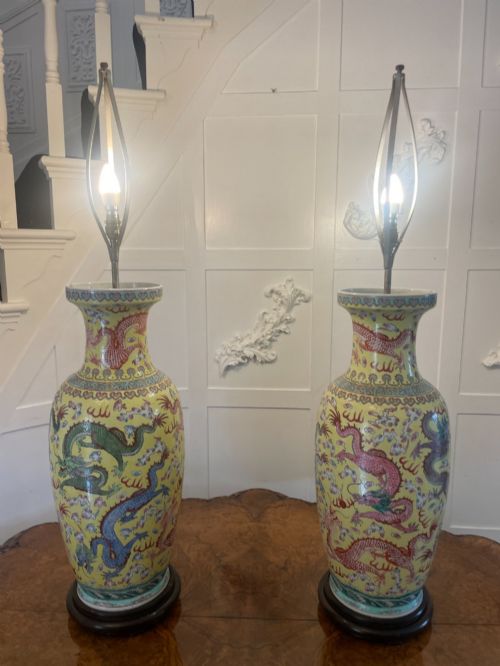
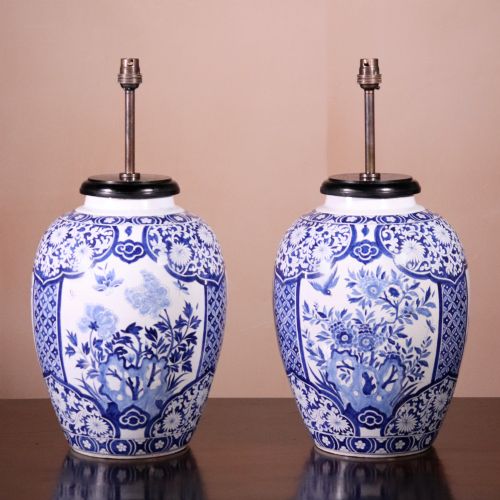
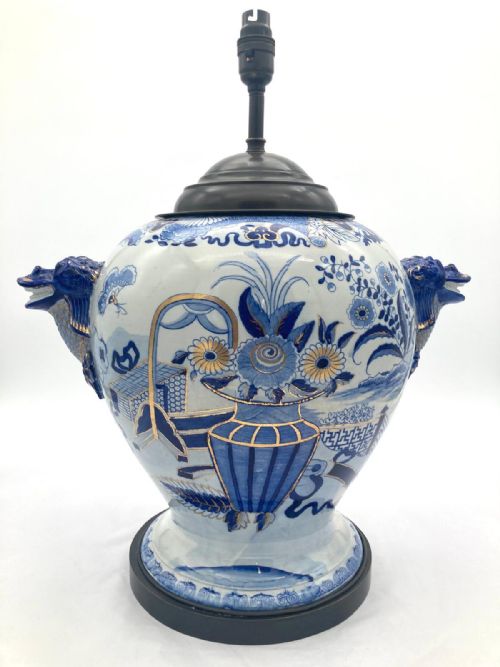
A large chinoiserie vase brings bold decoration and Eastern motifs into a room, often taking the form of a converted lamp.
Large Chinoiserie Vase
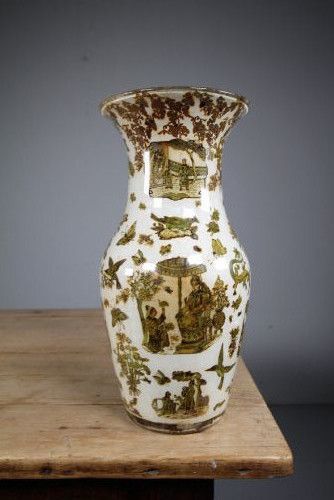
When searching for a large chinoiserie vase, you encounter grand vessels created in European factories, English potteries, and Chinese workshops. These pieces span the seventeenth century through to the twentieth century, reflecting shifting Western interpretations of Eastern design.
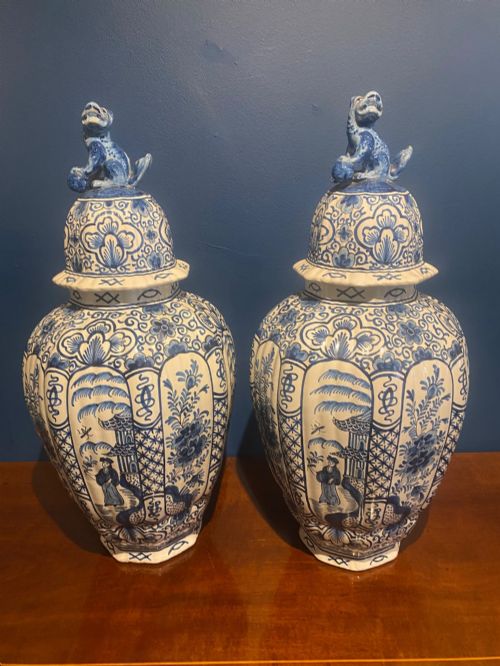
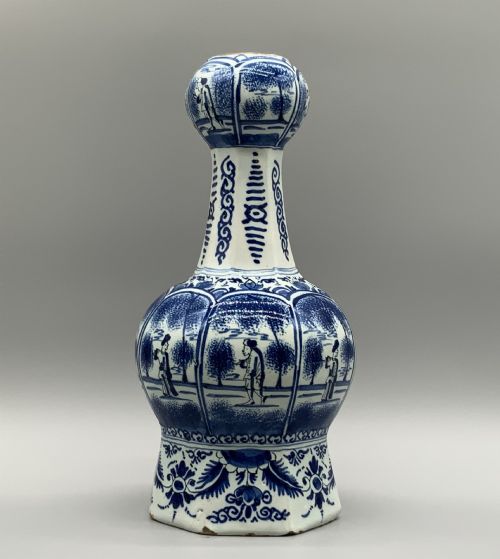
The most common examples on this page are nineteenth-century porcelain and ironstone vessels, frequently mounted with gilt bronze or adapted into table lamps. You also find Dutch delft earthenware, cloisonné enamel, and lacquer temple vases.
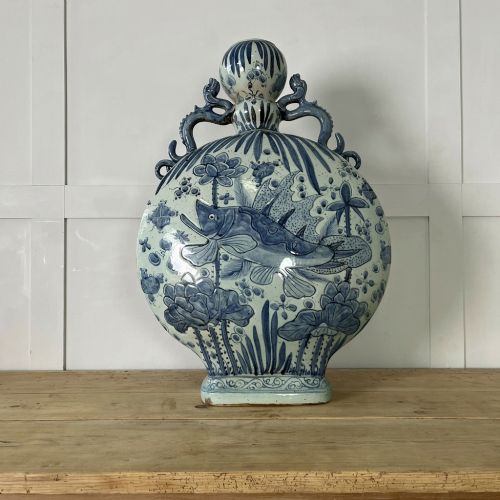
Forms range from simple bottle vases and moon flasks to monumental lidded jars and ribbed beaker vases. Many retain their original covers, while others have been wired for domestic lighting while preserving their ceramic bodies.
What varies in quality
The distinction between ordinary and exceptional pieces lies in the crispness of the hand-painted decoration and the weight of the ceramic body. Finer examples display meticulous brushwork in underglaze blue and polychrome enamels.
The quality of associated metalwork also sets pieces apart, particularly where original gilt bronze mounts or period lamp conversions integrate seamlessly with the ceramic form.
Large Chinoiserie Vase Retail Price Guide 2026
Typical asking prices for large chinoiserie vase among the pieces listed under this phrase on Sellingantiques today, from the lower quarter to the upper quarter. They describe what is for sale here now, not the wider market.
Several monumental temple vases stand at an impressive eighty-six inches tall, easily outgrowing the average collector.
Hicks and Meigh·Masons
The Large Chinoiserie Vase Glossary
- Chinoiserie
- European decorative style reflecting Chinese artistic influences. It appears across eighteenth and nineteenth-century ceramics and furniture.
- Ironstone
- A dense, durable ceramic developed in nineteenth-century England. It served as a robust alternative to porcelain for heavy household vessels.
- Famille Verte
- A polychrome ceramic palette dominated by green enamels. This style originated in Chinese export wares and influenced European makers.
- Moon Flask
- A flattened circular flask with a short neck and two handles. Potters often decorated both sides with distinct painted scenes.
- Cloisonné
- Enamelwork technique using metal wires to create compartments for coloured pastes. Craftsmen fire these vessels to produce vibrant decorative surfaces.
Large Chinoiserie Vase: Frequently Asked Questions
Were these always lamps?
Many large vessels began as decorative temple jars or display pieces before being converted into table lamps during the nineteenth or twentieth centuries.
This conversion process often involved drilling the base for wiring and adding bronze or brass fittings while retaining the original ceramic body.
How do I identify a period piece?
Dating relies on examining the ceramic body, glaze characteristics, and any visible maker marks or reign seals.
Nineteenth-century pieces often combine traditional hand-painted motifs with European gilt bronze mounts or nineteenth-century potting techniques.
Where were European versions made?
European potteries in England, France, and the Netherlands produced domestic interpretations of Chinese export porcelain.
English ironstone makers and Dutch delft potteries created robust earthenware vessels decorated with blue and white oriental scenes.
How do I care for a painted vase?
Dust ceramic and enamel surfaces gently with a soft dry cloth to protect delicate hand-painted decoration and gilding.
Avoid using liquid cleaners on antique enamels or metal mounts to prevent tarnishing and surface wear.