



Chinese Ceramic Flask
These Chinese ceramic flasks and related vessels offer portable grace, shaped through centuries of kiln mastery and meticulous hand-painting.
Chinese Ceramic Flask
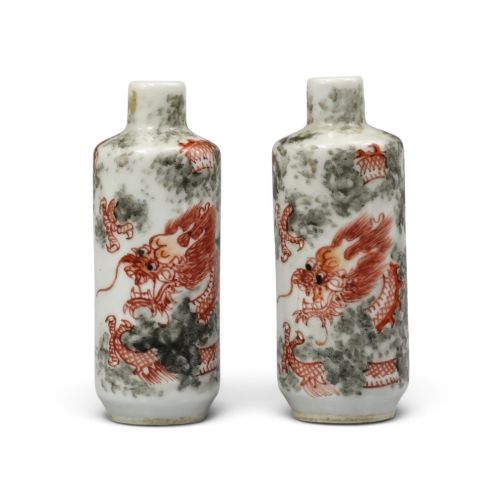
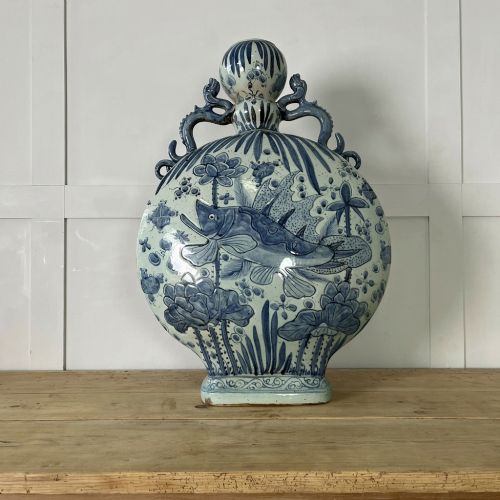
A Chinese ceramic flask represents a distinct branch of utilitarian and decorative vessel making, appearing on this page most frequently in the form of nineteenth-century snuff bottles and moon flasks. These pieces range from diminutive cabinet items designed for holding powdered tobacco to substantial porcelain moon flasks created for visual display.
The objects span multiple periods, notably the nineteenth century, including specific Guangxu and Daoguang eras, alongside earlier forms such as Kangxi period blue and white export items. Makers utilised traditional forms like the flattened moon flask alongside miniature bottle shapes suited to portable use.
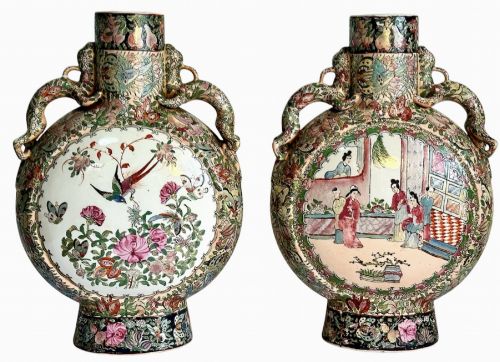
Collectors encountering these pieces will find both diminutive snuff bottles decorated with figural and dragon motifs and larger Famille Rose vessels standing up to fifty centimetres high. Each category demonstrates the enduring appeal of traditional Chinese ceramic arts across centuries of production.
How they were made
Potters shaped these vessels from refined porcelain clay, throwing or moulding them into specific flat-backed or globular profiles before applying mineral pigments. Cobalt oxide provided the deep blues for early underglaze work, while subsequent pieces employed intricate enamels.
The application of Famille Rose enamel palettes allowed artisans to introduce complex pinks and opaque colours over the fired glaze, fixed with a secondary low-temperature firing. Artisans also integrated gold leaf accents and carved jade or white metal elements into the finished composition.
Chinese Ceramic Flask Retail Price Guide 2026
Typical asking prices for chinese ceramic flask among the pieces listed under this phrase on Sellingantiques today, from the lower quarter to the upper quarter. They describe what is for sale here now, not the wider market.
Listings feature nineteenth-century porcelain decorated with iron-red dragons and Famille Rose enamels, alongside Kangxi period blue and white examples.
What varies in quality
The standard of a Chinese ceramic flask rests upon the precision of the hand-painted decoration, where controlled brushwork defines the dragons, figures, and botanical motifs. Superior examples display clear definition in the iron-red or polychrome enamels without bleeding or muddiness.
Proportion and potting technique also divide simpler production from finer items, particularly in the symmetry of moon flasks and the delicate thinning of miniature snuff bottle walls. The integration of auxiliary materials like jade stoppers further elevates the finished piece.
The Chinese Ceramic Flask Glossary
- Famille Rose
- A palette of opaque enamel colours dominated by pink, introduced to Chinese ceramics during the Qing dynasty. This technique allowed painters to render subtle tonal gradations on porcelain surfaces.
- Moon Flask
- A flattened ceramic vessel featuring a circular body, a short neck, and two looped handles connecting the neck to the shoulder. It derives its name from its resemblance to the full moon.
- Snuff Bottle
- A small container used in traditional Chinese culture to hold powdered tobacco, which was consumed for medicinal and social purposes. These bottles typically feature tight-fitting stoppers incorporating tiny spoons.
- Kangxi Period
- The era of the Qing dynasty spanning from sixteen sixty-two to seventeen twenty-two, noted for technical revival and excellence in blue and white porcelain production.
- Cobalt Oxide
- A mineral pigment applied beneath the glaze to produce enduring blue decoration during high-temperature firing. It remains stable under intense kiln heat.
Chinese Ceramic Flask: Frequently Asked Questions
How were snuff bottles used?
Users carried these small vessels in pockets or pouches for daily access to powdered tobacco. The attached spoon served to dispense small quantities as needed.
Over time, these practical containers evolved into objects of personal display and status among the Qing elite. Collectors today appreciate their miniature scale and intricate storytelling decoration.
What is a moon flask?
A moon flask is a decorative ceramic vessel characterised by a flattened circular body that stands on a low base. The form references ancient nomadic leather water bottles translated into porcelain.
These pieces were primarily produced for interior display in scholar's studios or imperial rooms. Their flat surfaces provided an ideal canvas for elaborate enamel painting.
How do I date these flasks?
Dating relies on examining the painting style, enamel type, and potting characteristics alongside any reign marks present on the base. Nineteenth-century pieces often display bright Famille Rose palettes or iron-red dragon motifs.
Earlier examples from periods like the Kangxi reign show distinct blue and white pigments and potting densities. Comparing handling wear and glaze characteristics helps confirm the period.
Where should I display them?
These ceramic items require stable shelf placement away from direct sunlight and high-traffic areas where accidental knocks might occur. Small snuff bottles benefit from dedicated display cabinets.
Larger moon flasks need sturdy surfaces that can support their height and weight, particularly pieces reaching fifty centimetres. Adequate spacing allows the painted details to remain visible.