

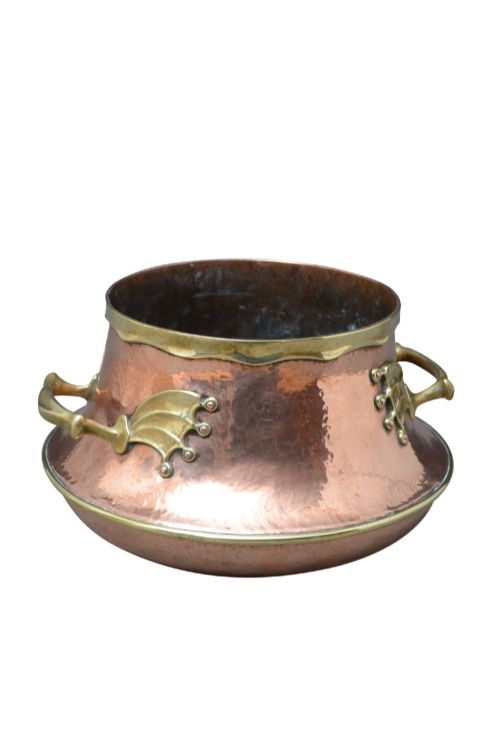
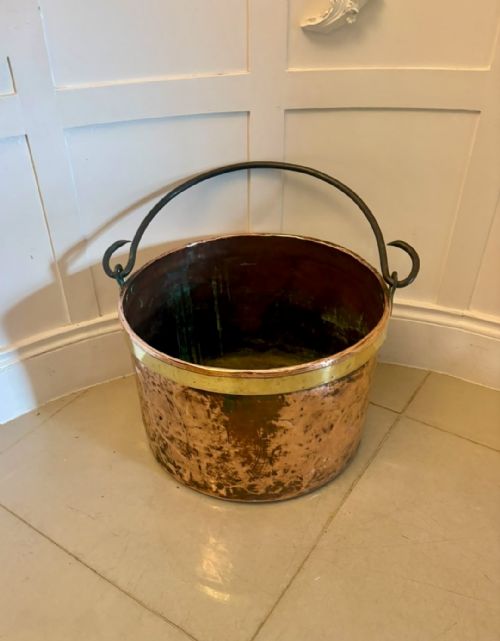



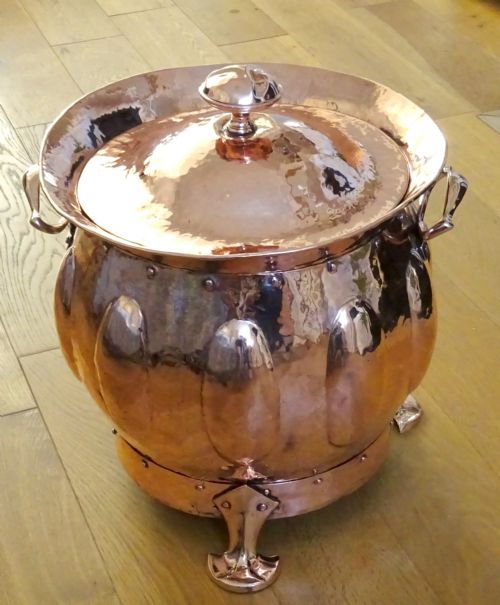


Large Brass Log Bin
A large brass log bin brings warmth and a solid metallic gleam to a hearth, holding fuel within easy reach.
Large Brass Log Bin
When you search for a large brass log bin, you find sturdy fireside vessels designed to hold wood, peat, or coal near the hearth. These containers often share forms with planters, jardinières, and cauldrons, moving easily between practical fuel storage and decorative display.
The versions most frequently met on this page date from the nineteenth century and the Victorian era, alongside pieces spanning the Georgian, Regency, Art Deco, and Arts and Crafts periods. They typically combine brass bodies with copper accents, wrought iron, or tin, reflecting robust domestic utility across different European styles.
How they were made
Metalworkers shaped these vessels using traditional techniques such as hammering, embossing, and dinanderie work, creating textured surfaces that catch the fireside light. Sheet brass and copper were beaten over forms or joined at seams, often incorporating iron handles and fittings for strength.
Makers frequently paired polished brass with contrasting copper bodies, utilising the distinct tonal qualities of each metal to create visual depth. Surface decoration ranges from plain, functional bucket forms to ornate embossed patterns and hand-hammered finishes.
Large Brass Log Bin Retail Price Guide 2026
Typical asking prices for large brass log bin among the pieces listed under this phrase on Sellingantiques today, from the lower quarter to the upper quarter. They describe what is for sale here now, not the wider market.
Listings feature items spanning the nineteenth century, Victorian era, and early twentieth century, incorporating brass, copper, wrought iron, and tin.
What varies in quality
The quality of a piece lies in the weight of the metal and the integrity of its construction, particularly around the base and handle attachments where heavy loads of logs exert constant stress. Thicker gauge brass and copper resist denting and maintain their structural rigidity over decades of heavy hearth use.
Artisanal skill distinguishes finer examples through crisply executed hand-hammering, deliberate embossing, and carefully finished seams rather than rushed industrial fabrication. The integration of complementary materials, such as wrought iron handles or riveted bands, further elevates a piece from simple utility to accomplished metalwork.
The Large Brass Log Bin Glossary
- Dinanderie
- The traditional craft of beaten and worked brass, copper, or bronze, often associated with decorative vessels and domestic containers.
- Jardiniere
- An ornamental pot or stand designed to hold plants, frequently utilised in period interiors for large fireside vessels.
- Embossing
- A technique where a design is raised from the surface of the metal by hammering from the reverse side.
- Cauldron
- A large deep metal pot with a wide mouth, historically used for boiling or heating and later adapted for fireside fuel storage.
Large Brass Log Bin: Frequently Asked Questions
How do I clean a brass log bin?
Wipe the surface gently with a soft, damp cloth to remove dust and soot from the fireside.
Avoid harsh chemical polishes that strip away the aged patina built up over generations of use.
Can I use these bins for logs?
These vessels were built specifically to hold wood, coal, and peat beside the hearth.
Their sturdy metal construction handles the weight and rough texture of logs without difficulty.
How do I date a brass log bin?
Examine the manufacturing marks, construction methods like hand-riveting, and stylistic cues from periods such as Victorian or Arts and Crafts.
Heavier hand-hammered surfaces and specific metal combinations often point toward nineteenth-century craftsmanship.
Are these bins waterproof?
Many of these containers share forms with planters and jardinières, but riveted or seamed metal can develop small gaps over time.
Check the interior seams before using them directly for live plants or wet logs.