



Large Brass Bed
A large brass bed brings substantial presence to a bedroom, combining gleaming metalwork with the generous proportions characteristic of nineteenth and early twentieth century sleeping quarters.
Large Brass Bed
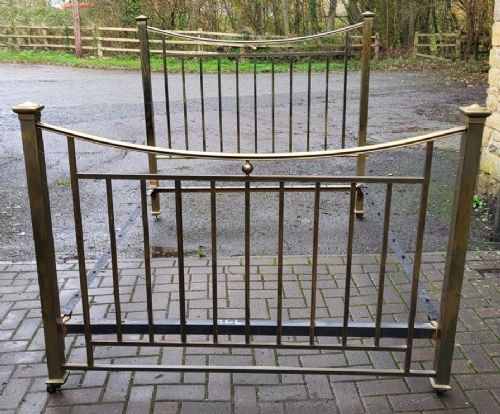
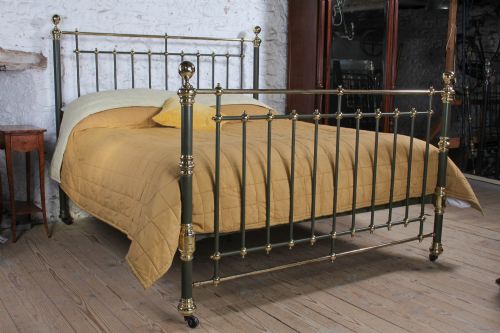
A large brass bed is a substantial frame designed for spacious sleeping, combining gleaming metal tubing with robust structural support. Buyers seeking a large brass bed will encounter robust Victorian and Edwardian examples spanning the latter half of the nineteenth century and the early twentieth century. These pieces appear primarily as large single, double, or king size formats, often incorporating iron internal components for stability.
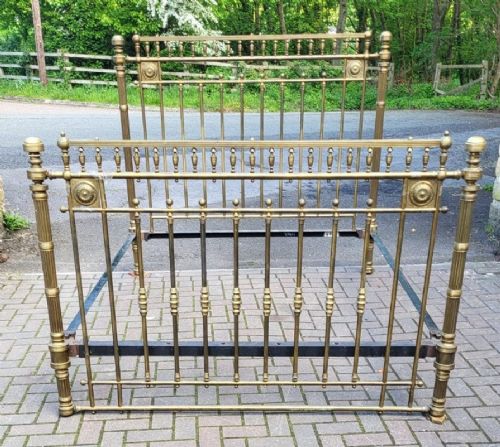
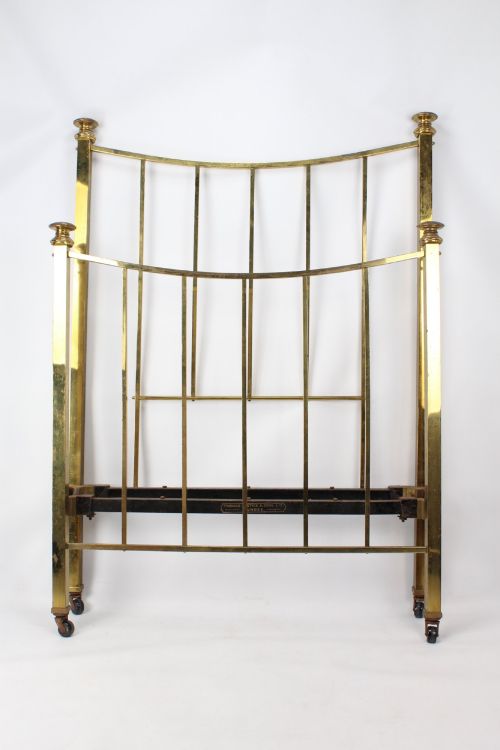
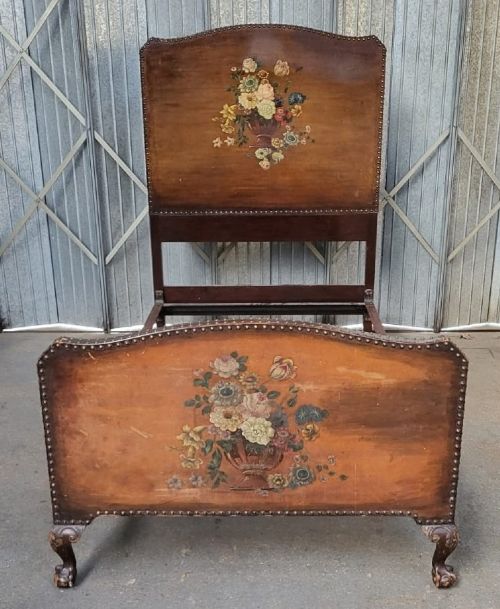
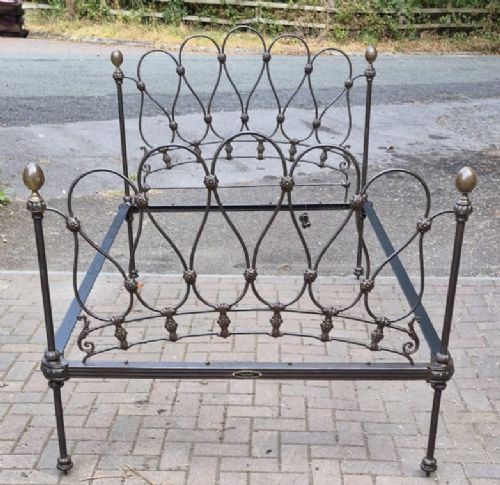
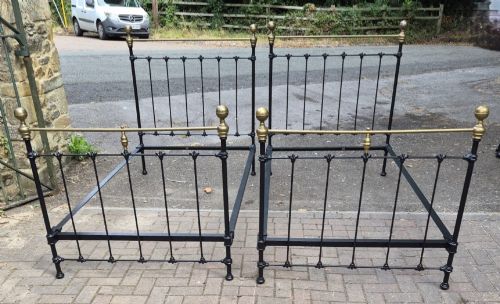
The pieces listed on this page showcase forms ranging from simple Victorian single frames to ornate king size bedsteads decorated with Aesthetic Movement details or Edwardian Dutch Revival influences. Many examples integrate contrasting materials such as cast iron, wrought iron, timber, or leather alongside the dominant brass components. This variety reflects the diverse manufacturing output of British workshops during the industrial period.
How they were made
Maker workshops constructed these frames by combining heavy brass tubing with structural iron and cast iron components to ensure durability. Manufacturers utilised metal casting techniques for decorative joints and finials, securing them to cylindrical pillars with internal spigots and corner brackets. Selected models incorporate painted wooden elements or upholstered leather panels to complement the polished metal framework.
Makers such as Hoskins & Sewell, R W Winfield, and Maple & Co. applied protective lacquers or finishes to the brass surfaces to maintain their lustre during daily use. Iron frames received durable painted coatings, whilst brass components were frequently spun, turned, and polished by hand to achieve a bright reflective finish.
Large Brass Bed Retail Price Guide 2026
Typical asking prices for large brass bed among the pieces listed under this phrase on Sellingantiques today, from the lower quarter to the upper quarter. They describe what is for sale here now, not the wider market.
Materials recorded across these brass bedstead listings include cast iron, wrought iron, timber, paint, and leather.
What varies in quality
Quality in a large brass bed rests upon the gauge of the metal tubing and the intricacy of the cast brass or iron ornamentation at the corners and headboard. Superior examples display crisp, deeply defined casting details on decorative mounts and heavy-gauge brass that resists flexing under weight. Lesser pieces rely on thin-walled tubing and simpler pressed sheet metal components.
The integration of secondary materials such as maple timber, painted accents, or fitted leather panels also distinguishes standard production from high-end workshop commissions. Comprehensive maker branding stamped into the iron rails indicates a higher tier of nineteenth century manufacturing provenance.
Hoskins & Sewell·R W Winfield·Maple & Co.
The Large Brass Bed Glossary
- Bedstead
- The complete structural framework of a bed, including headboard, footboard, and side rails, designed to support a mattress base.
- Aesthetic Movement
- A late nineteenth century design style emphasising visual beauty over narrative content, often featuring stylised natural motifs.
- Edwardian Dutch Revival
- An architectural and decorative style popular during the early twentieth century drawing inspiration from seventeenth century Dutch forms.
- Cast Iron
- An iron-carbon alloy poured into moulds to create rigid structural supports and decorative components with intricate surface detail.
- Spigot
- A cylindrical projection on a bedpost or joint designed to fit securely into a corresponding socket for stable assembly.
Large Brass Bed: Frequently Asked Questions
Will a large brass bed fit modern mattresses?
Many nineteenth century large single and king size frames accommodate standard modern mattress widths, though precise interior rail measurements vary among older handmade pieces.
Buyers should verify the internal length and width between the side rails before purchasing contemporary mattresses for antique frames.
How do I care for antique brass?
Maintain polished brass surfaces by dusting regularly with a soft dry cloth and avoiding abrasive chemical cleaners that strip protective lacquers.
Gentle cleaning preserves the original patina developed over decades of domestic use without damaging the underlying metal.
How were these beds assembled originally?
Nineteenth century metal beds utilise wedge-action corner brackets and heavy side rails that lock together firmly under the weight of the mattress base.
This knockdown construction allowed large furniture pieces to be dismantled easily for transport between rooms or properties.
What distinguishes Victorian from Edwardian frames?
Victorian brass beds frequently display heavy, ornate castings and elaborate Aesthetic Movement or industrial detailing from the mid to late nineteenth century.
Edwardian examples often incorporate lighter proportions, painted wood accents, or Dutch Revival stylistic influences reflecting early twentieth century tastes.