



Large Artists Easel
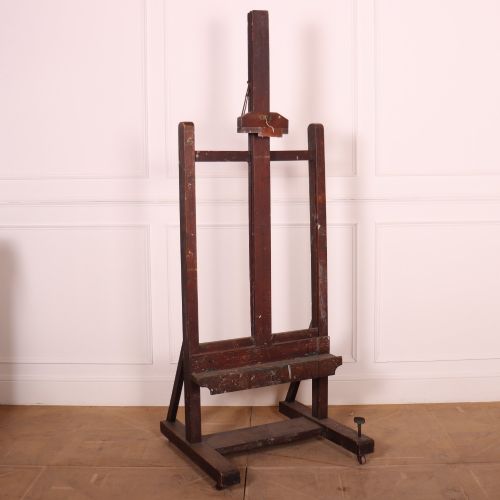
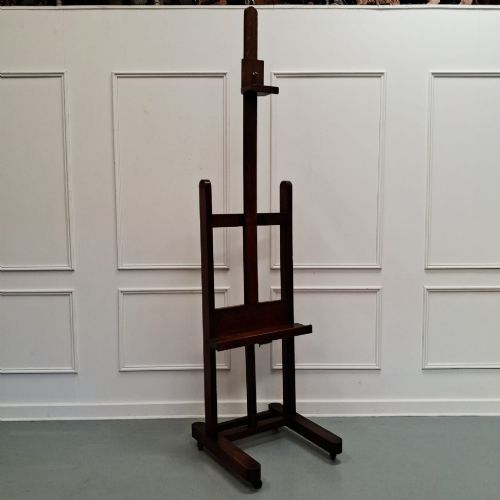
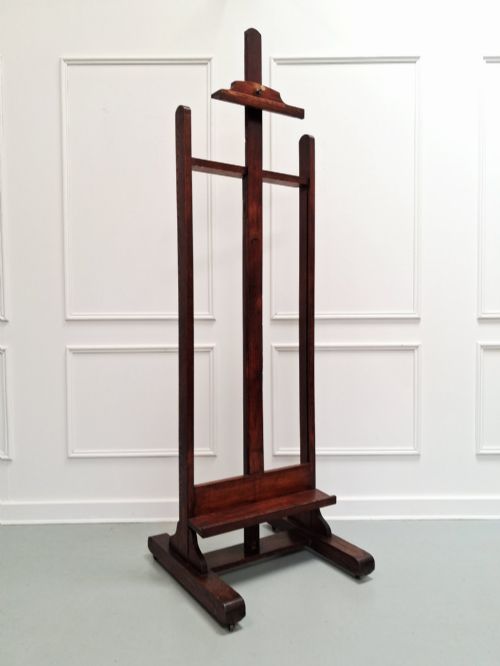
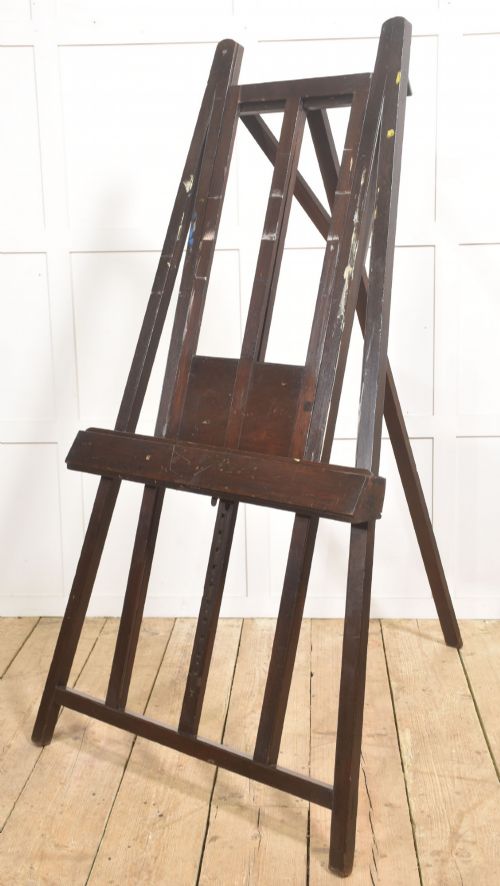
A large artists easel is a robust studio stand built to hold substantial canvases for serious painters, prized for solid oak construction and adjustable mechanisms.
Large Artists Easel
A large artists easel provides a heavy-duty framework for supporting oil paintings and studio canvases during creation. These practical pieces come from the nineteenth century and the early twentieth century, offering stable platforms for artists.
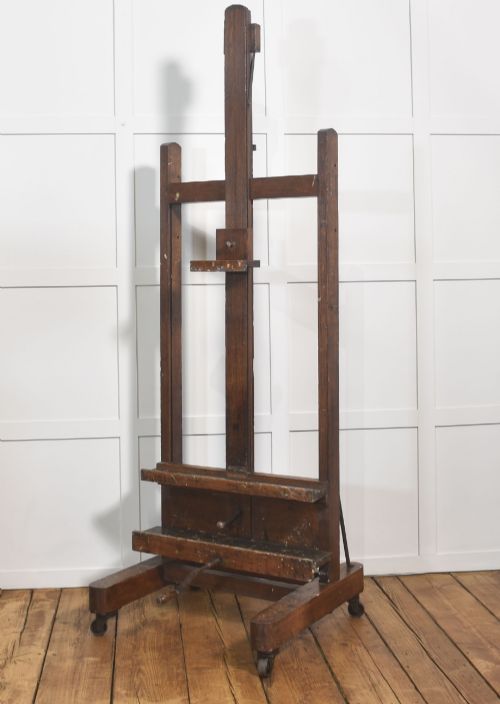
The selections encountered here typically comprise heavy timber frames in oak and mahogany, with some examples incorporating metal or cast iron adjustments. French and Scottish origins appear frequently among the nineteenth century formats.
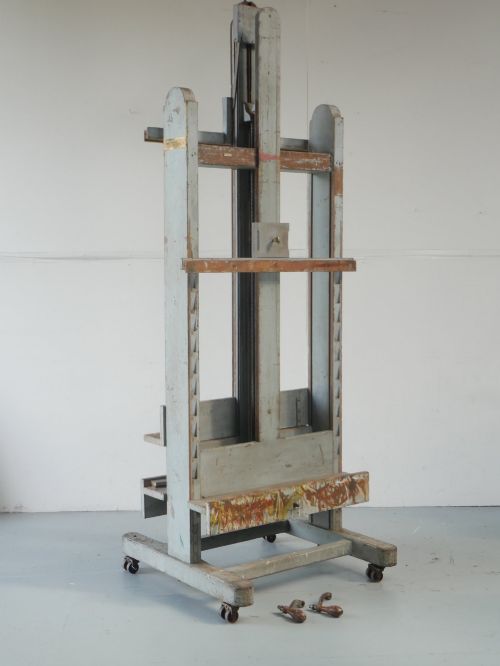
Studio easels range from double-sided configurations to fully adjustable variants designed for large-scale work. Specific pieces feature decorative flourishes such as a swan design alongside functional winding mechanisms.
How they were made
Cabinet makers utilised dense hardwoods like oak and mahogany to construct these substantial studio frames, ensuring the structure could bear the weight of heavy canvases. Joinery techniques relied on sturdy joints and substantial timber scantlings to withstand daily studio use.
Makers integrated brass and iron hardware to provide sliding brackets, winding handles and tilting mechanisms. Cast iron components frequently appear on industrial or fully adjustable examples to add necessary weight and strength at critical stress points.
Large Artists Easel Retail Price Guide 2026
Typical asking prices for large artists easel among the pieces listed under this phrase on Sellingantiques today, from the lower quarter to the upper quarter. They describe what is for sale here now, not the wider market.
One exceptional nineteenth-century studio stand includes a carved swan design.
What varies in quality
Quality rests upon the choice of timber and the precision of the mechanical adjustment systems. Dense, figured oak or rich mahogany frames with smooth-operating brass and iron winders represent the higher tier of production.
The complexity of the design alters the standing of a piece, moving from simple static uprights to fully adjustable double-sided studio formats with intricate decorative elements like swan carvings.
The Large Artists Easel Glossary
- Studio Easel
- A heavy, floor-standing wooden frame designed to hold large canvases securely inside a painter's workspace. These pieces often incorporate wheels or heavy bases for stability.
- Fully Adjustable
- A mechanical configuration allowing the painter to alter the height and angle of the canvas using integrated levers or winding handles.
- Double Sided
- A studio stand engineered to support two canvases simultaneously on opposing faces, permitting multiple works to progress in one workspace.
- Rococo Revival
- A nineteenth-century design movement favouring elaborate, fluid ornamentation derived from French eighteenth-century motifs.
Large Artists Easel: Frequently Asked Questions
How do I use a large artists easel?
Position the heavy wooden frame in a well-lit studio space, ensuring the base rests evenly on the floor. Use the winding handles and adjustable brackets to secure your canvas at a comfortable working height.
Take care not to overload the mechanisms beyond their intended capacity. Regular gentle maintenance of the metal gears keeps the height adjustments moving smoothly.
What woods were used for these easels?
Cabinet makers predominantly selected durable hardwoods such as oak and mahogany for nineteenth-century studio stands. These dense timbers provided the necessary structural integrity for heavy oil painting.
Occasionally, secondary softwoods or mixed timber components appear within internal framing. Metal and cast iron elements were added to reinforce high-stress mechanical areas.
How do I date a studio easel?
Examine the construction methods, timber selection and iron or brass hardware to determine the period. Nineteenth-century examples often display traditional hand-finished joinery alongside utilitarian metal winders.
Stylistic indicators such as French Rococo Revival detailing or specific regional oak characteristics also help narrow down the manufacturing timeframe between the late nineteenth century and nineteen-twenty.
Are these easels suitable for modern homes?
These substantial wooden stands serve as striking sculptural statement pieces in domestic interiors. They accommodate large modern artworks, mirrors or framed photographs with ease.
Ensure your floor space can support the deep footprint and heavy weight of an antique studio frame. Positioning the piece away from direct heat sources protects the old timber from drying out.