



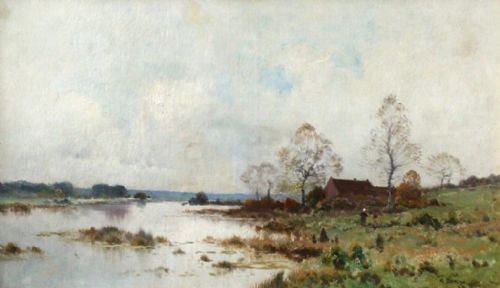


Large River Painting
A large antique river painting brings the movement and light of historic waterways directly into a room.
Large River Painting
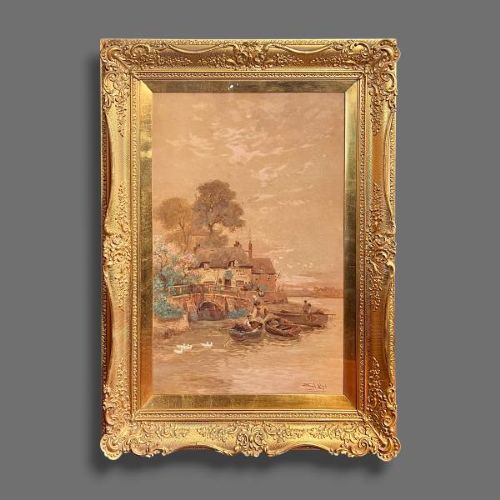
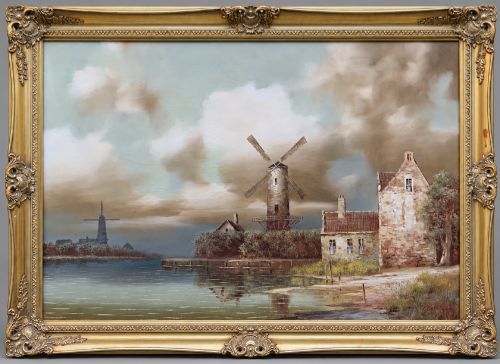
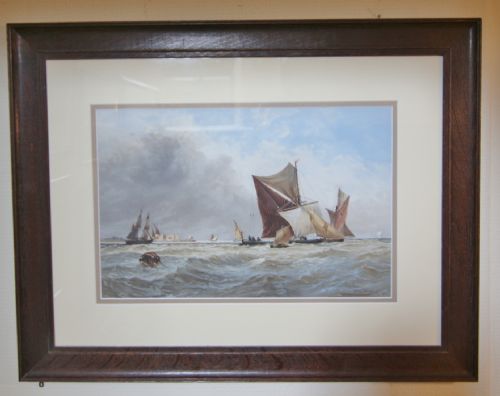
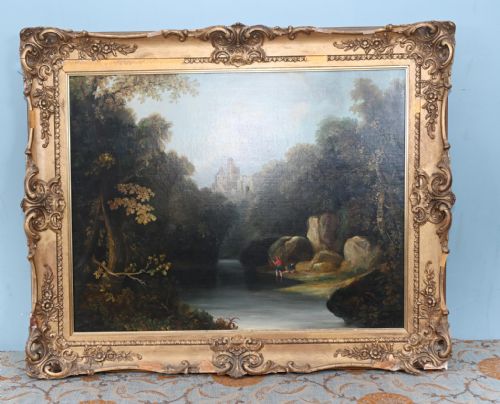
A large antique river painting captures expansive rural waterways, bustling docks, and quiet pastoral banks across the nineteenth and twentieth centuries. These works span British, French, and Continental schools, recording specific scenes from the Medway and the Stour to Niagara Falls and the Thames.
The version most commonly met on this page is a nineteenth-century oil painting on canvas or a detailed watercolour framed in period wood and gesso. Such works often measure on a grand scale, designed to dominate a wall and draw the viewer into the water's perspective.
The subject matter ranges from moody Victorian maritime views to sunlit post-impressionist scenes and topographical watercolours. Artists render these landscapes with varying focus, from topographical accuracy to atmospheric studies of light upon the surface of the water.
Materials and Technique
Painters utilised oil on canvas or applied watercolour to paper, often combining these media with embroidery or ink to build texture. Canvases were stretched over sturdy wooden frames, while watercolours relied on heavy paper supports to absorb washes of pigment.
Finished works found their homes within heavy wooden frames, frequently enhanced with gesso and giltwood to provide a formal boundary. These original frames protect the edges of the canvas and paper while complementing the tonal palette of the landscape within.
Large River Painting Retail Price Guide 2026
Typical asking prices for large river painting among the pieces listed under this phrase on Sellingantiques today, from the lower quarter to the upper quarter. They describe what is for sale here now, not the wider market.
Nineteenth-century artists frequently paddled small skiffs onto the middle of the Medway just to capture the exact wobble of a distant church tower.
Evaluating Quality
The distinction between ordinary and exceptional works rests on the artist's handling of light, atmosphere, and spatial depth across a grand scale. Superior paintings manage complex perspectives and fluid reflections without losing the natural rhythm of the water.
The integrity of the original frame and the preservation of the pigment layer heavily influence the standing of a piece. Works retaining their untouched surface and period giltwood framing demonstrate greater integrity than those altered by later interventions.
TB Hardy·Alexandre Le Bihan·William Sydney Cooper·David Cox Jnr·William Mellor·John Wright Oakes·Tom Seymour·Frederick Williamson·Gudrun Sibbons·Pierre Emmanuel Eugene Damoye·Harry Pennell·Franz Reder-Broili·Herbert John Finn·Pierre Peltier·Henri Therme·Etty Horton·Edward Seago·Matthew Jarvis·Hans Best·Joseph Paulman
The Large River Painting Glossary
- Giltwood
- Wood carved and coated with a thin layer of gold leaf or metallic powder. This material is standard for framing substantial nineteenth-century artwork.
- Gesso
- A plaster-like mixture applied to wooden frames before gilding or painting. It allows craftsmen to carve intricate relief ornaments along the border.
- Topographical
- Representing actual physical locations with geographical fidelity rather than inventing a landscape. These works serve as historical records of specific riverbanks and towns.
- Seascape
- A painting depicting the sea, ocean, or tidal rivers. These pieces often focus on maritime traffic and changing weather conditions over water.
- Continental School
- Art produced outside Britain, encompassing various European academies and regional styles. It indicates the broader geographical origin of the painter.
Large River Painting: Frequently Asked Questions
How should I hang a large river painting?
Secure the heavy frame directly into wall studs using appropriate picture hooks rated for substantial weight. Position the centre of the canvas at average eye level to ensure proper viewing perspective.
Keep the painting away from direct sunlight and damp walls to protect both the canvas and the original giltwood frame from gradual degradation.
What is the difference between oil and watercolour river paintings?
Oil paintings utilise pigment suspended in drying oils applied to canvas or wood, offering rich textures and deep tones. Watercolours use water-soluble pigments on paper, presenting a lighter and more translucent finish.
Oils generally tolerate environmental shifts better, whereas watercolours require protective glass glazing to prevent moisture damage and fading.
How do I identify the period of the frame?
Period frames feature hand-carved gesso details, shrinkage cracks in the surface finish, and corner joints constructed with traditional wooden pegs. These indicators distinguish nineteenth-century craftsmanship from later reproductions.
Examining the backing boards and rusted iron fixings can also confirm whether the frame has remained with the artwork since its creation.
Why are some river paintings signed while others are not?
Many professional artists signed their finished canvases or watercolours directly onto the front surface, often near a corner. Others documented their attribution on the reverse stretcher bars or archival framing labels.
Unsigned works frequently emerge from regional schools or student circles where individual branding was secondary to capturing the landscape.