
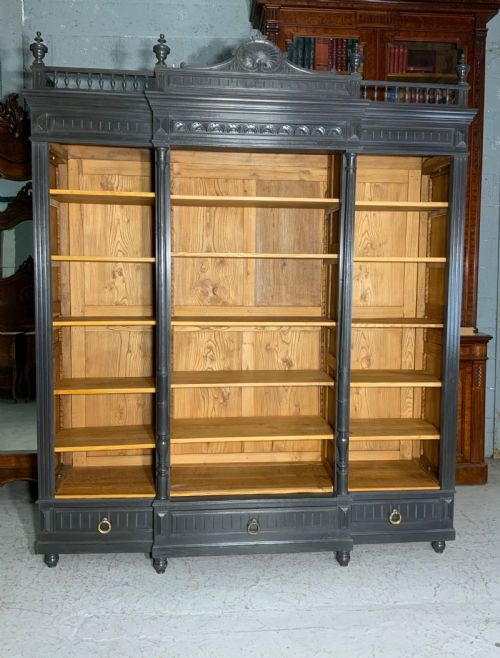
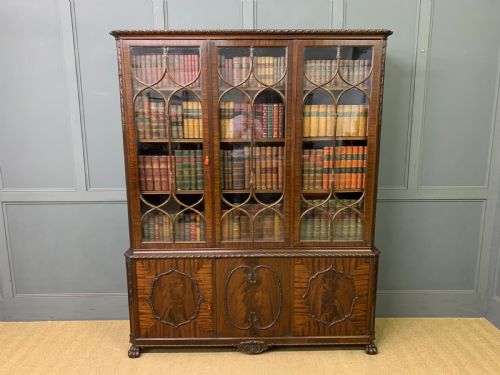
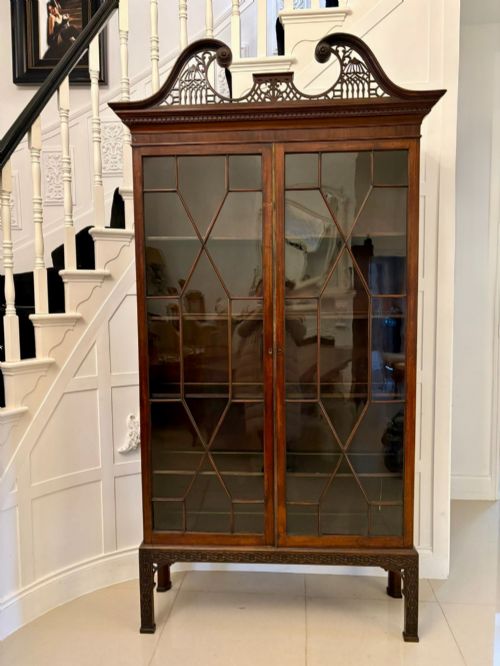
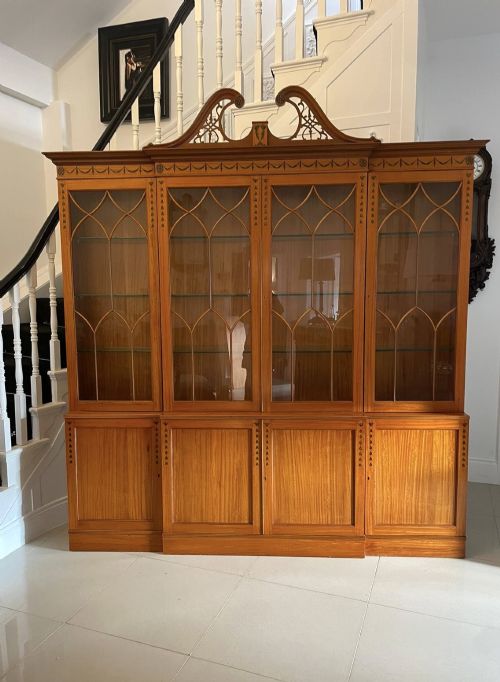
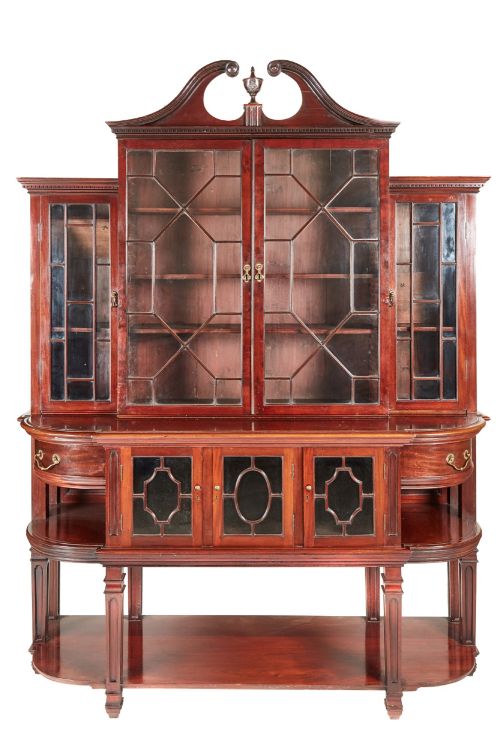
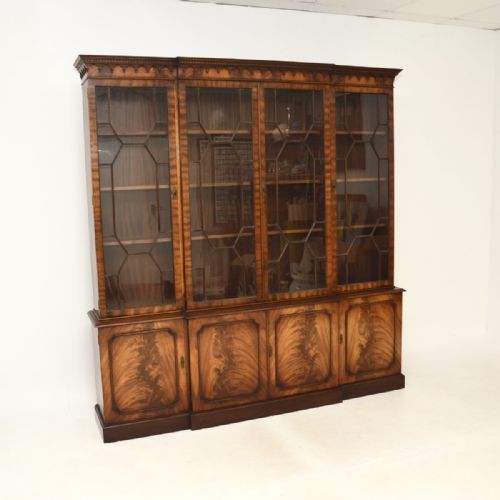
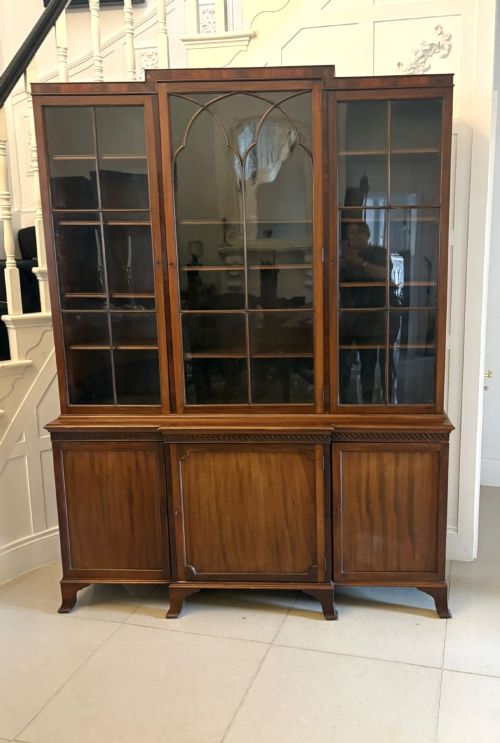
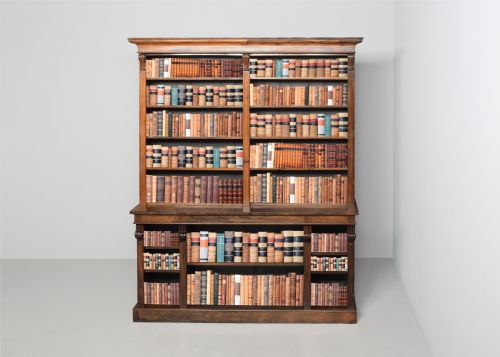

Large Bookcase Cabinet
When you search for a large antique bookcase cabinet, you are looking at substantial storage furniture built to house private libraries and display collections.
Large Bookcase Cabinet
A large antique bookcase cabinet combines bookshelf storage with enclosed cupboard space or glass-fronted display areas, often designed on a grand scale for domestic libraries or studies. The pieces seen here span from the eighteenth century through the Victorian and Edwardian eras into the early twentieth century.
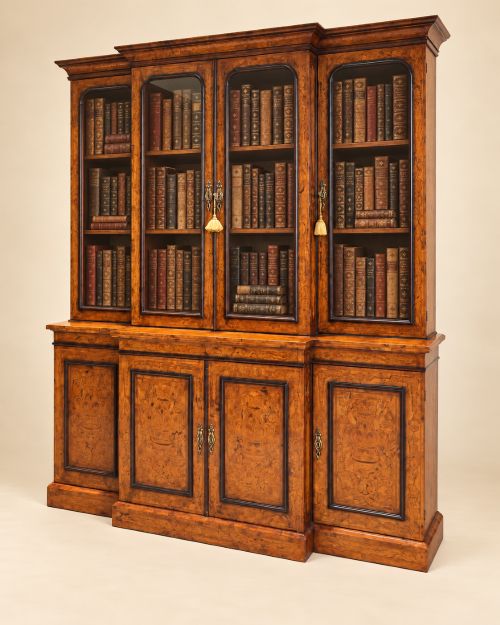
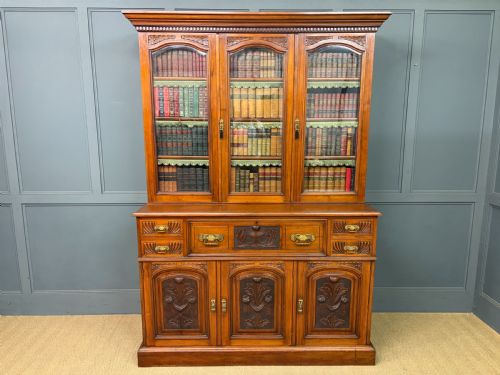
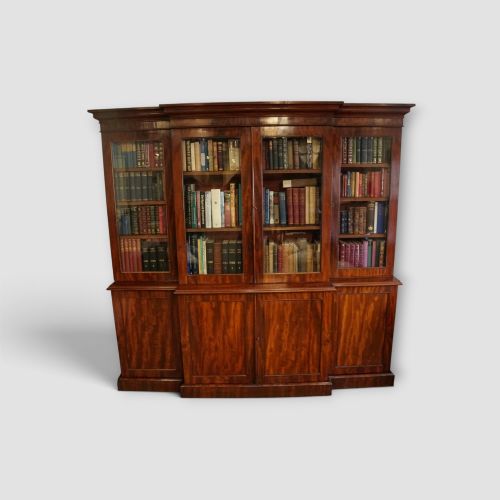
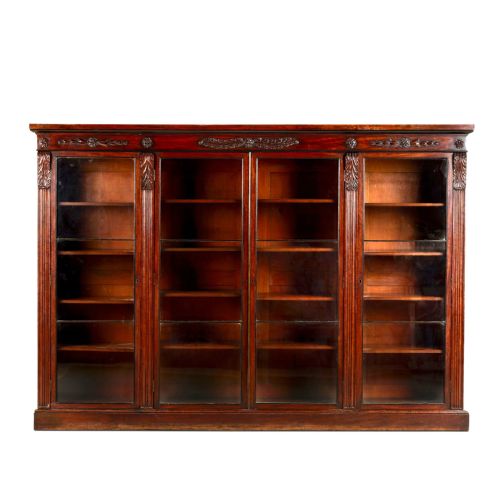
The breakfront configuration, featuring a central section projecting forward from flanking wings, appears frequently among the mahogany and walnut examples. Open bookcases and tall glazed library cabinets also form a major part of the selection, reflecting formal British and continental room layouts.
Makers and designers drew upon George III, Regency, and revival styles, resulting in substantial timber constructions designed to anchor a room. Buyers encounter tall upright formats alongside long multi-door configurations intended for extensive collections of books and porcelain.
Materials and Construction
Cabinet makers utilised dense hardwoods including mahogany, walnut, oak, and rosewood, often selecting figured veneers such as flame mahogany or burr walnut for prominent display surfaces. Secondary timbers like pine provided internal structure for shelving and backing boards.
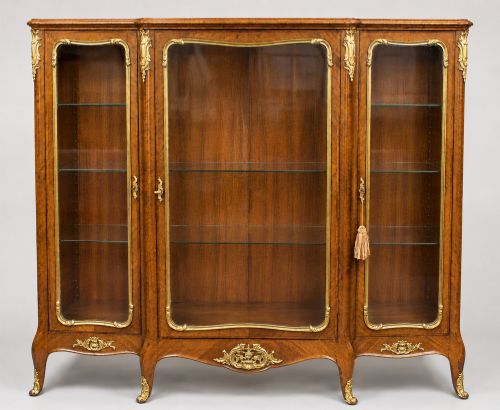
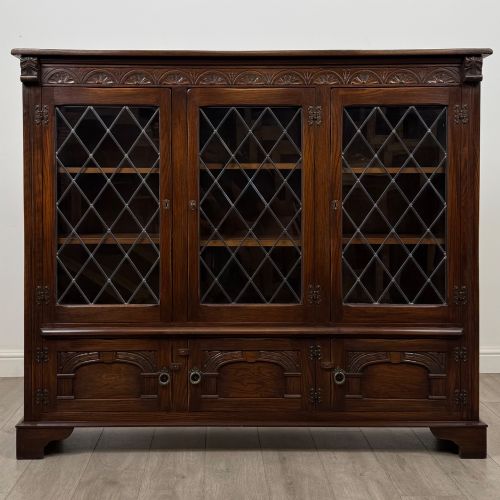
Glazing techniques employed individual glass panes held within wooden bars, such as astragal bars forming geometric patterns across cabinet doors. Brass hardware, ormolu mounts, and hand-cut dovetail joints complete the construction of these large storage pieces.
Listings feature woods including mahogany, oak, walnut, rosewood, and pine across eighteenth, nineteenth, and early twentieth century periods.
Grading Quality
Quality rests upon the selection of timber veneers and the precision of the joinery used in the breakfront or carcass frame. Master cabinet makers achieved seamless alignment in large multi-door fronts and incorporated subtle architectural details like carved mouldings.
The Large Bookcase Cabinet Glossary
- Breakfront
- A cabinet design where the central section projects forward from the flanking outer sections. This architectural arrangement creates depth and shadow lines across large furniture facades.
- Astragal
- A moulded bar of timber or metal fixing individual panes of glass within a cabinet door. These glazing bars often form delicate geometric or gothic arch patterns.
- Vitrine
- A glass-sided display cabinet designed primarily for the exhibition of porcelain and decorative objects. These cabinets frequently feature glazed sides to allow maximum light penetration.
- Secrétaire
- A desk disguised as a drawer or cabinet section that drops down to reveal a writing surface and pigeonholes. Such fittings appear within larger library bookcases.
- Ormolu
- Gilt bronze mounts applied to furniture for decorative enrichment during the eighteenth and nineteenth centuries. These metal ornaments accent key corners and cornices.
Large Bookcase Cabinet: Frequently Asked Questions
How do I care for a mahogany bookcase?
Keep the timber away from direct heat sources and sudden humidity changes to prevent veneer cracking.
Apply a traditional beeswax polish occasionally to nourish the wood and maintain its natural lustre.
Are the shelves adjustable?
Many period library bookcases feature rack-and-pinion or traditional wooden peg systems that allow shelf height adjustment.
Original interiors often retain these mechanisms, though some older cabinets have fixed shelving.
How do I tell Victorian from Georgian pieces?
Georgian furniture generally displays restrained classical proportions with clean architectural lines and dense native timbers.
Victorian pieces often incorporate heavier carvings, bolder cornices, and more flamboyant veneer selections reflecting later revival movements.
Can these large cabinets be dismantled?
Many breakfront and multi-section bookcases separate into manageable vertical modules or feature removable cornices and bases.
Older pine and oak examples may use knockdown construction methods designed for transportation between rooms.