



Large 18th Century Art
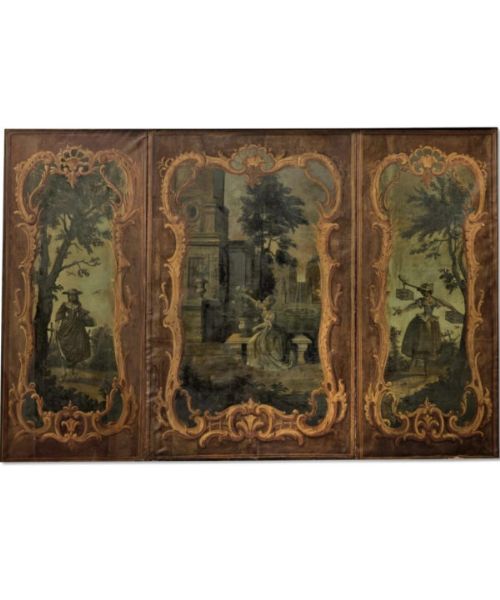
Large 18th century art encompasses grand oil paintings, woven tapestries, and detailed maps designed to anchor a historic interior.
Large 18th Century Art
Large 18th century art typically comprises monumental oil on canvas paintings, extensive woven tapestries, and framed cartographic maps. Buyers seek these substantial works to create a commanding focal point within high-ceilinged rooms or period properties.
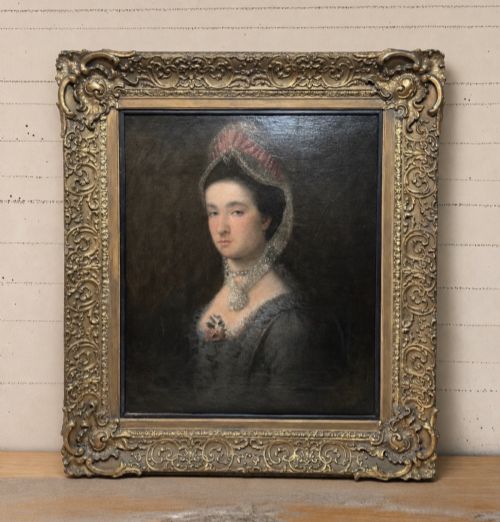
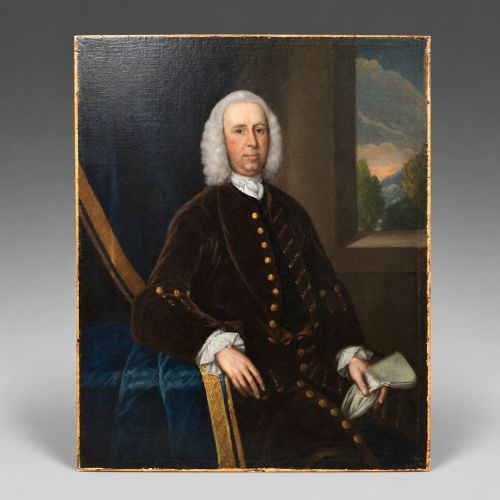
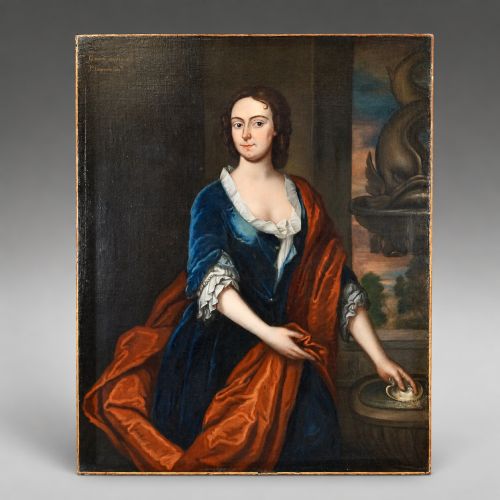
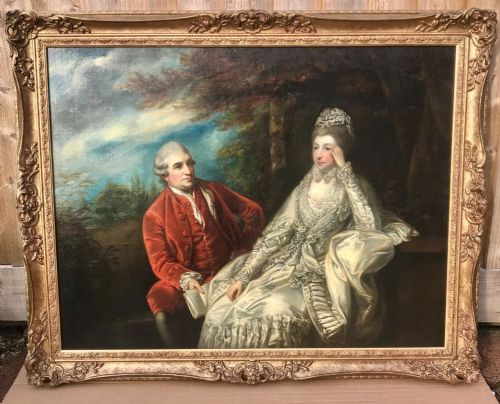
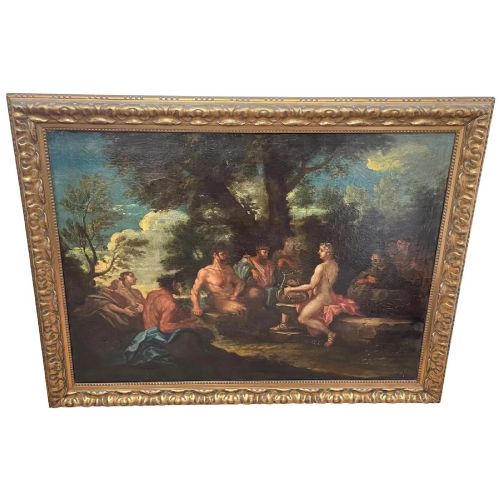
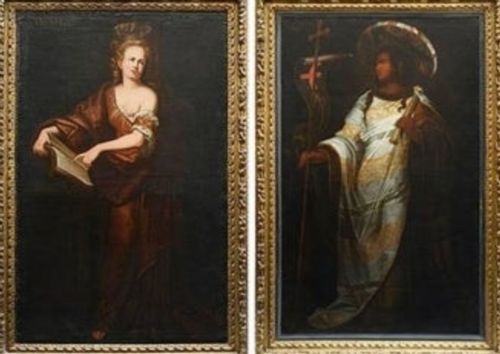
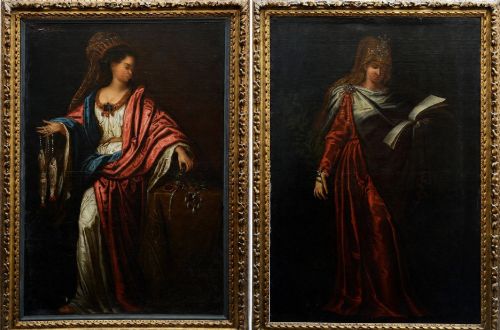
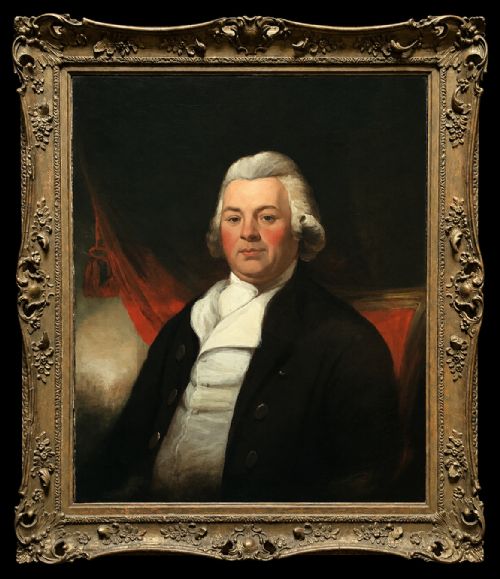
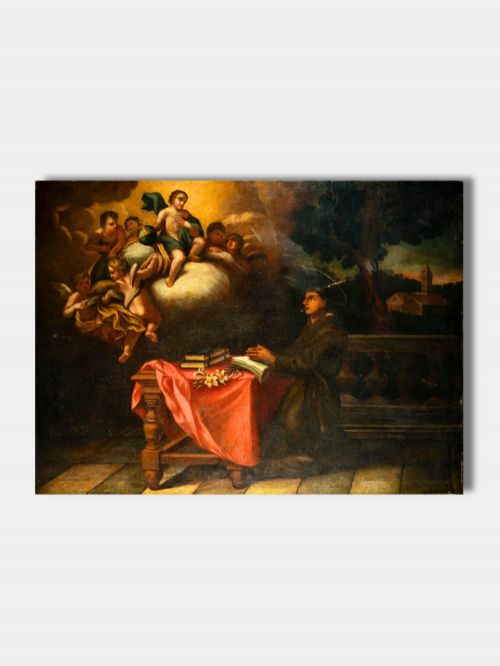
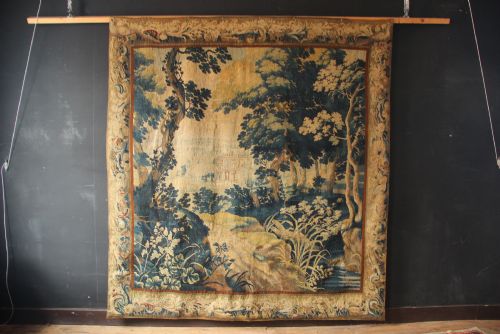
The selections span authentic Georgian portraiture and mythological scenes alongside later reinterpretations from the 1920s and 1930s. Original oils on canvas dominate the category, frequently framed in heavy giltwood or accompanied by French pastoral and Flemish verdure wall hangings.
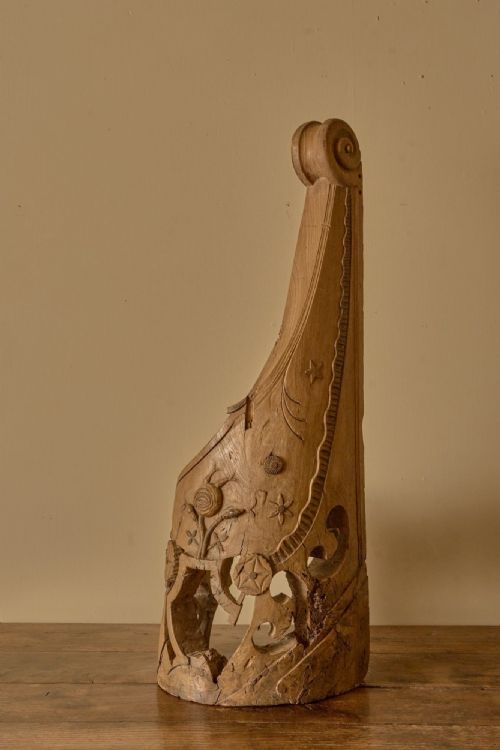
Beyond traditional canvases, the category extends to carved wooden panels, Delft charger plates, and hand-painted marriage chests. These diverse formats share a generous physical scale and direct links to eighteenth-century aesthetic traditions.
How they were made
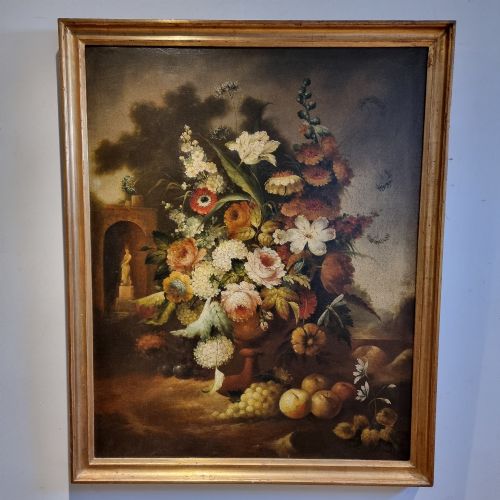
Paintings utilise oil on canvas applied with fine brushes, often housed within ornate, carved giltwood frames. Artisans built structural rigidity using heavy timber stretchers to support expansive compositions like Dutch floral still lifes and grand portraits.
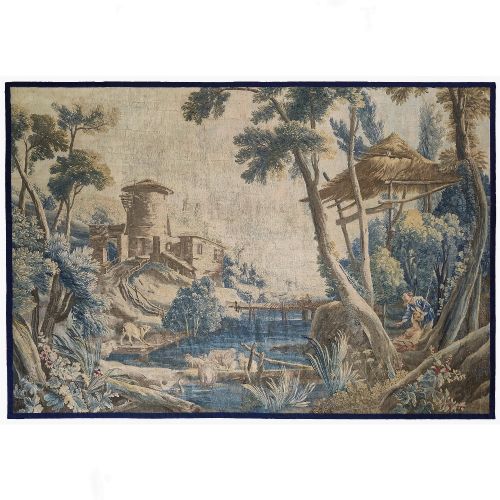
Tapestries involve complex hand-weaving techniques using wool and other textile fibres to construct dense verdure and pastoral narratives. Cartographic works and prints combine paper substrates with detailed ink application, occasionally featuring hand-colouring.
Sculptural elements rely on materials such as plaster cast in moulds to form decorative wall friezes or involve direct wood carving. Ceramic items like Delft chargers combine clay bodies with tin-glazing and polychrome pigment painting.
Large 18th Century Art Retail Price Guide 2026
Typical asking prices for large 18th century art among the pieces listed under this phrase on Sellingantiques today, from the lower quarter to the upper quarter. They describe what is for sale here now, not the wider market.
Common structural materials include oil on canvas, woven wool, giltwood, and pith paper.
What varies in quality
The finesse of the brushwork and the confidence of the draftsmanship distinguish accomplished portraiture and landscape painting from rigid studio copies. Master artists achieve depth in drapery and facial expression through nuanced layering, whereas lesser works remain flat.
Textile pieces differ in the density of the wool weave and the complexity of the polychrome palette, which affects how well the pictorial narrative survives. Finer tapestries maintain structural integrity across large expanses without excessive distortion.
The integrity of the supporting frame, whether original giltwood or period timber, plays a major role in the overall presentation. Works retaining their contemporaneous framing elements demonstrate higher historical cohesion than those paired with modern replacements.
Joshua Reynolds·John Opie·George Watson·Philipp Ferdinand de Hamilton·George Morland·Eman Bowen·Giacomo Nani
The Large 18th Century Art Glossary
- Giltwood
- Wood that has been coated with a thin layer of gold leaf or gold paint. This technique was widely applied to elaborate frames designed for grand paintings.
- Verdure tapestry
- A woven wall hanging featuring a predominant landscape design of trees, foliage, and plants. These textiles often incorporate distant views of hills or animals.
- Old Master
- A term applied to a highly skilled European painter working before about eighteen hundred. It also refers to a painting produced by such an artist.
- Grisaille
- A method of painting executed entirely in shades of grey or neutral monochrome. This technique often imitates the appearance of sculptural reliefs.
- Polychrome
- Decorated or printed in several colours. The term frequently describes ceramics, painted panels, and wall hangings with vibrant palettes.
Large 18th Century Art: Frequently Asked Questions
How do I hang a heavy canvas?
Substantial oil paintings require secure fixings anchored directly into wall studs or masonry using heavy-duty picture hooks rated for the specific weight.
Professional installation is often necessary to distribute the load evenly across the frame and prevent structural strain on the canvas.
What is a verdure tapestry?
A verdure tapestry is a woven wall hanging dominated by botanical motifs, foliage, and woodland scenery. These large textiles were originally used to insulate stone walls and bring natural imagery indoors.
They typically employ wool threads to create textured depictions of trees, leaves, and occasional wildlife.
Are these paintings original?
The selection includes both original eighteenth-century works and later stylistic interpretations created in subsequent decades. Each listing specifies the period of creation to distinguish authentic antiques from twentieth-century revivals.
Examining the canvas preparation and pigment characteristics helps confirm the age of the piece.
How should I clean a textile panel?
Historic textiles require gentle maintenance and should be protected from direct sunlight to prevent fading of the wool fibres. Professional conservation cleaning is recommended for large tapestries to avoid damaging the weave.
Regular light dusting with a soft brush helps prevent surface accumulation.