




Landscape Tapestry Panel
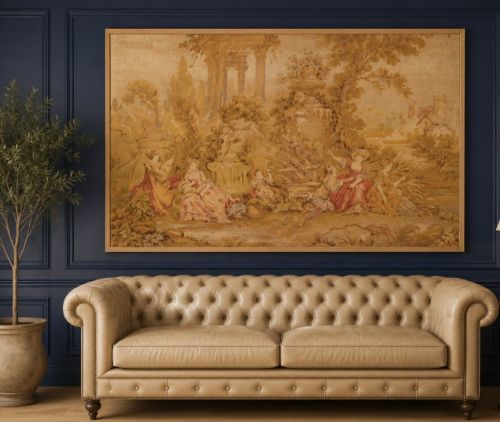
A landscape tapestry panel brings expansive historic foliage and distant woodland scenes indoors, transforming plain walls with woven depth and texture.
Landscape Tapestry Panel
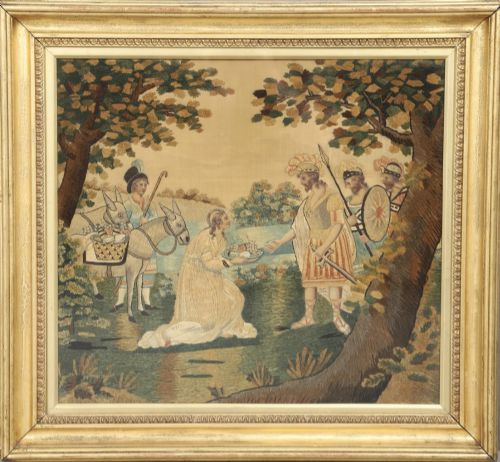
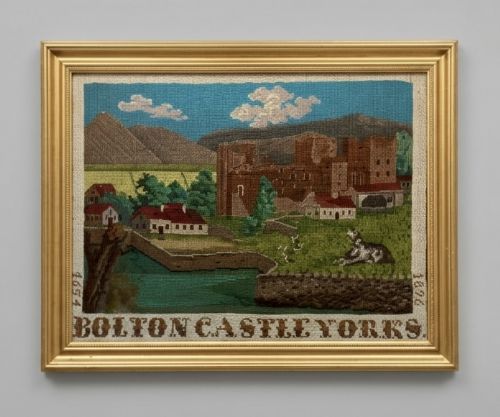
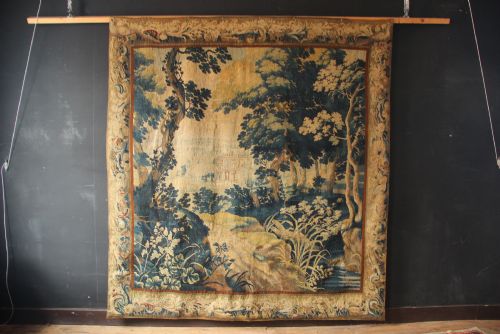
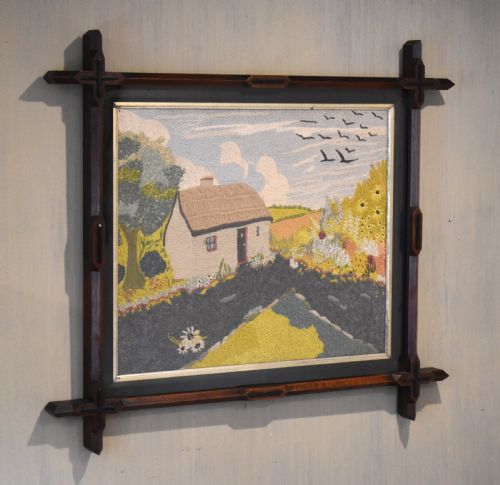
The selections span the seventeenth, eighteenth, and nineteenth centuries, with distinct regional expressions including Flemish Baroque verdure compositions and French chateau styles. Pieces range from grand horizontal wall art to vertical needlework pictures created during the Arts and Crafts period.
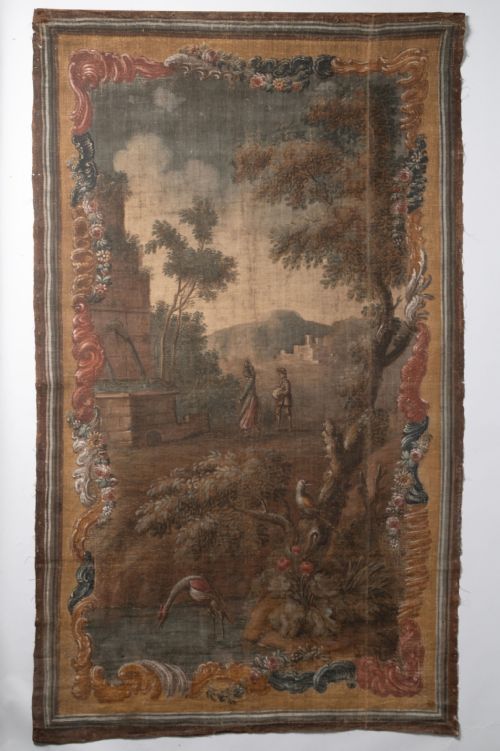
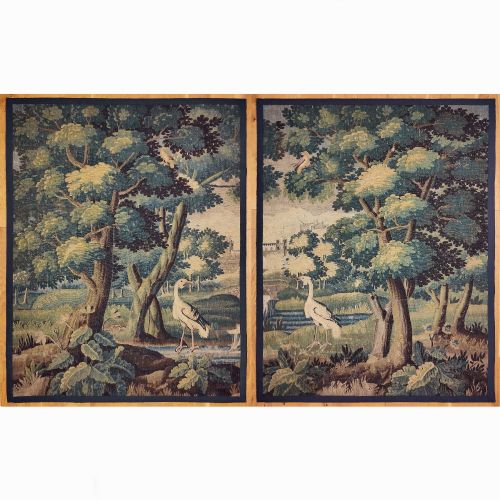
Verdure subjects dominate the selection, featuring lush foliage, trees, and occasional wildlife woven to create a sense of deep perspective. Many examples survive within timber frames or mounted directly as textile art for modern rooms.
Materials and construction methods
Weavers constructed these panels primarily using wool and silk threads, blending durable animal fibres to achieve varied textural densities and chromatic depth. Silk highlights often illuminate foliage and sky elements, contrasting against heavier wool warp and weft foundations.
Makers integrated linen or cotton backings on specific hanging examples to provide structural support for heavy woven surfaces over centuries of display. Certain needlework pictures incorporate water-based pigment details or utilise timber frames for rigid wall mounting.
Landscape Tapestry Panel Retail Price Guide 2026
Typical asking prices for landscape tapestry panel among the pieces listed under this phrase on Sellingantiques today, from the lower quarter to the upper quarter. They describe what is for sale here now, not the wider market.
Wool and silk forests populated by tiny woven birds have outlasted the monarchs under whose reigns they were stitched.
Assessing quality in historical textiles
Quality rests upon the complexity of the dye palette and the tightness of the weave, which together govern the persistence of botanical detail. Tightly packed wool and silk threads maintain crisp foliage edges and convincing spatial depth across verdure vistas.
The survival of original colour saturation dictates visual success, as fugitive dyes alter the balance between deep woodland greens and lighter background tones. Structural integrity of the textile weave and the presence of supportive timber frames further distinguish superior examples.
The Landscape Tapestry Panel Glossary
- Verdure tapestry
- A textile featuring a predominant landscape design of trees, plants, and foliage, often populated by birds or small animals. These scenes emphasise lush greenery and naturalistic scenery over human figures.
- Flemish Baroque
- An artistic style originating in Flanders during the seventeenth century characterised by dramatic composition, rich texture, and opulent botanical rendering. Tapestries from this tradition display dense, layered woodland environments.
- Needlework picture
- A hand-stitched textile composition created using yarn or thread on a canvas or linen ground, functioning as framed wall art. These pieces substitute direct weaving with surface embroidery techniques.
- Aubusson
- A traditional French style of tapestry weaving associated with workshops in the Creuse valley, known for pastoral and floral designs. Aubusson panels frequently depict verdure landscapes framed by decorative borders.
Landscape Tapestry Panel: Frequently Asked Questions
How do I hang a heavy tapestry panel?
Large textile panels require even weight distribution along the upper edge using a concealed batten or specialised sleeve stitched to the reverse. This method prevents distortion of the wool and silk weave over time.
Avoid hanging tapestries in direct sunlight or damp environments to preserve the integrity of natural fibres and historical dyes.
What is a verdure landscape?
A verdure landscape depicts dense foliage, trees, and rolling hills with an emphasis on botanical variety and natural shades of green. These scenes often create an immersive woodland atmosphere within an interior space.
Originating largely in Flemish and French workshops, these compositions invite the outdoors inside through detailed textile artistry.
How do I clean an antique tapestry?
Surface dust should be removed gently using a soft brush attached to a low-suction vacuum, with a protective mesh screen placed over the textile. Professional textile conservators should handle deeper cleaning or repairs.
Water and standard cleaning products can cause irreversible shrinkage and dye bleeding in historical wool and silk threads.
How do I date an old tapestry panel?
Dating relies on stylistic markers such as Flemish Baroque foliage motifs, nineteenth-century colour palettes, or Arts and Crafts needlework techniques. Material composition, including the use of specific silk and wool blends, also provides chronological clues.
Comparing border designs and perspective rendering against documented historical examples helps narrow the period of creation.