





Lancashire Armchair
A lancashire armchair brings solid English country character to a room, offering sturdy regional craft and rush or timber seating.
Lancashire Armchair
A lancashire armchair embodies traditional English country vernacular design, combining regional timber framing with practical seating. Buyers seeking a lancashire armchair encounter robust vernacular forms from the seventeenth century through to the Edwardian era.
Rush seats and timber seats predominate across the periods, reflecting utilitarian country requirements. Pieces range from early wainscot forms to later Victorian farmhouse armchairs and Edwardian interpretations.
Materials and Construction
Makers utilised native English hardwoods such as oak, elm, ash, beech, and occasionally fabric for upholstery where specified. Seventeenth-century examples rely heavily on solid oak construction, while later nineteenth-century chairs frequently employ elm and ash.
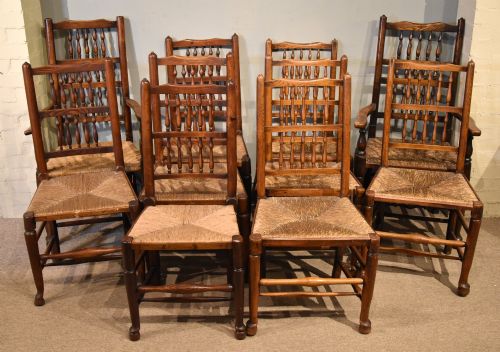
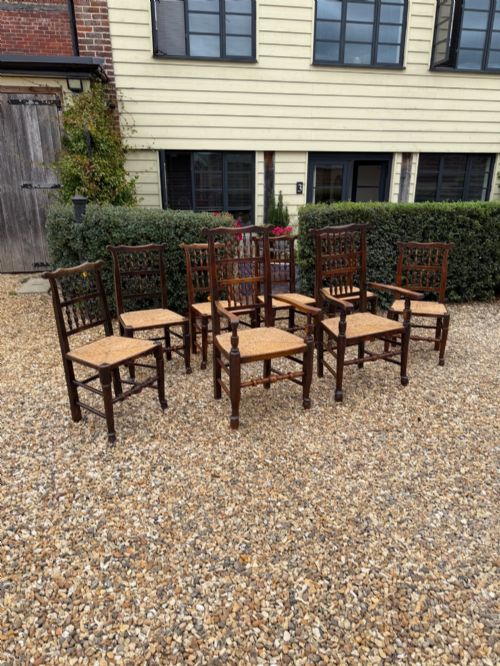
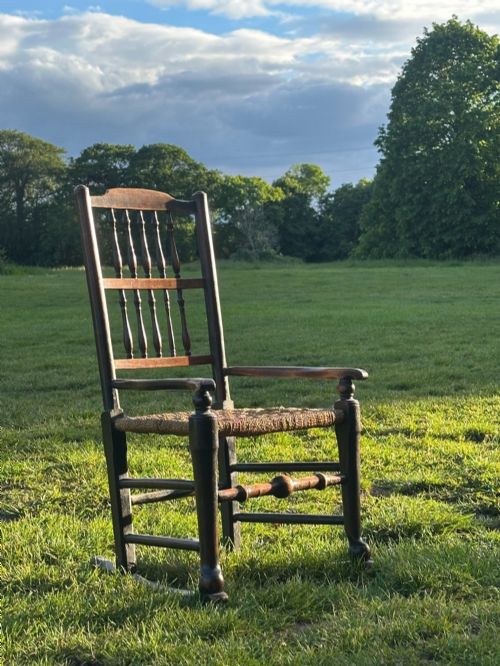
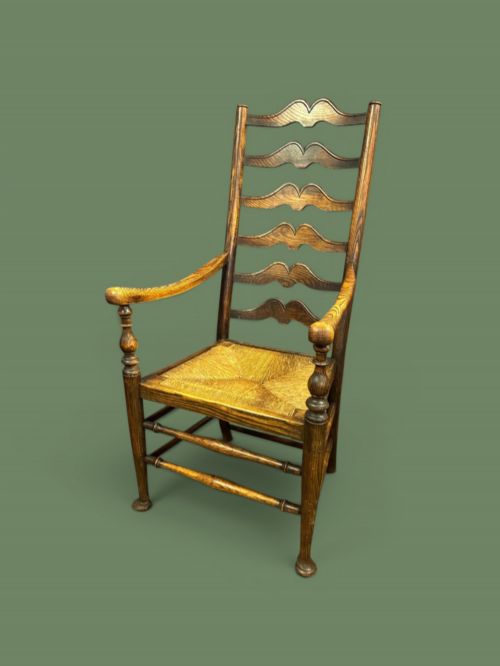
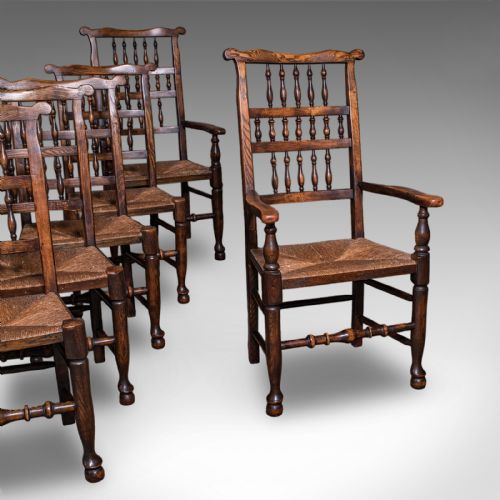
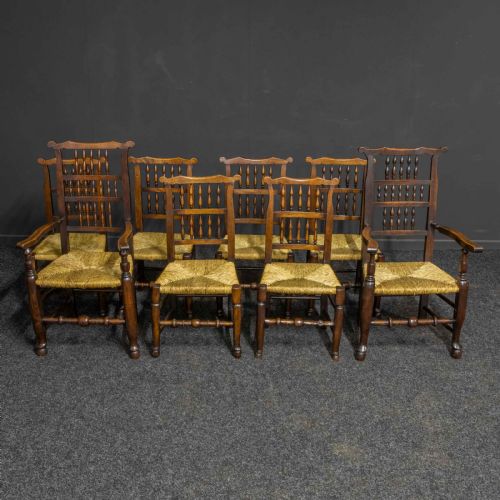
Frames demonstrate traditional joinery techniques suited to country workshops, incorporating spindleback and ladderback supports alongside rush seating. These construction methods prioritised durability and functional utility in domestic settings.
Lancashire Armchair Retail Price Guide 2026
Typical asking prices for lancashire armchair among the pieces listed under this phrase on Sellingantiques today, from the lower quarter to the upper quarter. They describe what is for sale here now, not the wider market.
Listings span from the 17th Century to the Edwardian period, utilising oak, elm, ash, beech, and rush.
Assessing Quality and Character
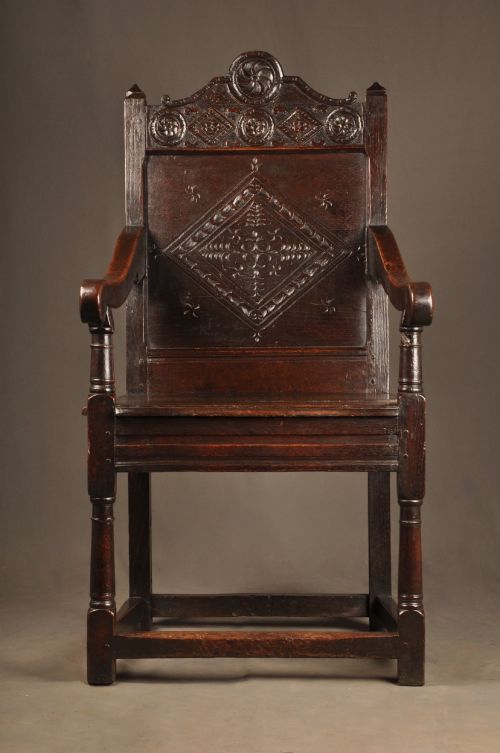
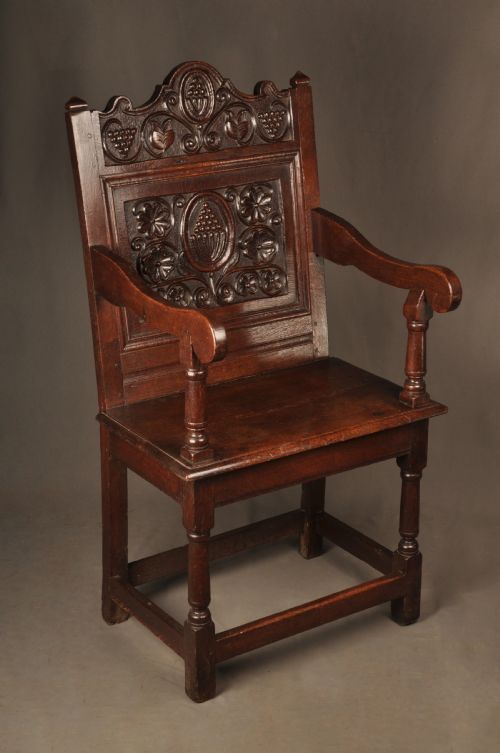
Quality in these country chairs rests upon the integrity of the timber framing and the preservation of original elements like rush seats. Early wainscot examples derive distinction from deep period carving and substantial oak construction.
Later spindleback and ladderback versions show variation in the turning of the wood and the tightness of the rush work. Proportions and the retention of honest surface patination distinguish superior regional pieces from simpler variants.
The Lancashire Armchair Glossary
- Wainscot chair
- An early heavy wooden armchair constructed with panelled backboards and solid seat supports. These seventeenth-century pieces represent the formal end of regional vernacular seating.
- Spindleback
- A chair back constructed with a series of vertical turned wooden rods. This style provides lighter support than solid panels in nineteenth-century country chairs.
- Rush seat
- A seating surface woven from dried marsh rushes. It offers a resilient, slightly springy texture common in traditional country chairs.
- Ladderback
- A chair back featuring a series of horizontal arched slats between the upright posts. This traditional form allows for simple yet sturdy construction.
Lancashire Armchair: Frequently Asked Questions
How do I date a lancashire armchair?
Dating relies on identifying the primary timber, construction style, and form characteristics present in the piece. Seventeenth-century examples typically use heavy oak with wainscot panelling, while eighteenth and nineteenth-century versions utilise elm, ash, and beech in spindleback formats.
Changes in turning styles and seat construction also help distinguish earlier regional work from later Victorian and Edwardian interpretations.
Were these chairs used for dining?
Many of these chairs served multiple domestic purposes around the farmhouse table or hearth. Sets of dining chairs and individual carvers appear alongside rocking chairs in the regional record.
Their sturdy timber frames and comfortable rush or solid seats made them suitable for daily household use across generations.
How do I care for a rush seat?
Rush seats require a stable indoor humidity level to prevent the natural fibres from drying out or becoming brittle. Regular gentle dusting keeps the woven strands free from damaging grit.
Heavy moisture should be avoided entirely when cleaning the wooden frames and rush panels.