





Ladies Kneehole Desk
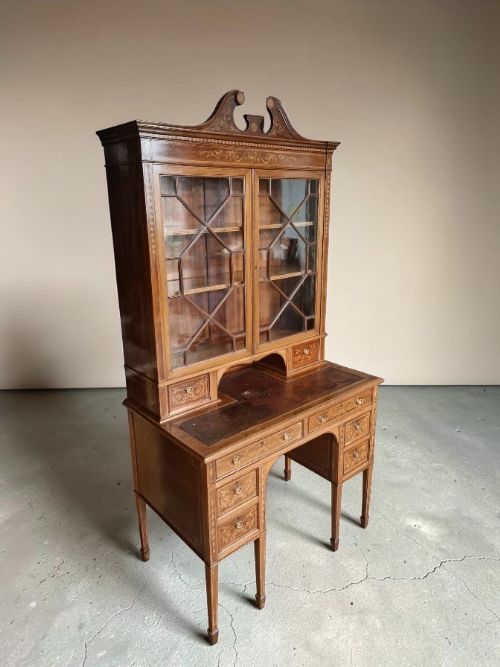
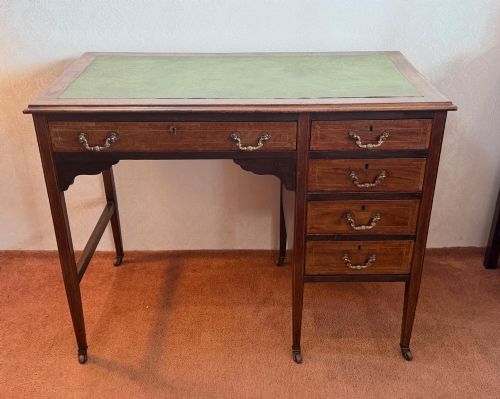
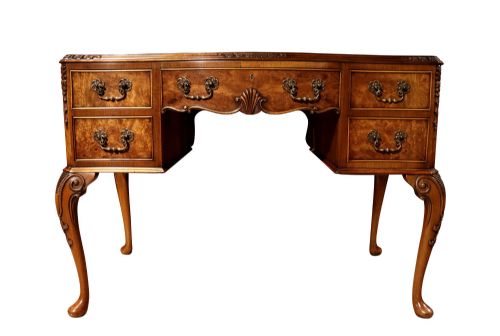
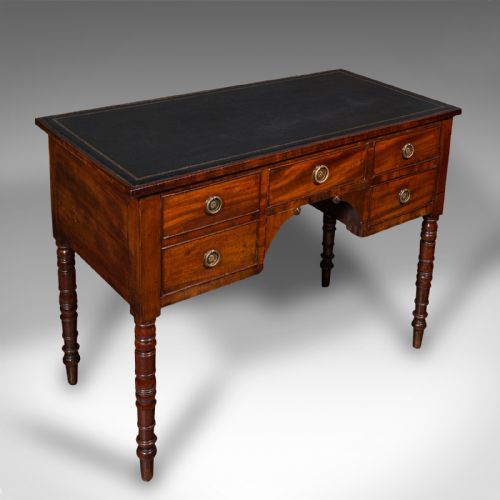
These ladies kneehole desk pieces are compact writing tables with a central recess, offering a neat workspace that suits a private study.
Ladies Kneehole Desk
A ladies kneehole desk brings a compact and practical writing surface into smaller rooms, combining a central recess with banks of side drawers. These pieces appear across several periods, from mid-nineteenth century examples to Edwardian and later twentieth century interpretations.
The most common versions on this page are Edwardian and nineteenth century pieces, often constructed in mahogany, walnut, or burr walnut. Many feature inlaid details, leather writing surfaces, or revival styles that look back to earlier centuries.
Makers and cabinetmakers produced these desks for private correspondence and morning room use, ensuring a refined scale that distinguishes them from larger partners desks or library tables.
How they were made
Cabinetmakers built these desks using solid timbers and veneers like mahogany, walnut, burr walnut, and satinwood, frequently enhanced by intricate marquetry or stringing. Brass handles, escutcheons, and occasional ormolu mounts complete the hardware of the drawers and doors.
Writing surfaces typically incorporate inset panels of leather, providing a durable and smooth plane for correspondence. Internal drawer construction often relies on traditional dovetail joints, reflecting standard workshop practices of the Victorian and Edwardian eras.
Several examples include compartments specifically designed for morning correspondence, reminding us of an era when letters required morning room concentration.
What varies in quality
Quality in these desks rests upon the choice of timber and the precision of the cabinetwork, particularly in the figuring of veneers like burr walnut or kingwood. Finer pieces demonstrate careful grain matching across drawer fronts and harmonious proportions that avoid feeling heavy or cramped.
The refinement of secondary details, such as hand-cut dovetails, crisp brass hardware, and well-executed inlay work, separates standard production items from more accomplished workshop output.
The Ladies Kneehole Desk Glossary
- Kneehole
- A recessed space beneath the desk top designed to accommodate the user's legs while seated. This arrangement allows drawers to flank both sides.
- Marquetry
- Decorative patterns formed by fitting together small pieces of wood veneer. It frequently adorns the top and drawer fronts of revival pieces.
- Ormolu
- Gilt bronze ornamentation applied to furniture mounts. It appears on French revival pieces to accent corners and handles.
- Escutcheon
- A protective plate surrounding a keyhole. These are typically cast in brass and add a functional decorative touch to drawer faces.
Ladies Kneehole Desk: Frequently Asked Questions
What is a kneehole desk?
A kneehole desk is a compact writing table featuring a central recess for the user, flanked by small drawers on either side. This layout provides storage without requiring the broad footprint of a full pedestal desk.
Such furniture was traditionally used in private sitting rooms and chambers for daily correspondence and personal administration.
How do I date an Edwardian desk?
Edwardian desks often display characteristic lighter timbers, delicate boxwood stringing, and neoclassical revival motifs. Construction methods during this period also lean towards factory standardisation alongside traditional hand finishing.
Examining the drawer linings, secondary timbers, and overall aesthetic helps distinguish these pieces from earlier Victorian or later revival examples.
Are these desks suitable for daily use?
These pieces function well for modern writing and laptop tasks, provided the working height matches your chair. Their modest dimensions make them practical for contemporary home offices and bedrooms.
Care should be taken with historic leather writing surfaces and polished wood finishes when using modern writing implements.
What woods were commonly used?
Mahogany and walnut form the primary structural and visual choices across the periods represented. Cabinetmakers also utilised burr walnut, satinwood, and kingwood for decorative veneer work.
Secondary timbers inside the drawers often include oak or pine, depending on the workshop origin and date of manufacture.