




Ladies Cocktail Watch
A ladies cocktail watch combines the precision of fine horology with the sparkle of period jewellery.
Ladies Cocktail Watch
A ladies cocktail watch functions primarily as a piece of evening jewellery that happens to tell the time, designed to be worn at social gatherings. These pieces emerged strongly during the 1920s and 1930s under the influence of Art Deco geometry, continuing through the mid-century decades with cleaner lines.
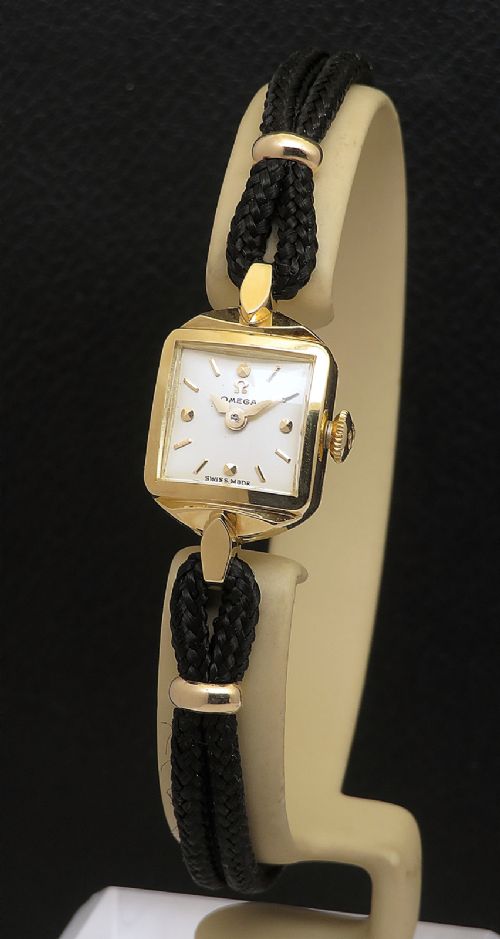
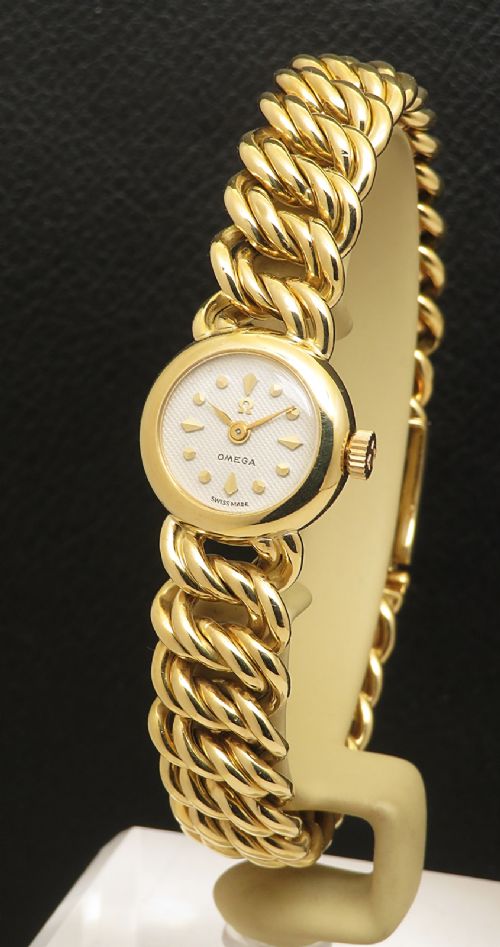
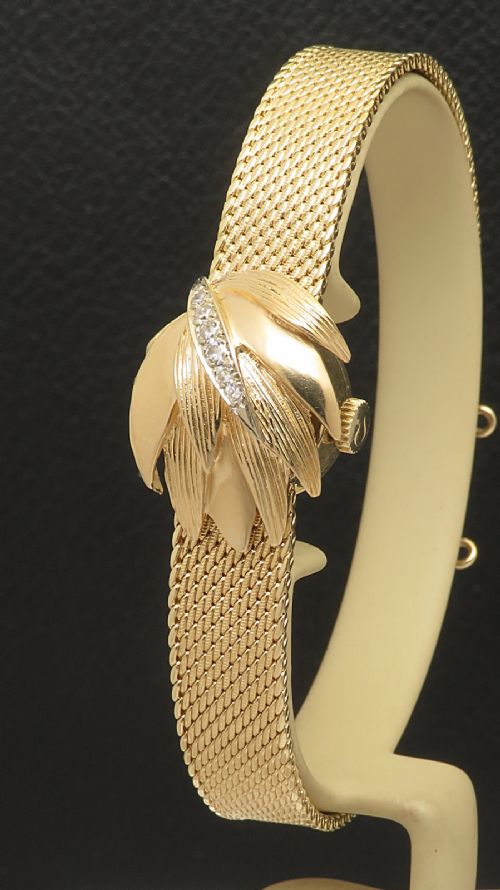
Most examples found here take the form of delicate wristwatches or integrated bracelet watches, though fob watch variants also appear. They frequently feature tiny watch faces concealed beneath diamond-set covers or integrated seamlessly into precious metal bands.
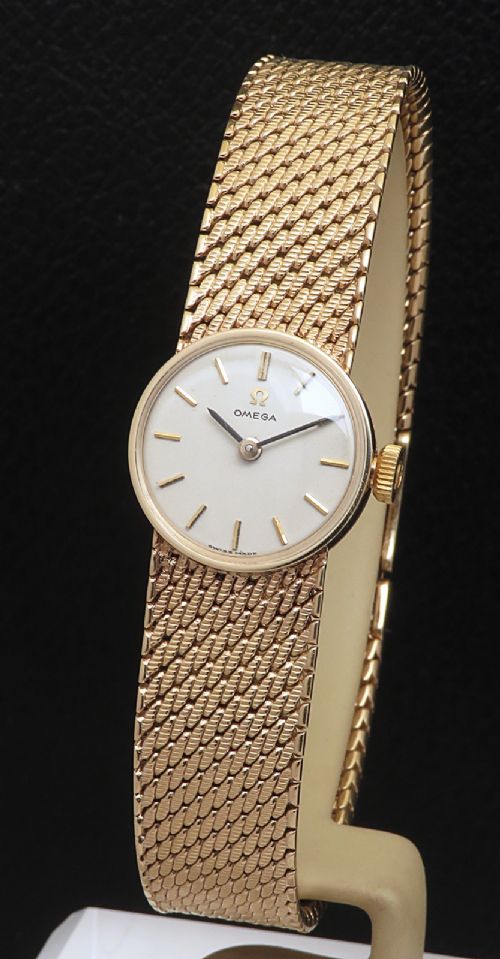
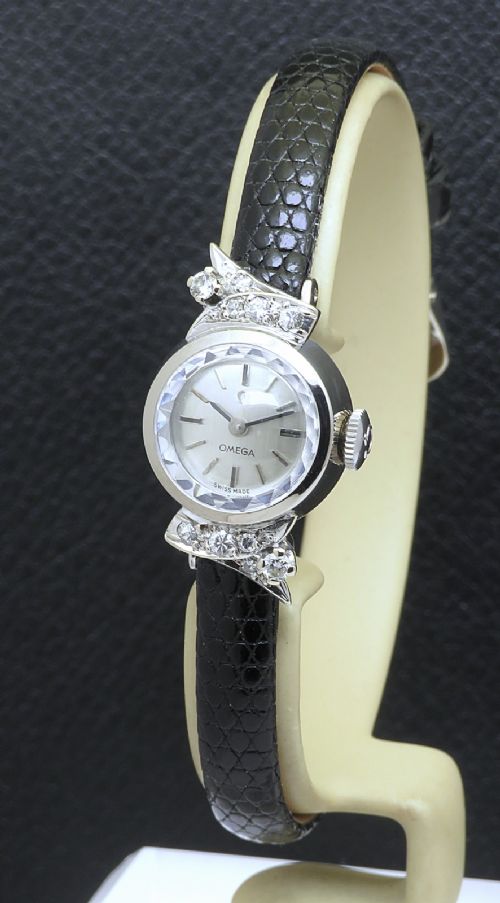
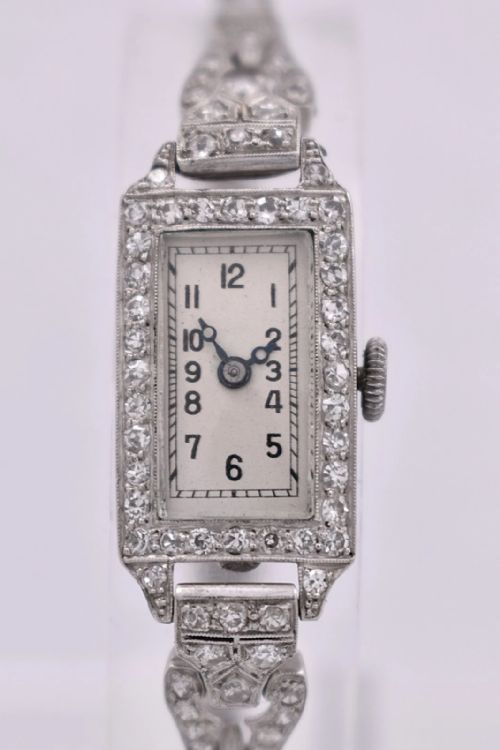
The aesthetic shifts visibly across the decades represented on this page. Earlier twentieth-century pieces lean heavily into platinum and geometric diamond settings, while the 1950s and 1960s introduce heavier gold construction and modernist forms from makers like Omega and Vertex.
How They Were Made
Horologists utilised precious metals such as platinum, 18ct white gold, and 9ct yellow gold to form the miniature cases and flexible mesh bracelets. These metals provided the necessary structural rigidity to securely hold micro-pavé and prong-set diamonds without adding excessive weight to the wrist.
Gems were selected for their uniformity and brilliance, covering surfaces in carat weights that often rivalled dedicated cocktail rings. Movements inside were miniaturised Swiss mechanical calibres, often featuring jewelled lever escapements to maintain accuracy within a very restricted space.
Materials recorded across the archive include platinum, 18ct white gold, 9ct gold, diamonds, glass, leather, and fabric.
What Varies in Quality
The hierarchy among these watches rests on the integration between the jewellery design and the underlying movement. Pieces where the diamond work and precious metal casing are executed by high-end makers or specialty jewelers display a superior unity of form.
Finishing details distinguish standard production pieces from exceptional ones, particularly the complexity of the gold mesh work, the symmetry of the gem-setting, and the presence of original signed boxes and documentation.
Omega·Rolex Tudor·Bucherer·Asprey·Elgin·Vertex·Movado·Tissot·Benrus·Jaeger-LeCoultre·Mappin and Webb·Girard Perregaux·Longines·Certina·Bensons of London
The Ladies Cocktail Watch Glossary
- Manual wind
- A mechanical watch movement that requires regular hand-rotation of the crown to tension the mainspring. This traditional mechanism allowed cases to remain exceptionally slim.
- Swiss jewelled lever
- An escapement mechanism utilising synthetic rubies to reduce friction on moving parts. This system became the standard for high-precision miniature timepieces.
- Mesh bracelet
- A flexible strap woven from fine strands of precious metal wire. It drapes smoothly around the wrist like fabric.
- Calibre
- A specific manufacturer's designation for a particular watch movement design. Collectors reference these numbers to identify the mechanical lineage inside the case.
Ladies Cocktail Watch: Frequently Asked Questions
How do I wear a ladies cocktail watch daily?
These delicate timepieces were originally intended for evening wear rather than heavy daily tasks. Treating them as fine jewellery ensures the fragile metal mesh and small gemstone settings remain secure.
Wind them gently and keep them away from water and modern magnetic fields to preserve the vintage mechanical movement inside.
How can I tell an Art Deco watch from a mid-century piece?
Art Deco watches from the 1920s and 1930s typically feature platinum cases, geometric diamond layouts, and sharp rectangular or asymmetrical silhouettes. They often incorporate black enamel accents.
Mid-century examples from the 1950s and 1960s lean towards warmer 18ct or 9ct gold tones, rounded integrated bracelets, and cleaner, minimalist dials.
Are these watches mechanical or quartz?
Every historical piece from these periods relies entirely on mechanical manual-wind movements rather than modern battery power. Tiny gears, springs, and jewelled escapements drive the hands.
Owners must wind the crown by hand at regular intervals to keep the mechanism running accurately.
What is the difference between white gold and platinum cases?
Platinum offers a dense, durable, and naturally bright white metal surface that does not require plating. It was the preferred choice for intricate Edwardian and Art Deco gem-setting.
White gold is an alloy mixed to achieve a similar pale colour, frequently appearing in post-war pieces from the 1950s onward alongside yellow and rose gold variants.