



Ladder Back Elbow Chair
A ladder back elbow chair brings solid vernacular timberwork and slatted comfort into a room, offering sturdy arms and a supportive upright stance.
Ladder Back Elbow Chair
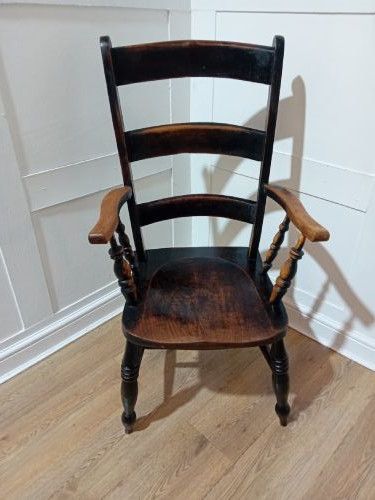
A ladder back elbow chair is a traditional form defined by horizontal slats across the backrest and integral armrests flanking the seat. These pieces range from simple regional country seating in oak, elm and beech to more formal mahogany iterations from the Georgian and Chippendale periods.
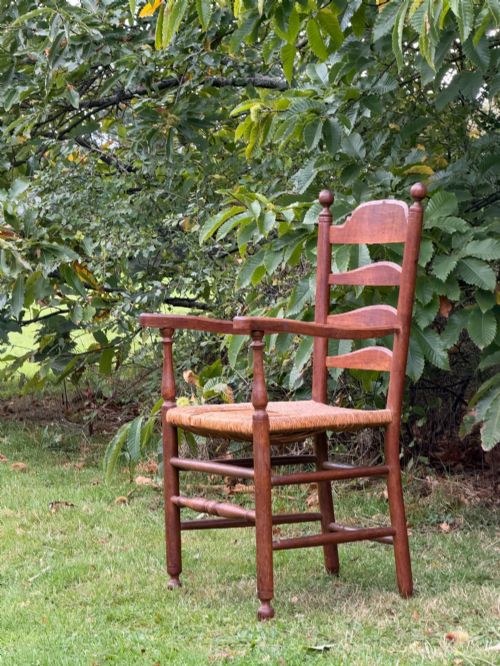
The version most commonly met on this page is the nineteenth-century or Edwardian vernacular armchair, often featuring turned supports and regional styling such as Thames Valley or French provincial forms. Alongside these utilitarian carvers, occasional Arts and Crafts examples appear with rush seating and cleaner lines.
How they were made
Makers utilised native hardwoods such as oak, elm, beech and mahogany, selecting timber for strength in the uprights and elasticity in the steam-bent back slats. Joinery relied on mortise and tenon construction, pegging and traditional turning methods to build a frame that could withstand daily sitting.
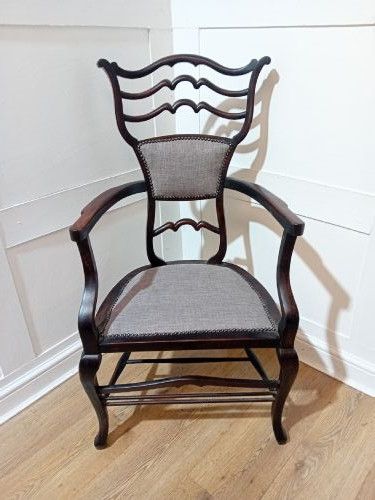
Seats were finished in woven rush or dropped-in frames upholstered in fabric secured with brass studs, depending on whether the chair followed a rustic country tradition or a formal urban style.
Ladder Back Elbow Chair Retail Price Guide 2026
Typical asking prices for ladder back elbow chair among the pieces listed under this phrase on Sellingantiques today, from the lower quarter to the upper quarter. They describe what is for sale here now, not the wider market.
What varies in quality
The standard of timber selection and the integrity of the original joints dictate the quality of a ladder back elbow chair. Chairs retaining their original surface finish and undisturbed rush or upholstery represent a higher order of survival than those heavily rebuilt over generations.
Refinement of the turning on the arm supports and legs also separates everyday utility seating from ambitious cabinet-made pieces influenced by Georgian or Chippendale designs.
Liberty and Co
The Ladder Back Elbow Chair Glossary
- Carver
- A term for an armchair, typically designed to match a set of dining chairs and placed at the head of a table. These chairs provide supportive elbow rests while maintaining a relatively upright posture.
- Rush
- A traditional seating material woven from marsh plants to form a durable, textured pad within the chair frame. It appears frequently on country and Arts and Crafts examples.
- Elbow chair
- An alternative designation for an armchair, highlighting the inclusion of low rests for the arms. The phrase often describes vernacular dining seating from the nineteenth century.
- Wavy line ladderback
- A style of back slat featuring curved or serpentine horizontal rails rather than straight boards. This decorative variation adds visual rhythm to Edwardian and vernacular dining chairs.
Ladder Back Elbow Chair: Frequently Asked Questions
What is a ladder back elbow chair?
A ladder back elbow chair is a wooden seat featuring horizontal rails across the backrest and integrated arms at the sides. These chairs range from utilitarian nineteenth-century country forms to formal eighteenth-century mahogany designs.
They function as both standalone carvers and end-of-table seating in dining arrangements. The design prioritises structural support through joined timber and slatted back support.
How do I date a ladder back chair?
Dating relies on examining the timber species, construction marks, turning styles and wear patterns. Eighteenth-century examples often display formal mahogany styling, whereas nineteenth-century pieces tend to use oak, elm or beech.
Edwardian and later vernacular pieces frequently incorporate rush seats and wavy line slats. Comparing the finish and joinery helps place the chair within its historical period.
Were these chairs used for dining?
These elbow chairs served primarily as carvers positioned at the head and foot of a dining table. Their armrests provided additional comfort during long meals while matching the simpler side chairs in the set.
Surviving examples often turn up as isolated carvers or in small matched sets. Their sturdy proportions made them useful across domestic spaces beyond the dining room.
What woods were used for these chairs?
Makers relied on durable native hardwoods suited to turning and structural framing. Oak, elm and beech appear frequently in regional country pieces and nineteenth-century carvers.
More formal urban pieces utilised imported mahogany. Seats were often finished with woven rush or upholstered in fabric.