




Lacquered Wood Divider
These lacquered wood divider screens bring rich East Asian and Regency style into a room, offering both privacy and decorative presence.
Lacquered Wood Divider
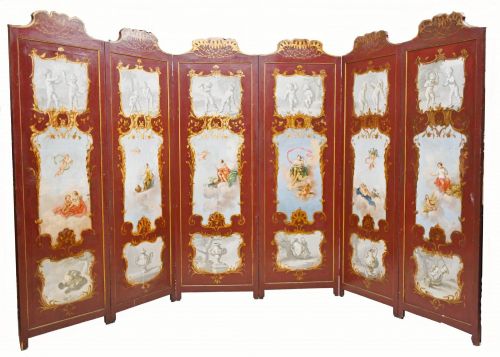
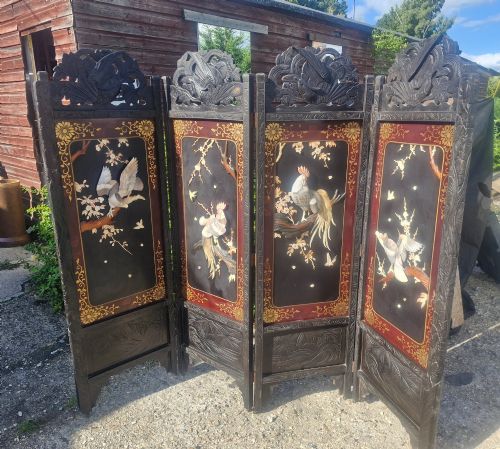
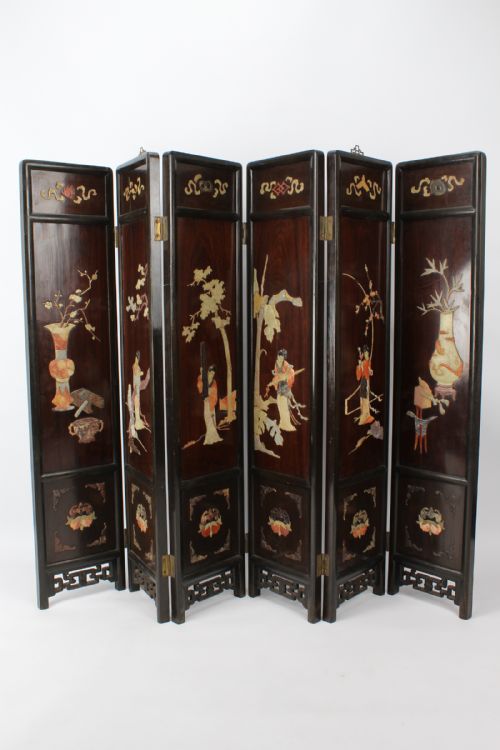
When you search for lacquered wood divider pieces, you encounter folding screens and fire screens originating from various periods including the nineteenth century and the early twentieth century. These furnishings take several forms, from three-fold dressing screens to tall multi-panel room dividers spanning up to eight folds.
The aesthetic draws heavily on Chinoiserie, Japanese Meiji, Qing Dynasty, and Regency styles, reflecting diverse cultural traditions. You are most likely to meet folding screens featuring multiple panels designed to section off interior spaces or serve as dressing screens.
How they were made
Constructed primarily from wood and hardwood, these pieces rely on lacquer as a core surface finish. Artisans applied layers of lacquer to create smooth, durable panels that often serve as a backdrop for further decoration.
Surface ornamentation incorporates gold leaf, gilt leaf, and paint to build intricate visual patterns. Some examples integrate deep carved bone inlay or brass elements to add texture and contrast against the lacquered ground.
Lacquered Wood Divider Retail Price Guide 2026
Typical asking prices for lacquered wood divider among the pieces listed under this phrase on Sellingantiques today, from the lower quarter to the upper quarter. They describe what is for sale here now, not the wider market.
Listings feature periods spanning the 19th Century, Regency, 1910, 1920, and 1950, alongside materials like lacquer, hardwood, bone, and gold leaf.
What varies in quality
The distinction between standard examples and superior pieces rests on the complexity of the surface work and the depth of the carving. Finely executed bone inlay and meticulously applied gold leaf demonstrate a higher level of artisan skill.
Panel construction and structural integrity also separate tiers of quality, particularly in multi-fold screens that require robust hinges to support the weight of hardwood frames. The crispness of the painted Chinoiserie motifs and the preservation of the original lacquer surface dictate the overall desirability.
The Lacquered Wood Divider Glossary
- Chinoiserie
- European artistic style reflecting Chinese motifs and techniques. It appears frequently on decorative screens and furniture.
- Meiji
- Japanese historical period spanning the late nineteenth and early twentieth centuries. Pieces from this era often feature detailed craftsmanship.
- Fire screen
- A decorative panel placed in front of an unlit fireplace. Examples include folding screen formats made from lacquered wood.
- Dressing screen
- A portable partition used for privacy while changing clothes. These often consist of three or more hinged panels.
Lacquered Wood Divider: Frequently Asked Questions
What is a lacquered wood divider used for?
These screens serve to divide large rooms, create private dressing areas, or act as decorative wall art. Historically, smaller versions functioned as fire screens to shield inhabitants from excessive hearth heat.
Today, they are placed against walls or used freestanding to introduce texture, height, and colour into interior spaces.
Are all lacquered wood dividers Chinese?
No, while many pieces reflect Chinese styles like Chinoiserie and Qing Dynasty design, others originate from Japan, Burma, or Britain during the Regency period.
Japanese Meiji examples introduce distinct carving traditions, while Regency pieces often blend Asian lacquer techniques with British furniture forms.
How do I care for a lacquered wood divider?
Maintain these screens by dusting gently with a soft, dry cloth to protect the delicate lacquer surface. Avoid placing them in direct sunlight or near heat sources to prevent the wood and lacquer from drying out.
Handle the hinged panels carefully when adjusting their position to avoid stressing the joints and inlay work.