




Lacquered Wood Box
A lacquered wood box brings centuries of refined surface craft and secure storage to a room, ranging from small tea caddies to large trunks.
Lacquered Wood Box
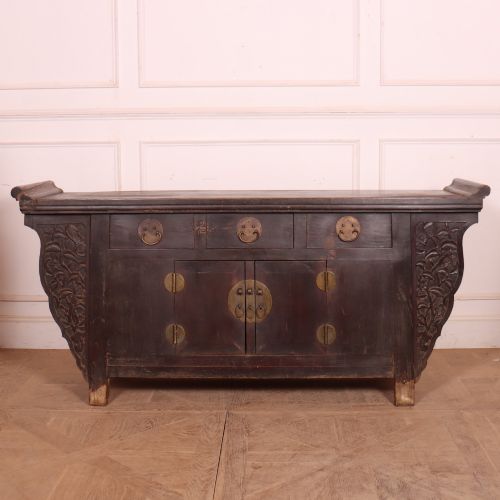
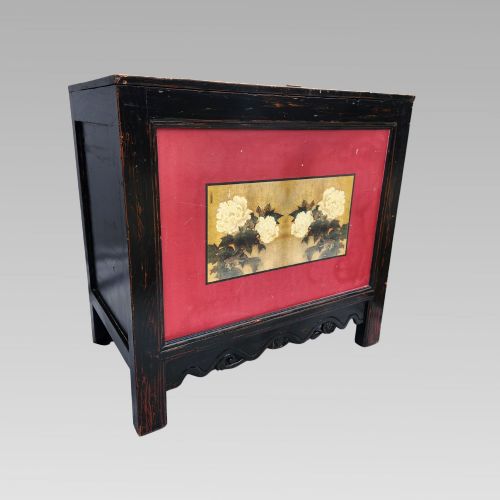
When you search for a lacquered wood box, you encounter items shaped by diverse global traditions, spanning small decorative containers to substantial storage trunks. The selections here draw heavily from nineteenth-century Chinese, Japanese, and Indian workshops, alongside English and Italian examples.
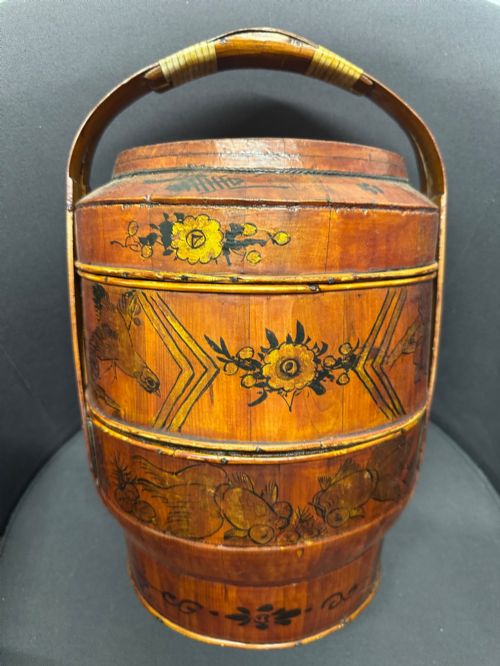
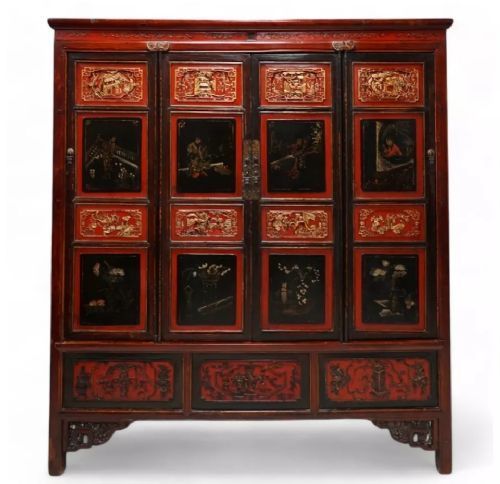
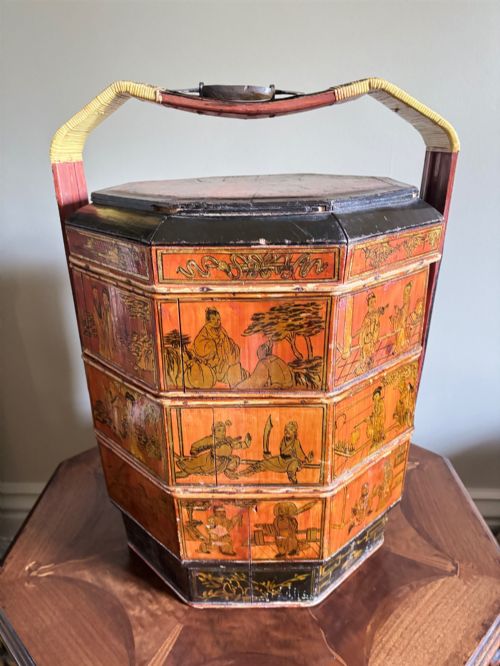
The forms vary widely in function and scale, encompassing tea caddies, jewellery boxes, marriage cabinets, dowry baskets, and penwork sewing boxes. Most examples belong to the nineteenth century, though eighteenth-century japanned cabinets and early twentieth-century Italian pieces also appear.
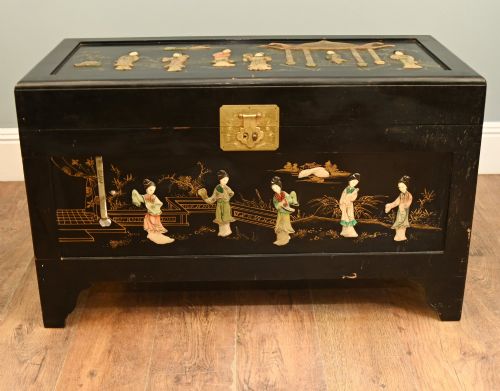
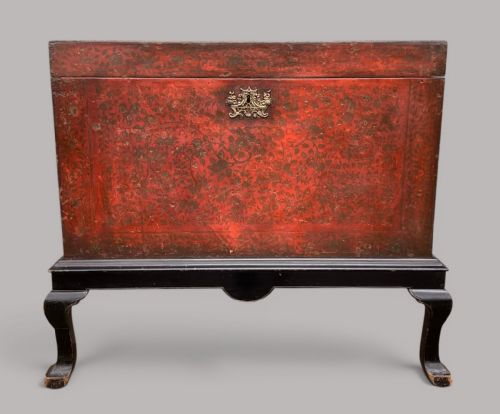
Many of these items rely on structural woods such as elm, camphor, boxwood, and kiri, coated in protective and decorative layers of lacquer. Whether handling an intricate Japanese kodansu or an Anglo-Indian chest on stand, each piece serves as both a practical receptacle and an expression of historic surface design.
How they were made
The foundation of a lacquered wood box rests on stable timber such as elm, camphor wood, or boxwood, which provides a rigid base for the finish. Artisans applied successive coats of lacquer to seal and protect the wood, often building up deep, lustrous surfaces in red, black, or natural tones.
Decoration frequently involved gold leaf, hand painting, or carved details such as cinnabar effects and penwork. Metal elements including brass and iron hinges, locks, and corner mounts added structural reinforcement and visual contrast to the refined wooden bodies.
Lacquered Wood Box Retail Price Guide 2026
Typical asking prices for lacquered wood box among the pieces listed under this phrase on Sellingantiques today, from the lower quarter to the upper quarter. They describe what is for sale here now, not the wider market.
Listings feature pieces spanning the eighteenth, nineteenth, and twentieth centuries, incorporating materials such as brass, gold leaf, ebonised wood, and iron.
What varies in quality
The distinction between tiers of quality lies in the depth of the lacquer finish and the precision of the hand-painted or carved details. Superior examples exhibit smooth, even surfaces where gold leaf, Chinoiserie motifs, or intricate penwork remain crisp and securely bonded to the timber base.
Construction standards also set pieces apart, visible in the careful joining of woods like camphor or elm and the integration of original brass or iron hardware. Finer boxes maintain their structural integrity and surface decoration intact across centuries of use.
The Lacquered Wood Box Glossary
- Lacquer
- A durable resin finish applied to wooden objects to create a glossy, protective surface. It forms the primary visual and tactile characteristic of these boxes.
- Chinoiserie
- European decorative style reflecting Chinese artistic influences, commonly found on English and continental penwork or storage boxes. This aesthetic interprets Asian motifs through a Western lens.
- Tea Caddy
- A specialised vessel designed to store dry tea leaves securely, often featuring internal compartments. These boxes frequently date from the Regency and early nineteenth-century periods.
- Japanned
- European imitation of East Asian lacquerwork, popular during the eighteenth century on cabinets and boxes. It involves building up dark varnished surfaces with gilt decoration.
- Kodansu
- A small Japanese tabletop cabinet or multi-drawer jewellery box intended for precious items. These pieces showcase meticulous joinery and fine lacquer or metal fittings.
Lacquered Wood Box: Frequently Asked Questions
What were lacquered wood boxes used for?
These boxes served a variety of domestic storage needs, from safeguarding valuable jewellery and documents to preserving expensive tea leaves. Larger examples functioned as marriage chests, dowry baskets, or travel trunks for personal belongings.
Over time, they evolved from purely utilitarian containers into decorative furnishings displayed prominently within homes. Their enclosed spaces protected delicate goods from moisture, dust, and light.
How do I care for a lacquered wood box?
Maintain these boxes in stable indoor environments away from direct sunlight and sudden humidity shifts to protect the delicate wooden structure and surface finish. Dust gently with a dry, soft cloth without applying modern chemical polishes or abrasive cleaners.
Keep brass or iron hardware dry, and avoid placing hot or damp items directly onto the lacquer surface. Proper care preserves the original sheen and integrity of the decorative layers.
How do I distinguish regional styles?
Regional origins reveal themselves through specific motifs, construction methods, and material choices distinctive to each culture's historic workshops. Japanese pieces often feature gold lacquer landscapes or refined kodansu forms, while Chinese examples frequently utilise elm or camphor with red lacquer and marriage motifs.
Indian and Anglo-Indian trunks typically display bold painted or carved schemes on sturdy timber stands. European pieces from the Regency period often incorporate penwork and traditional cabinet-making techniques.
What is a tea caddy?
A tea caddy is a dedicated container built to hold and preserve loose tea when the beverage was an expensive luxury commodity. They frequently include fitted interiors with lidded compartments to separate different tea varieties.
Many examples from the early nineteenth century feature sophisticated penwork, precious woods, or lacquer finishes that matched the elegance of the drawing room.