






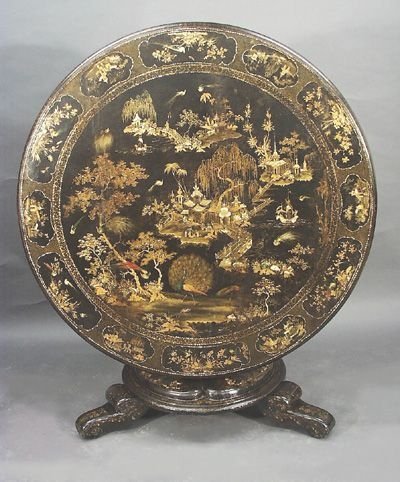


Lacquered Wine Table
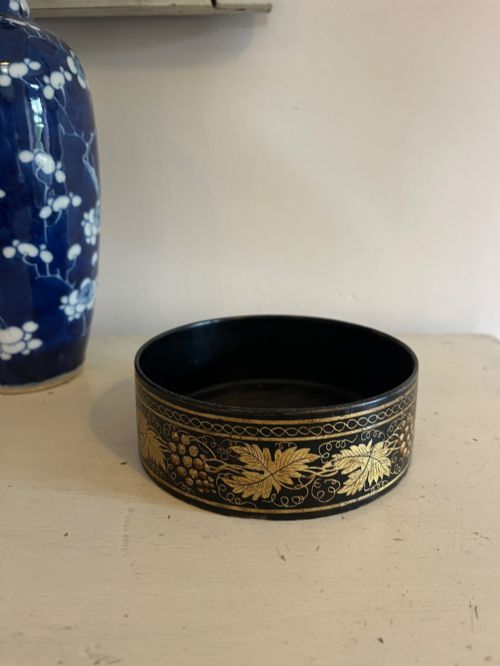
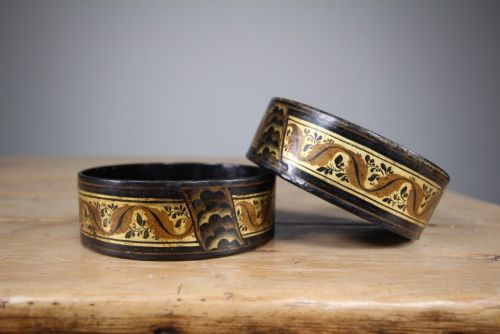
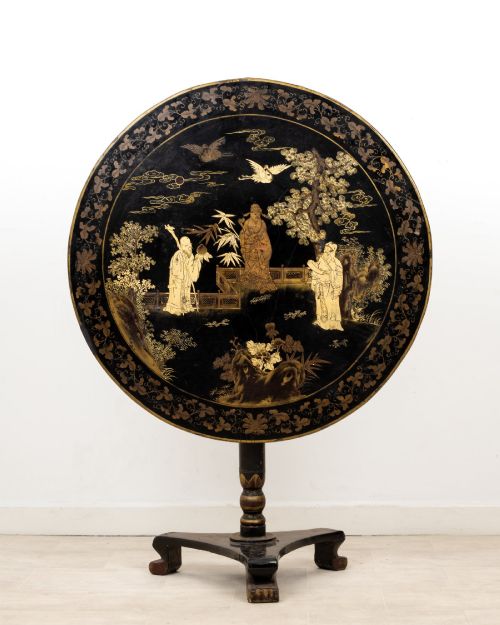
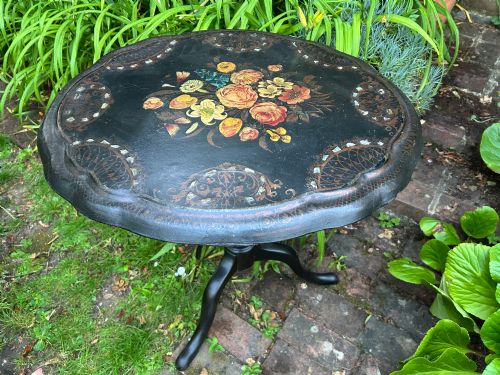
Lacquered wine tables are portable, highly decorative small stands designed for holding drinks, most frequently encountered here in Regency and Victorian papier-mâché or painted wood.
Lacquered Wine Table
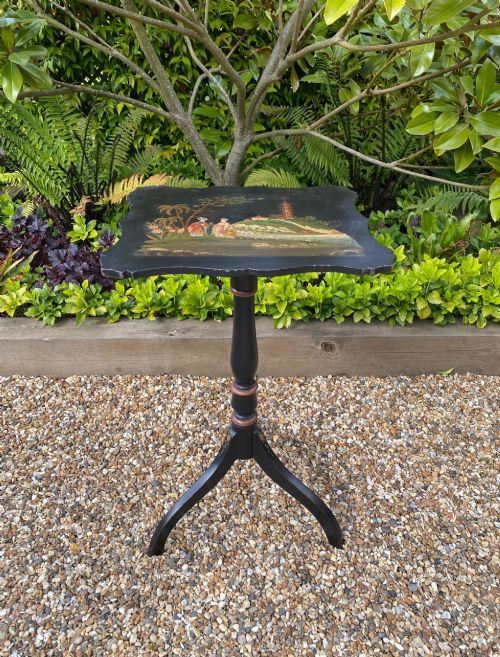
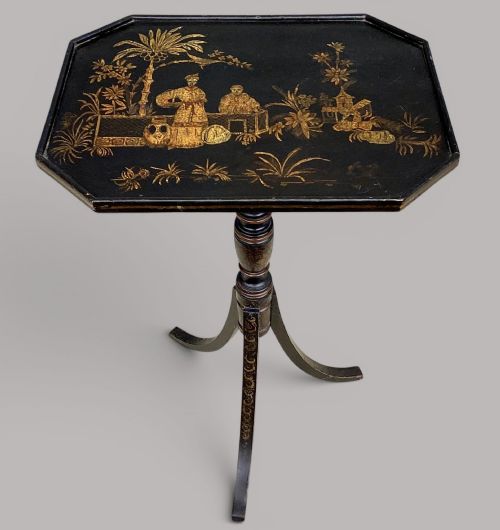
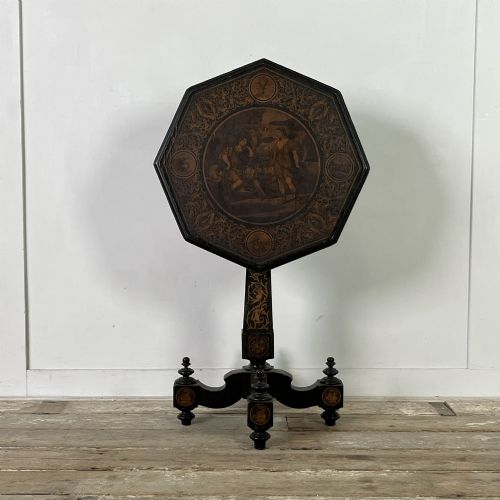
A lacquered wine table combines a small surface with a sturdy support, often standing on a tripod base for stability on uneven floors. When searching for a lacquered wine table, buyers encounter formats ranging from tilt-top occasional tables to small side tables and wine coasters.
The selections span several periods, with 19th Century, Regency, and Victorian pieces forming the core of the available inventory. Makers utilised diverse influences, producing both English Chinoiserie interpretations and Chinese provincial works.
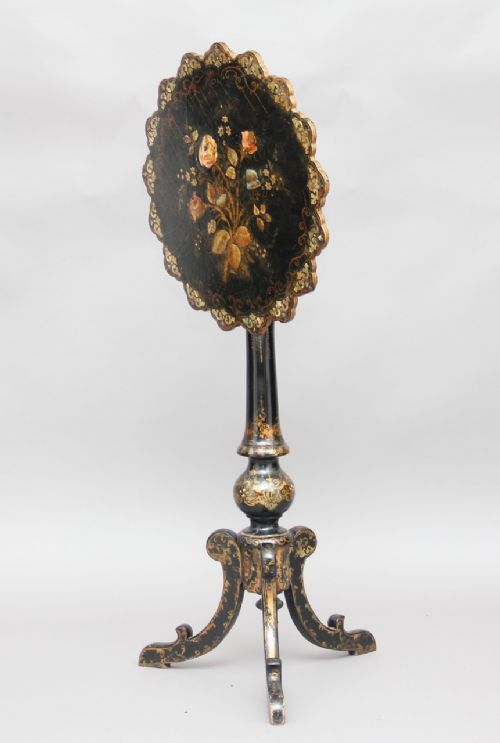
Forms vary from tray tables and tripod tables to specialised wine coasters designed for dining rooms. Most examples rely on black or dark grounds enriched with painted details, gilding, or mother-of-pearl inlay.
How they were made
Craftsmen built these pieces using wood, papier-mâché, and Chinese elm, shaping them into tilt-top tables, side tables, and coasters. Papier-mâché offered a smooth, durable substrate that held complex layers of lacquer and paint.
Surfaces received treatments of lacquer, gold leaf, paint, and gilt, sometimes incorporating detailed ink work or mother-of-pearl inlay. Artisans applied these finishes by hand to create the characteristic polished sheen associated with Chinoiserie and Japanned decoration.
Lacquered Wine Table Retail Price Guide 2026
Typical asking prices for lacquered wine table among the pieces listed under this phrase on Sellingantiques today, from the lower quarter to the upper quarter. They describe what is for sale here now, not the wider market.
Listings feature items spanning the Georgian period through to the Edwardian era, predominantly employing lacquer, papier-mâché, and painted wood.
What varies in quality
The refinement of the hand-painted decoration and the depth of the lacquer layers distinguish the finer examples from simpler provincial work. Crisp detailing in the Chinoiserie motifs and precise application of parcel gilt elevate certain pieces above standard production.
The integrity of the structural support, such as a well-turned tripartite base or a smoothly functioning tilt mechanism, marks the standard of the construction. Superior pieces maintain balance and alignment across the top and the tripod legs.
The Lacquered Wine Table Glossary
- Chinoiserie
- European interpretation and imitation of Chinese artistic traditions and motifs, popular in furniture decoration. Artisans applied these designs to lacquer surfaces using gold and paint.
- Papier-mâché
- A composite material made from paper pulp or layers of paper bound with glue, pressed and dried into a rigid form. It provided an ideal lightweight base for smooth lacquering.
- Tilt-top table
- A table featuring a mechanism that allows the surface to pivot vertically for storage against a wall when not in use. This design saved space in period interiors.
- Japanned
- European European-made work imitating Japanese and Chinese lacquer finishes through specialised varnishing and painting techniques. This treatment created a glossy, dark surface often highlighted with gilt.
- Parcel gilt
- Portions of an object highlighted with gold leaf or gold paint while the rest of the surface remains a different colour. This technique accentuates carved details and edges.
Lacquered Wine Table: Frequently Asked Questions
How were lacquered wine tables used?
These small stands served primarily for holding glasses, bottles, or small items during social gatherings in drawing rooms and dining rooms. Their portability allowed servants to move them easily wherever guests required a surface.
Tilt-top versions were pushed against walls or folded away when the room needed to be cleared for dancing or other activities.
How do I care for papier-mâché tables?
Keep papier-mâché and lacquered surfaces away from direct sunlight, excessive heat, and moisture to prevent warping or cracking of the delicate finish. Dust them gently with a soft, dry cloth without applying modern chemical polishes.
Use coasters or mats under glasses and hot items to protect the historical painted layers from staining and ring marks.
What is the difference between Regency and Victorian pieces?
Regency examples often feature restrained neoclassical lines, gilt Chinoiserie scenes on black grounds, and crisp proportions dating from the early decades of the nineteenth century. Victorian pieces tend to introduce heavier ornamentation, mother-of-pearl inlay, and varied papier-mâché forms.
Both periods embraced Orientalist aesthetics, but the Victorian works frequently display denser, more colourful painted details.
Are tilt-top mechanisms sturdy?
Period tilt-top mechanisms rely on wooden catches or brass latches that secure the tabletop horizontally to the tripod base. When properly maintained, these joints hold the surface steady during normal daily use.
Buyers should handle the pivot point with care and avoid placing excessive weight on the outer edges of the tilted leaf.