






Lacquered Storage Trunk
These lacquered storage trunk pieces are substantial historical receptacles built from wood and coated in decorative finishes, offering both deep utility and striking visual character.
Lacquered Storage Trunk
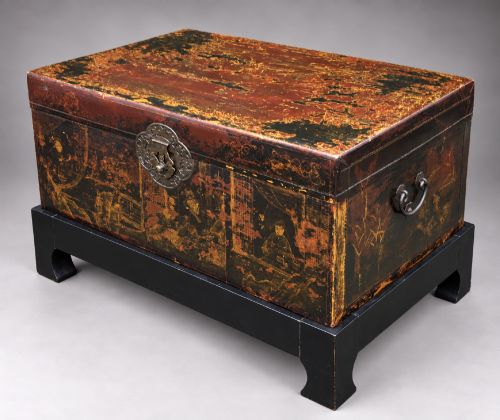
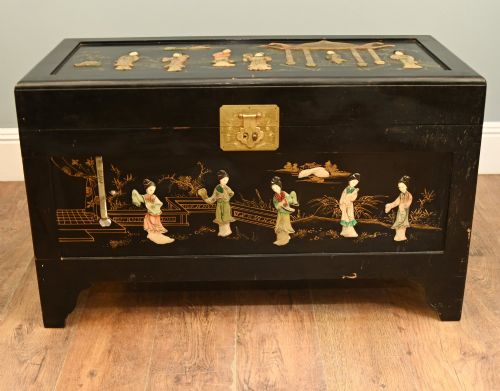
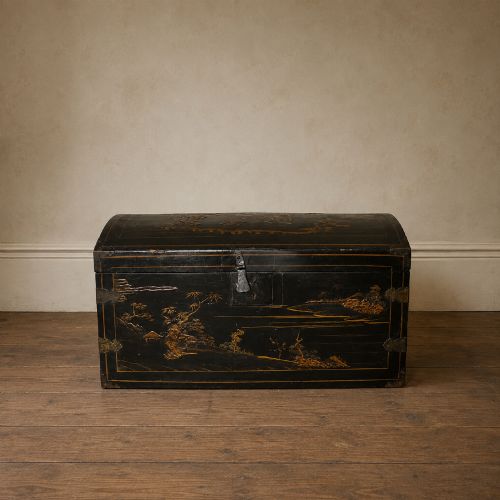
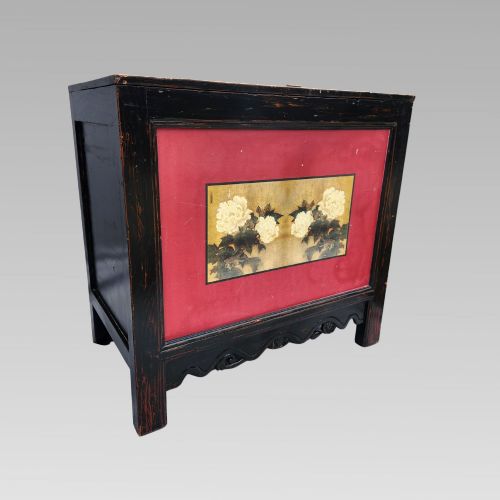
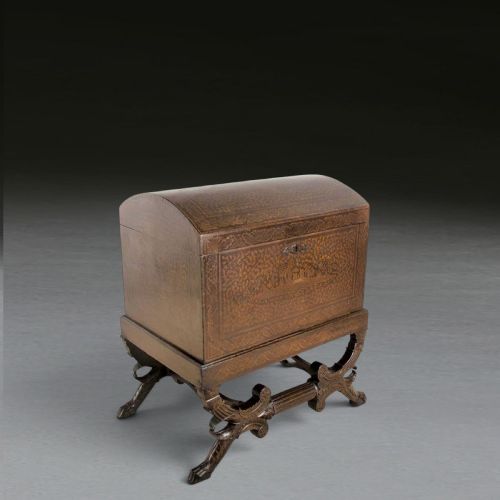
A lacquered storage trunk serves as a robust container originally designed for travel, dowries, or household storage, merging practical utility with decorative artistry. Buyers exploring this category encounter varied forms including domed chests, coffers, and blanket boxes resting on dedicated stands.
The origins span widely across Asian and colonial workshops, with examples arriving from Chinese export centres, Japanese Meiji period makers, and Anglo-Indian traditions. Nineteenth-century pieces dominate the selection, accompanied by eighteenth-century examples and early twentieth-century creations from the nineteen-twenties and thirties.
How they were made
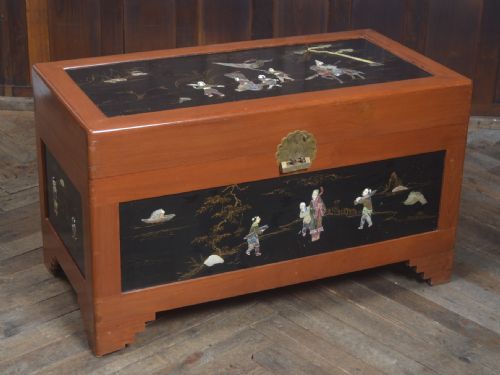
Carpenters constructed the core bodies using timber such as camphor wood and general wood, frequently reinforcing the structure with brass and iron mounts. Artisans then applied layers of lacquer, pigment, and occasionally gold leaf or gilt decoration to the exterior surfaces.
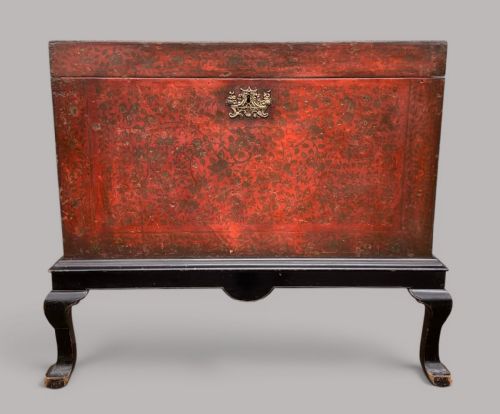
Many items incorporate hand-painted pictorial scenes or floral Chinoiserie motifs directly onto the lacquer, while other variants utilise leather or pig skin coverings. Specialised regional techniques produced distinct finishes, ranging from glossy black surfaces to vibrant red lacquered treatments.
Lacquered Storage Trunk Retail Price Guide 2026
Typical asking prices for lacquered storage trunk among the pieces listed under this phrase on Sellingantiques today, from the lower quarter to the upper quarter. They describe what is for sale here now, not the wider market.
Some nineteenth-century merchants wisely lined their camphor wood chests with fragrant timber specifically to confuse passing moths.
What varies in quality
The sophistication of the surface decoration largely dictates the standard of a piece, separating simple utilitarian boxes from elaborate export commissions. Finer trunks display meticulous hand-painted detail and rich application of gold leaf or gilt, whereas simpler versions rely on plain pigmented finishes.
The integrity of the underlying timber and the preservation of the original lacquer coatings influence the overall caliber. Examples mounted on original stands or retaining robust brass and iron hardware represent higher tiers of craftsmanship.
The Lacquered Storage Trunk Glossary
- Lacquer
- A durable resin finish applied to wooden objects to create a hard, smooth coating that protects the material beneath. It often serves as the canvas for detailed painting or gilding.
- Coffer
- A heavy wooden chest traditionally used for holding valuables or documents. These deep receptacles usually feature hinged lids and sturdy structural reinforcement.
- Chinoiserie
- European artistic styles that reflect Chinese decorative motifs and techniques. Artisans applied these imaginative interpretations to furniture and storage boxes.
- Camphor wood
- An aromatic timber frequently utilised for interior storage boxes due to its natural insect-repellent properties. It provides a distinct fragrance alongside structural strength.
- Tansu
- Traditional Japanese mobile storage cabinetry and chests built for domestic utility. These pieces often incorporate multiple internal drawers and compartments.
Lacquered Storage Trunk: Frequently Asked Questions
What were lacquered storage trunks used for?
These vessels originally served to transport personal belongings, store precious textiles, or hold wedding dowries within wealthy households. Their sturdy construction protected contents from moisture and pests during transit or long-term safekeeping.
Over time, many of these receptacles transitioned into stationary furniture pieces within the home, doubling as decorative tables or blanket boxes while keeping stored items hidden away.
How do I live with a lacquered storage trunk?
Position your chest away from direct sunlight and strong heat sources to prevent the lacquer coating from drying out or cracking over time. Maintaining stable indoor humidity helps preserve both the wooden core and the delicate surface decoration.
Use the flat top surface as a display area for lamps or decorative objects while utilising the internal cavity for linens or keepsakes. The substantial presence of these boxes makes them effective focal points in hallways, living rooms, or bedrooms.
How can I tell different periods apart?
Eighteenth-century examples typically exhibit heavy export styling with specific hand-painted motifs and patination native to that era. Nineteenth-century versions encompass a broader range of regional variations, including Anglo-Indian and Japanese export designs.
Twentieth-century pieces, particularly those from the nineteen-twenties and thirties, often show standardised hardware methods or distinct twentieth-century interpretations of traditional Chinoiserie. Examining the internal timber and the ageing patterns of the lacquer helps confirm the general timeframe.
What is a trunk on stand?
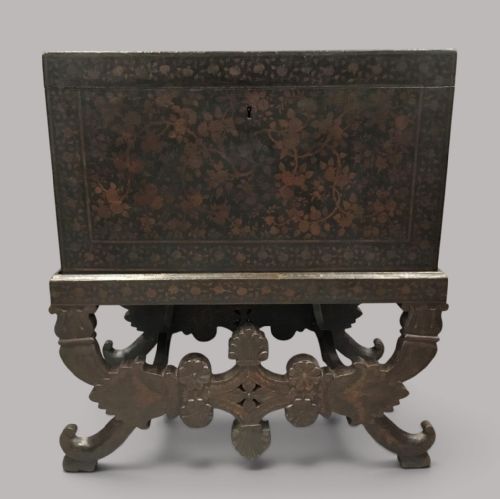
A trunk on stand pairs a traditional storage chest with a purpose-built supporting frame that elevates the main body off the floor. This configuration made accessing the contents more convenient while adding architectural presence to the furniture.
The stands themselves often share decorative traits with the main chest, incorporating complementary finishes or matching woodwork from the same period.