

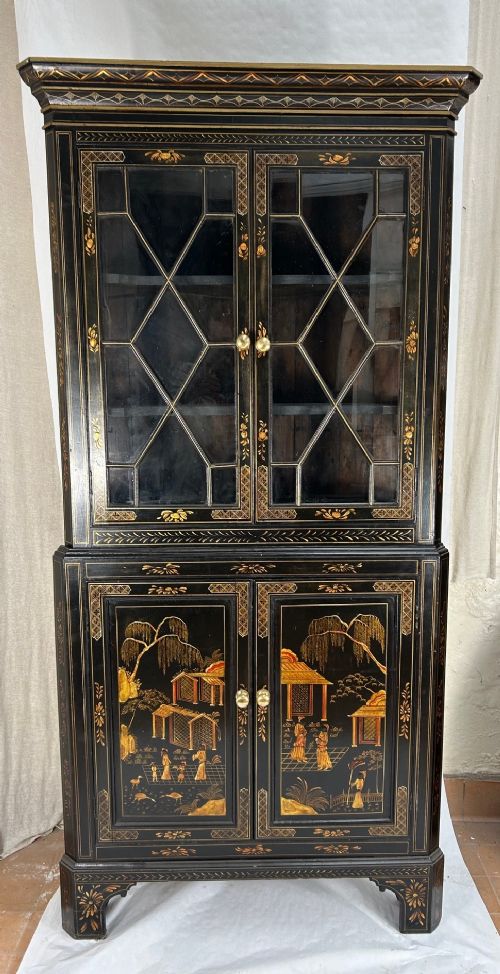
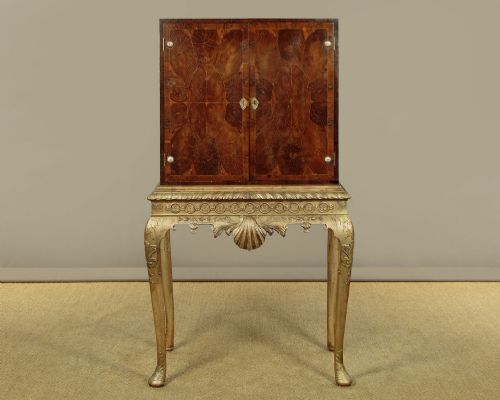
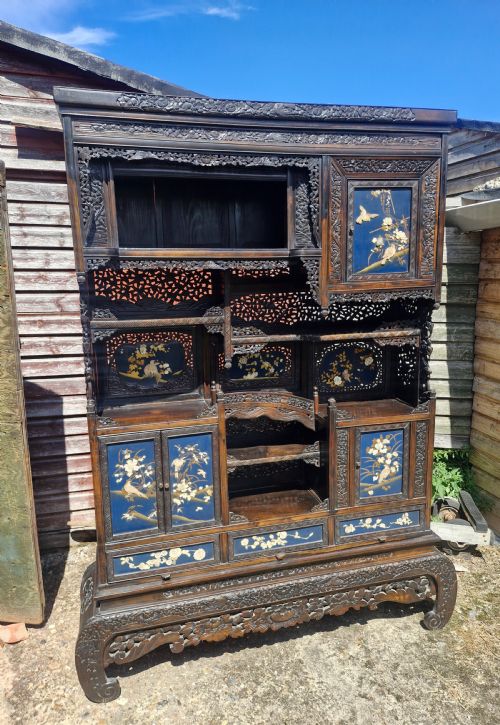
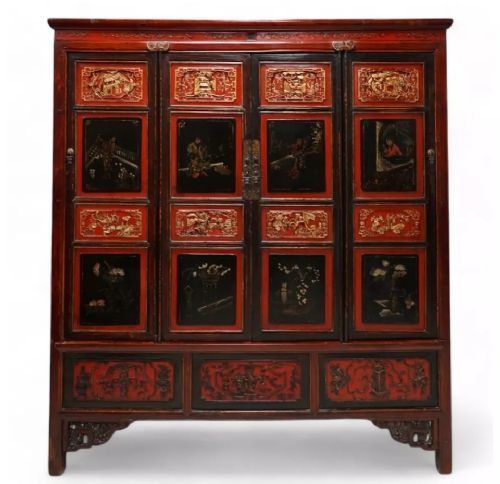



Lacquered Display Cupboard
A lacquered display cupboard brings rich surface pattern and glassed storage into a room, spanning centuries of Asian and European craft.
Lacquered Display Cupboard
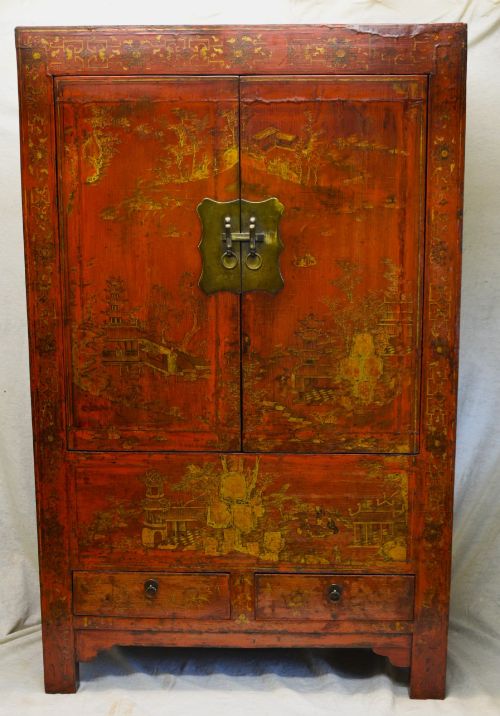
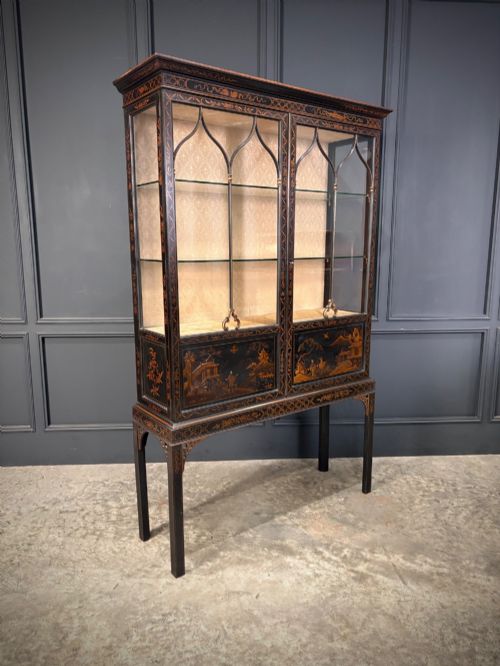
When you search for a lacquered display cupboard, you encounter a diverse group of storage furniture designed to showcase objects behind glass or within panelled compartments. These pieces range from corner cupboards and wall units to substantial cabinets on stands and tall marriage cabinets.
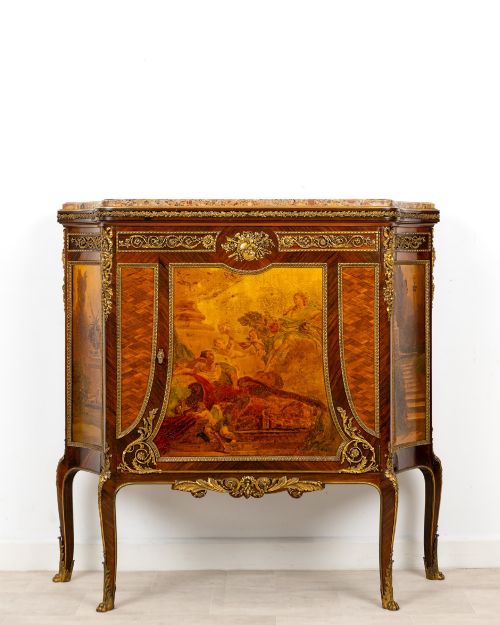
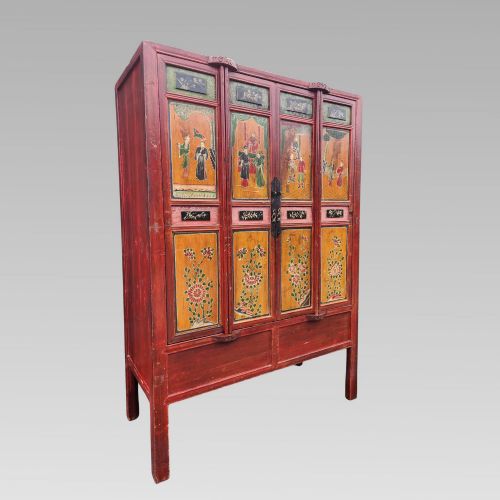
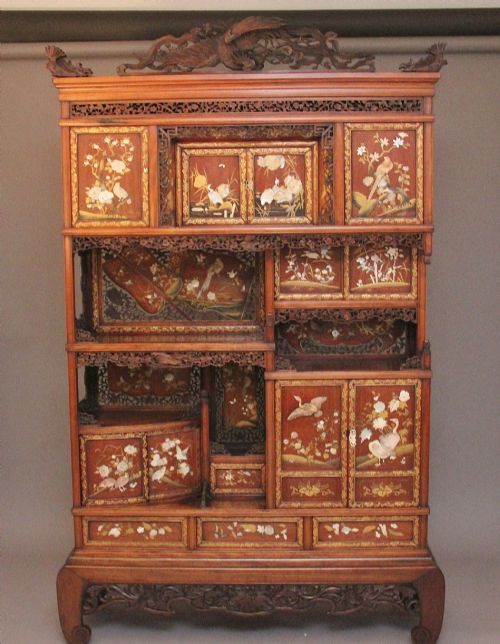
The selections available here lean heavily into nineteenth-century production alongside Edwardian reinterpretations and earlier eighteenth-century forms. You will find items influenced by Chinese Qing Dynasty aesthetics, Japanese Meiji period craftsmanship, and European Chinoiserie traditions.
Forms vary from compact side cabinets to monumental wedding cupboards finished in black, red, or ebonised grounds. Many integrate specialised shelving or display spaces suited for porcelain, books, and curiosities.
How they were made
Cabinet makers built these pieces using solid hardwoods and structural timbers as a foundation for multiple layers of applied lacquer. Artisans built up the surface through painstaking coats, allowing for intricate incised work or smooth polished finishes.
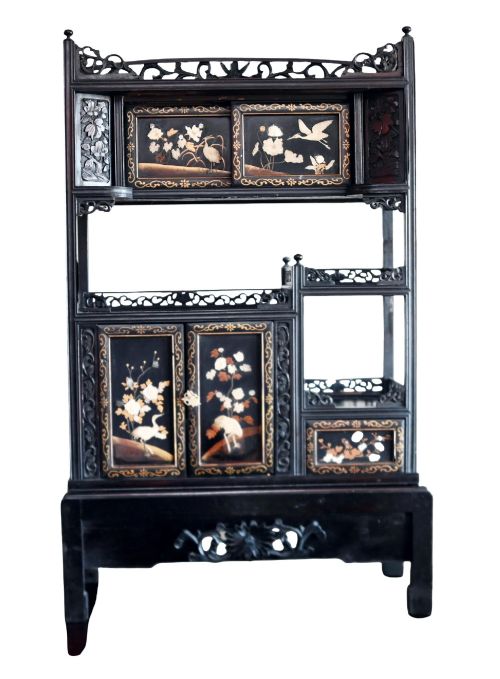
Decoration often involved gold leaf, brass mountings, and inlaid mother-of-pearl or bone to depict landscapes, birds, and floral motifs. European workshops utilised techniques like penwork and Vernis Martin to emulate oriental lacquer, occasionally mounting pieces with ormolu or gilt-bronze.
Lacquered Display Cupboard Retail Price Guide 2026
Typical asking prices for lacquered display cupboard among the pieces listed under this phrase on Sellingantiques today, from the lower quarter to the upper quarter. They describe what is for sale here now, not the wider market.
Some nineteenth-century marriage cabinets hide secret internal compartments designed to store family deeds alongside the bride's dowry.
What varies in quality
The distinction between ordinary and exceptional examples rests in the depth and execution of the surface decoration. Superior pieces display finely hand-painted details with layered metallic dust and meticulously carved motifs that retain their crisp edges.
Structural integrity also separates the tiers, seen in the stability of the stands, the alignment of doors, and the preservation of the original lacquer finish over generations of use.
François Linke
The Lacquered Display Cupboard Glossary
- Shodana
- Japanese tiered display cabinet featuring asymmetrical shelving and small cupboards. These pieces utilise fine woodwork to exhibit artistic objects and ceramics.
- Vernis Martin
- Eighteenth-century European imitation lacquer technique named after French polishers. It employs translucent varnishes to achieve a glossy, multi-layered finish akin to Asian lacquerware.
- Cinnabar lacquer
- Technique involving numerous layers of red lacquer carved into intricate low-relief designs. This method produces a rich, weighty surface texture requiring immense time to manufacture.
Lacquered Display Cupboard: Frequently Asked Questions
What is a lacquered display cupboard?
A lacquered display cupboard is a piece of furniture finished with resin-based coatings and designed to store and exhibit prized possessions. They incorporate doors with glass panels, open shelving, or enclosed lower compartments.
These cabinets originated in various global traditions, blending practical utility with decorative surface art. They serve as focal points in a room while protecting fragile items from dust.
How do I style a lacquered display cupboard at home?
Integrating one of these cabinets into a room relies on allowing its decorative surface to command attention. Position the piece against a neutral wall so the red, black, or ebonised lacquer stands out clearly.
Use the interior shelves to display curated collections of ceramics or glassware rather than overcrowding the space. Adequate lighting nearby will highlight the metallic leaf and intricate painted details.
How do I tell Chinese export lacquer from European Chinoiserie?
Distinguishing between genuine Asian export work and European Chinoiserie involves examining the substrate timber and the composition of the lacquer layers. Asian pieces often utilise regional softwoods or hard timbers native to the workshop's location.
European interpretations, such as Regency penwork or Vernis Martin, frequently employ local woods like oak or mahogany and utilise distinct varnishing techniques. The style of the figures and landscapes also reflects the maker's geographic understanding of the motifs.
What maintenance do antique lacquered cabinets require?
Maintaining these surfaces requires keeping them away from direct sunlight and extreme fluctuations in temperature or humidity. Excessive heat can cause the underlying wood to expand and the lacquer to crack or craze.
Dust the cabinet gently with a soft, dry cloth without applying modern chemical polishes or abrasive cleaners. Professional conservation should be sought if the lacquer or gilt-bronze mounts require repair.