





Lacquered Console Table
A lacquered console table brings gloss and decorative depth to a hallway, combining Asian export or European Chinoiserie styles with practical surface space.
Lacquered Console Table
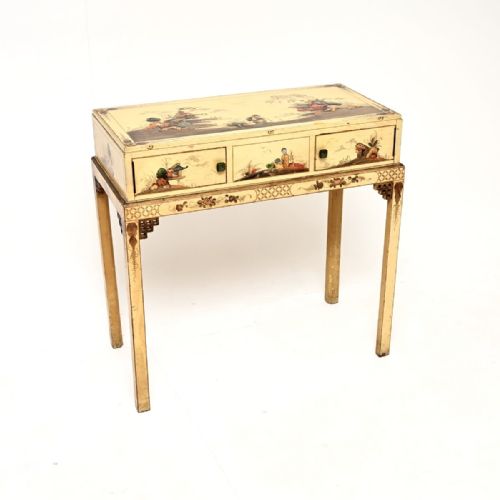
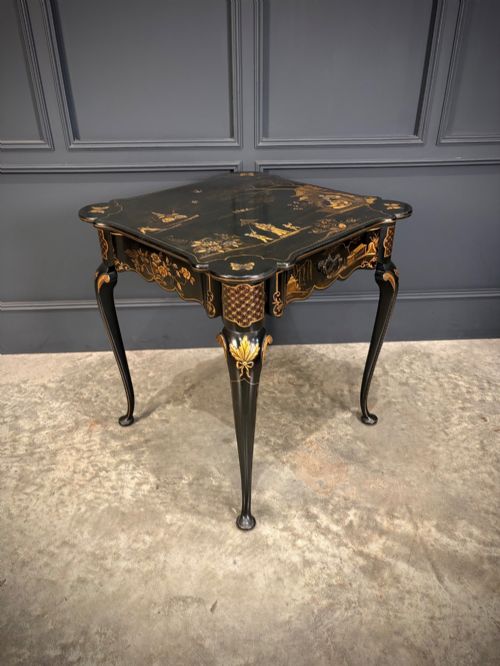
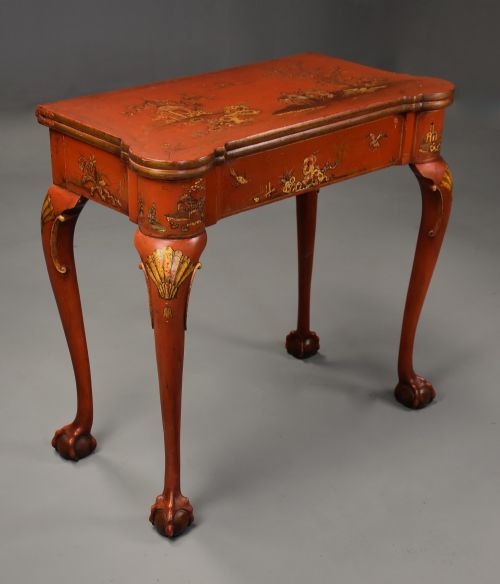
A lacquered console table appears in forms ranging from Chinese export altar tables and demi-lune card tables to Victorian Chinoiserie side tables and European Sheraton or Regency interpretations. The examples seen on this page span the eighteenth century, the Victorian and Edwardian eras, and the early twentieth century, showing both Oriental regional workshops and Western revival styles.
Buyers looking at this selection encounter pieces designed for practical service as side tables, games tables, or desks, alongside architectural console forms fitted with marble tops or brass mounts. Construction materials lean heavily on elm, hardwood, and ebonised wood finished with black or red lacquer coatings.
The aesthetic divides broadly between native Chinese provincial and export pieces displaying Chinoiserie motifs, and English or continental furniture adopting Oriental lacquer techniques within classical European furniture shapes.
Materials and construction methods
Makers built these pieces using traditional timber framing in elm, hardwood, and general wood substrates, preparing the surfaces to receive successive coats of lacquer. Brass fittings, gold leaf highlights, and inset marble tops frequently complete the construction of the finer examples.
The decorative finish relies on built-up layers of lacquer, often applied in black or red tones, which are then hand-painted with Chinoiserie scenes, figures, or botanical motifs. This surface technique requires precise drying and polishing between coats to achieve the characteristic depth and sheen.
Lacquered Console Table Retail Price Guide 2026
Typical asking prices for lacquered console table among the pieces listed under this phrase on Sellingantiques today, from the lower quarter to the upper quarter. They describe what is for sale here now, not the wider market.
Several tables arrive with folding tops ready for an impromptu Victorian card game.
Assessing quality and execution
Quality in a lacquered console table rests on the depth of the finish and the crispness of the hand-painted or gilt decoration applied over the wood or lacquer ground. Superior pieces display complex layering and well-preserved surface detail that has aged evenly without heavy modern intervention.
Structural integrity of the underlying elm, hardwood, or ebonised frame distinguishes finer cabinetwork from simpler utility pieces. The integration of fitted elements, such as marble slabs or brass mounts, also indicates the level of ambition in the original workshop.
The Lacquered Console Table Glossary
- Chinoiserie
- European decorative style reflecting Chinese artistic influences, popular in furniture and lacquerwork during various historical periods. It employs motifs such as pagodas, landscapes, and figures painted in gold or colours on a dark ground.
- Demi-lune
- A half-moon shape used for console and card tables designed to stand flat against a wall. This format is common among the eighteenth and nineteenth-century tables recorded here.
- Altar table
- A traditional Chinese table form characterised by a long, narrow rectangular top, often with upturned flanged ends. They frequently feature red or black lacquer finishes.
- Ebonised wood
- Timber treated with chemical stains or black finishes to imitate costly ebony wood. It provides a dark, uniform surface suited to Victorian and aesthetic movement furniture.
- Gilt
- Application of gold leaf or gold paint to highlight carved details or decorative motifs on furniture surfaces. It creates contrast against red or black lacquer grounds.
Lacquered Console Table: Frequently Asked Questions
What is a lacquered console table used for?
These tables function as surface furniture in entrance halls, living rooms, and dining spaces, holding decorative objects, lamps, or correspondence.
Many historic variants also double as games or card tables, featuring folding tops that expand the surface area when needed.
How do I care for antique lacquer?
Antique lacquer surfaces require gentle dusting with a dry, soft cloth and protection from direct sunlight and excessive humidity.
Avoid chemical polishes and abrasive cleaners, as moisture and strong solvents can damage the historic finish.
How can I tell the period of a table?
Dating relies on examining the timber construction, tool marks, joinery methods, and the style of the lacquer decoration.
Comparing the piece to documented examples from the eighteenth, nineteenth, or early twentieth centuries helps establish its likely era of manufacture.
Are these tables sturdy enough for daily use?
Most examples utilise robust hardwoods like elm and employ traditional joinery designed to support everyday objects and surface items.
However, delicate finishes and older frames benefit from careful placement away from high-traffic zones where knocks might occur.