






Lacquered Armchairs
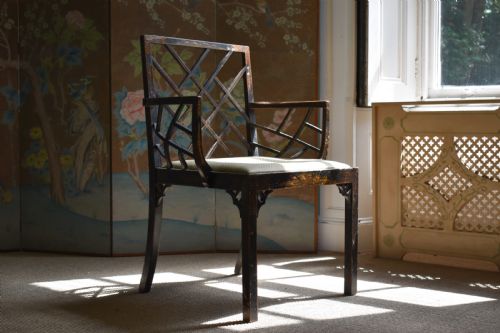
Lacquered armchairs bring painted motifs and deep finishes to a room, ranging from Chinese elm originals to English Chinoiserie iterations.
Lacquered Armchairs
When searching for lacquered armchairs, collectors encounter both traditional Chinese forms and European Chinoiserie interpretations. The selection spans nineteenth-century pieces alongside Edwardian examples.
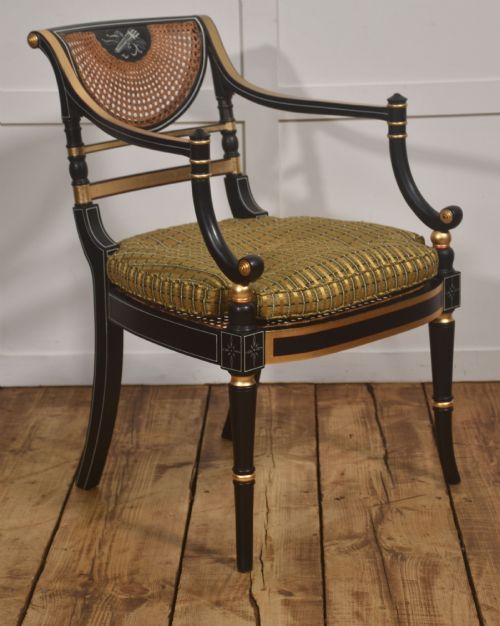
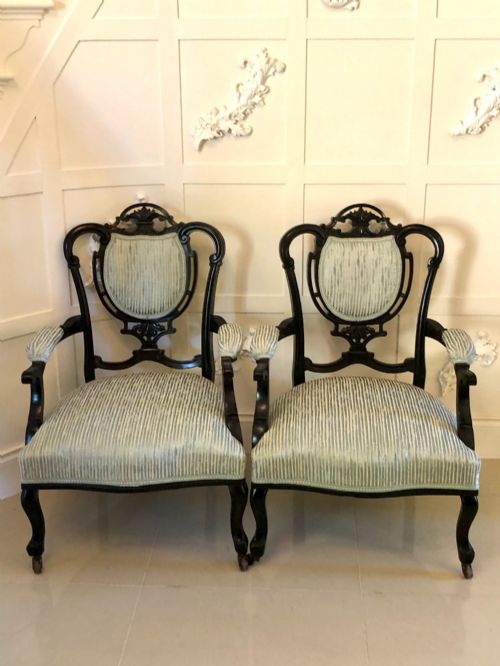
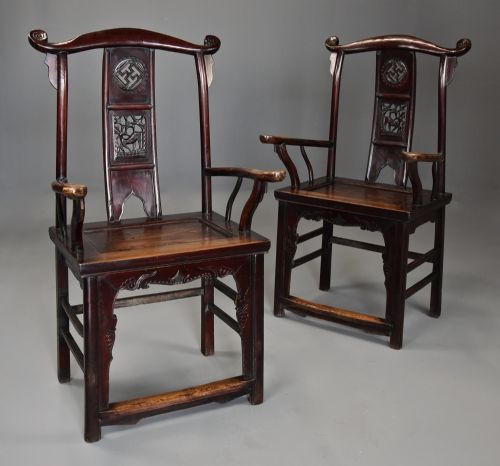
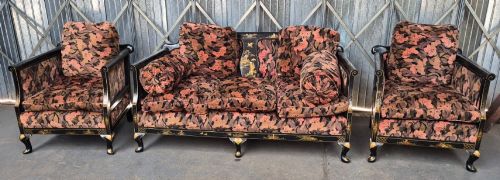
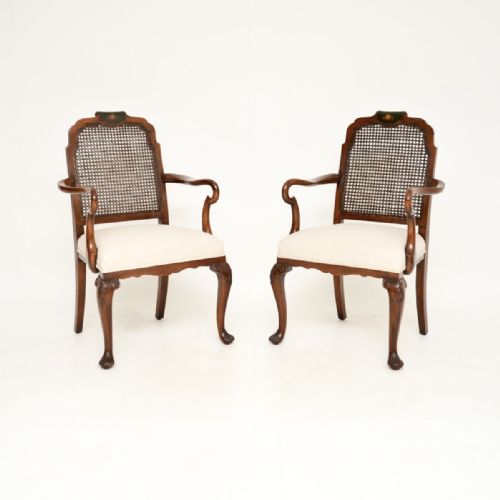
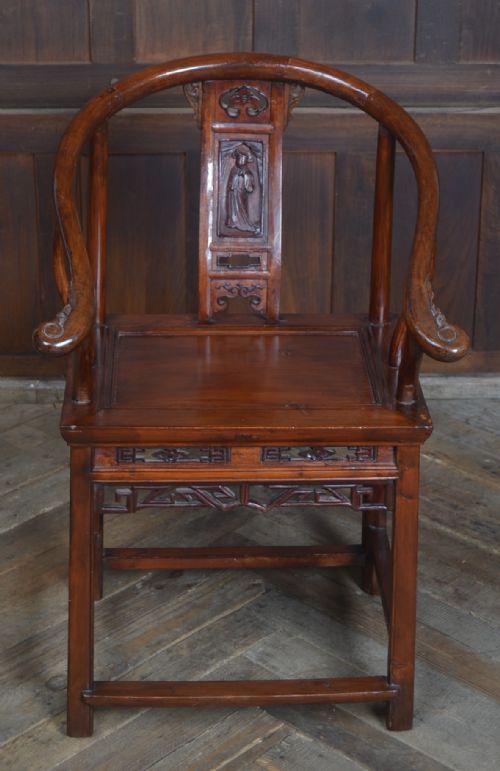
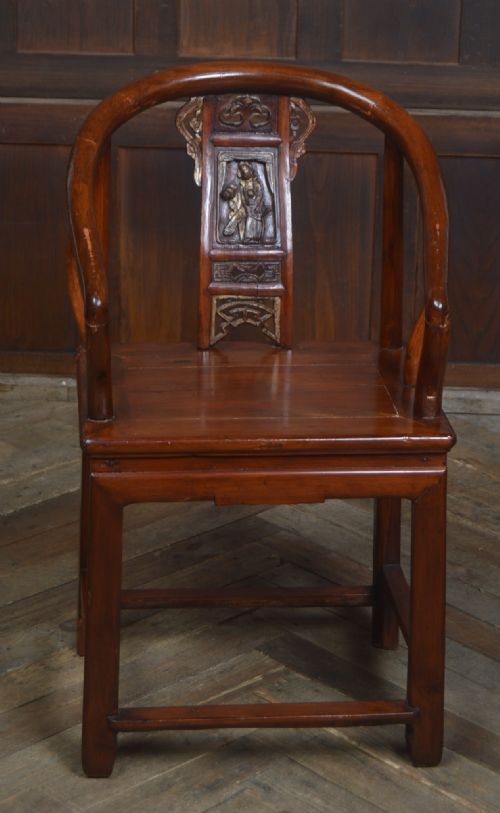
The most common forms on this page include elm yokeback armchairs with red lacquer and pairs of ebonised or painted frames. Buyers also find bergere armchairs with cane seating and occasional three-piece suites.
Origins stretch from Chinese workshops to English cabinet makers working in Georgian, Victorian, and Edwardian styles. These seats function as focal points in a library, drawing room, or hallway.
Materials and construction
Elm, hardwood, walnut, and satinwood form the structural bases for these frames. Canework panels appear frequently on seats and backs, accompanied by textile upholstery.
Makers applied layers of lacquer, gold leaf, and painted detailing over ebonised wood or natural timber. Carved elements and faux bamboo turnings define the joinery of the period.
Lacquered Armchairs Retail Price Guide 2026
Typical asking prices for lacquered armchairs among the pieces listed under this phrase on Sellingantiques today, from the lower quarter to the upper quarter. They describe what is for sale here now, not the wider market.
Several pieces embrace faux bamboo turnings, proving that Victorians loved botanical impersonation just as much as we do.
What separates the ranges
The survival of original surface decoration and red or black lacquer determines the desirability of a piece. Patina on elm and the crispness of hand-painted Chinoiserie motifs set finer examples apart.
Structural integrity in cane panels and the precision of carved woodwork dictate the grade of each chair. Matching pairs command distinct interest compared to single seating options.
The Lacquered Armchairs Glossary
- Yokeback armchair
- A traditional Chinese chair style featuring a top rail that curves like a yoke. These pieces often display exposed timber grain beneath red lacquer.
- Chinoiserie
- European imitation and interpretation of Chinese artistic traditions and motifs. Makers applied this decorative style to English and Edwardian seating.
- Canework
- Woven cane material utilised for seat bases and backrests. This technique provides lightness and flexibility to hardwood frames.
- Bergere armchair
- An enclosed upholstered armchair with a wooden frame. These chairs frequently incorporate cane panels and loose cushions.
- Japanned
- European lacquering technique imitating East Asian decorative finishes. Craftsmen used this process on Victorian and Edwardian frames.
Lacquered Armchairs: Frequently Asked Questions
How do I care for lacquered wood?
Keep these chairs away from direct sunlight and fluctuating humidity to protect the delicate surface layers.
Dust gently with a dry, soft cloth and avoid chemical polishes that can lift the original finish.
Are these chairs comfortable for daily use?
Many designs feature generous proportions and supportive armrests suited for relaxation in a living space.
Upholstered versions and bergere seats offer softer seating, while wooden yokeback chairs benefit from fitted cushions.
How do I date a Chinoiserie chair?
Examine the underlying timber, construction joinery, and the wear patterns within the lacquer.
Victorian and Edwardian pieces often reveal different pigment applications and wood preparation compared to nineteenth-century Chinese elm examples.
Can I mix these with modern furniture?
The bold visual presence of painted lacquer and gilt motifs allows these chairs to act as strong accent pieces.
They pair effectively with neutral modern upholstery and minimal interiors to highlight the decorative craftsmanship.