





Lacquer Tray Table
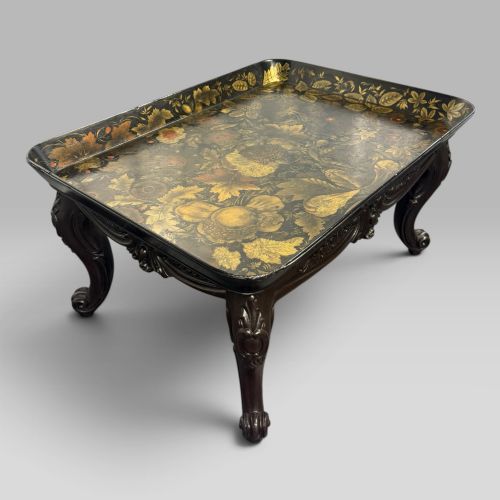
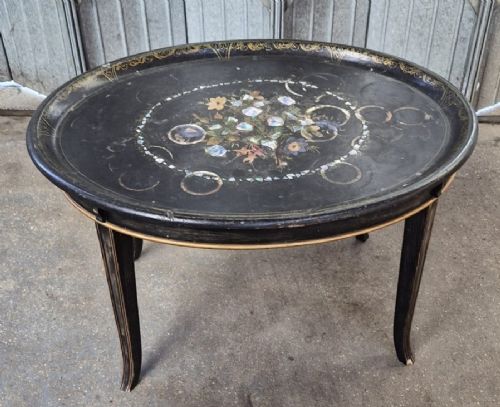
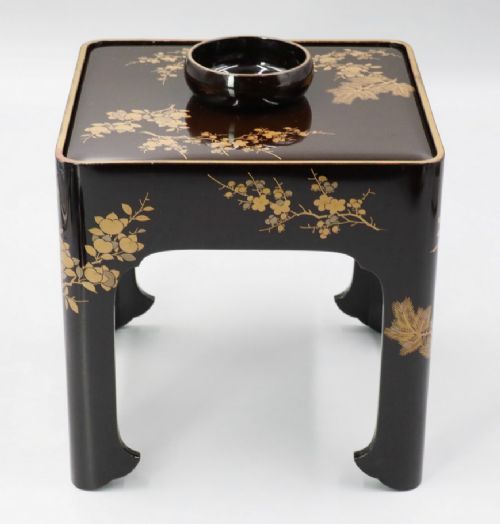
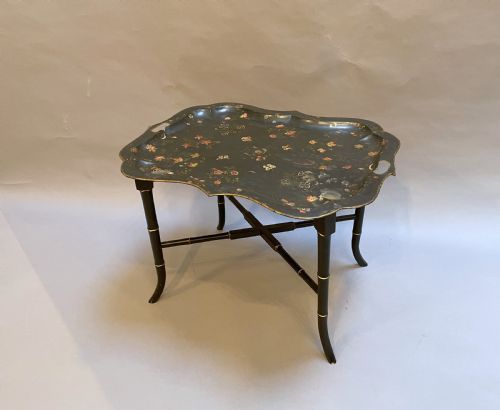
A lacquer tray table brings a rich surface of dark glaze and gilt to a room, functioning as a portable serving surface set upon a folding or fixed stand.
Lacquer Tray Table
A lacquer tray table pairs a deep-finished surface with a supportive base, combining utility with ornamental surface design. These pieces appear across the eighteenth, nineteenth, and early twentieth centuries, spanning periods from the Georgian and Regency eras through to the Victorian and Edwardian years.
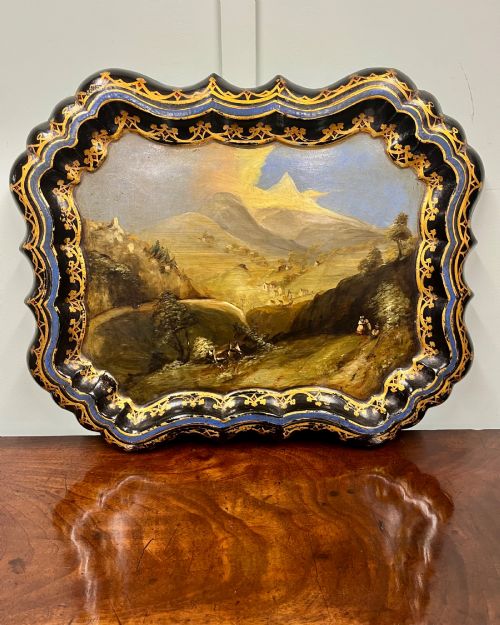
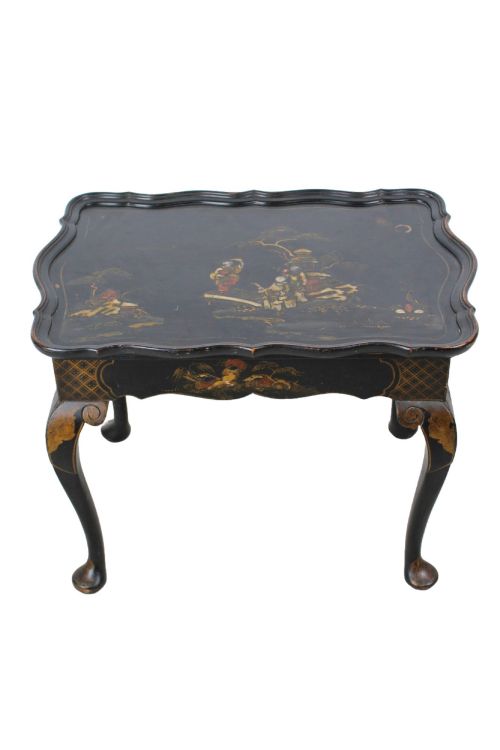
Stylistic influences draw heavily on Chinoiserie and Japanese Meiji aesthetics, bringing painted motifs, landscapes, and floral patterns to the finished surface. Makers such as Henry Clay and Jennens & Bettridge produced notable examples during the eighteenth and nineteenth centuries that established the standard for these forms.
How they were made
The foundation of many early examples relies on papier-mâché, built up from layers of paper and binder to form a rigid, smooth board capable of holding intricate painted details. Wood and ebonised wood also serve as primary structural materials, providing a sturdy base for subsequent layers of lacquer.
Makers applied successive coats of lacquer to seal the material, creating a dark, lustrous ground that frequently incorporated gold leaf and hand-painted gilt decoration. Brass elements occasionally appear for handles or structural reinforcement on the tables and serving trays.
Lacquer Tray Table Retail Price Guide 2026
Typical asking prices for lacquer tray table among the pieces listed under this phrase on Sellingantiques today, from the lower quarter to the upper quarter. They describe what is for sale here now, not the wider market.
Several pieces owe their survival to centuries of careful butler service, dodging spills during nineteenth-century tea parties.
What varies in quality
The distinction between tiers rests upon the crispness of the hand-painted Chinoiserie decoration and the depth of the lacquer finish. Pieces bearing the signatures or marks of established makers like Henry Clay or Jennens & Bettridge demonstrate superior control over the papier-mâché substrate and pictorial detail.
Construction details also define the grade, such as whether the tray is an original pairing with its stand or a later adaptation. The preservation of the original gilt and the stability of the lacquered surface determine the standing of an individual piece.
Henry Clay·Jennens & Bettridge
The Lacquer Tray Table Glossary
- Papier-mâché
- A composite material made from paper pulp or layers of paper reinforced with glue, moulded and dried to form a tough base for lacquer. It provides a remarkably smooth surface for detailed painting.
- Chinoiserie
- A European decorative style that imitates Chinese artistic traditions, featuring imaginary landscapes, figures, and pagodas. This aesthetic dominates the painted scenes on these trays.
- Toleware
- Painted or enamelled metalware, usually tinplate, utilised for serving trays and vessels. These pieces share similar decorative painting techniques with their wooden counterparts.
- Ebonised wood
- Timber treated with a chemical stain or finish to imitate ebony. This dark treatment provides a contrasting frame for gilded ornamentation.
- Meiji
- The period of Japanese history spanning from 1868 to 1912, associated with distinct lacquerware production. Items from this era bring authentic Eastern craftsmanship to the listings.
Lacquer Tray Table: Frequently Asked Questions
Are the trays fixed to the stands?
Most traditional examples feature a removable tray resting upon a folding or rigid wooden stand. This allows the top to lift off independently for serving.
Some later or adapted pieces secure the tray permanently to the base to function strictly as a static occasional table.
How do I clean a lacquer surface?
Dust the surface gently with a soft, dry microfibre cloth to remove particles without scratching the glaze. Avoid all water, chemical sprays, and abrasive polishes.
Protect the finish from direct sunlight and heat sources to prevent the lacquer from cracking or fading over time.
What is the difference between a tray table and a coffee table?
A tray table uses a shallow, raised rim designed originally for carrying vessels, supported by a stand at a convenient height. Many nineteenth-century trays were later fitted to custom stands to serve this dual purpose.
Coffee tables are built from the outset as low furniture, whereas tray tables retain their portable top heritage.
How can I tell an eighteenth-century tray from a Victorian one?
Early pieces by makers like Henry Clay often utilise heavier, denser papier-mâché foundations with subtle hand-painted motifs. Victorian examples frequently display brighter gilt work and more elaborate Chinoiserie scenes.
Examining the construction of the stand and the wear patterns on the underside of the tray provides further clues to the manufacturing era.