


Lacquer Storage Chest
A lacquer storage chest brings deep black or red surfaces, metallic gilt decoration, and substantial capacity into a room.
Lacquer Storage Chest
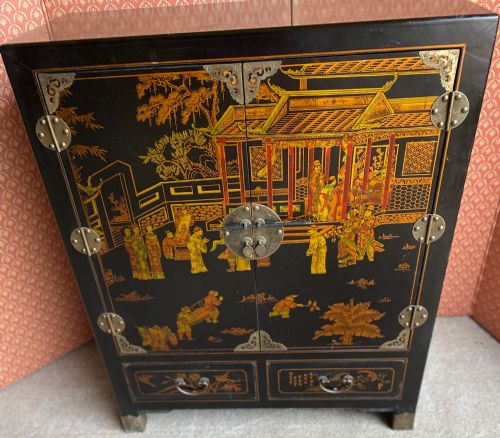
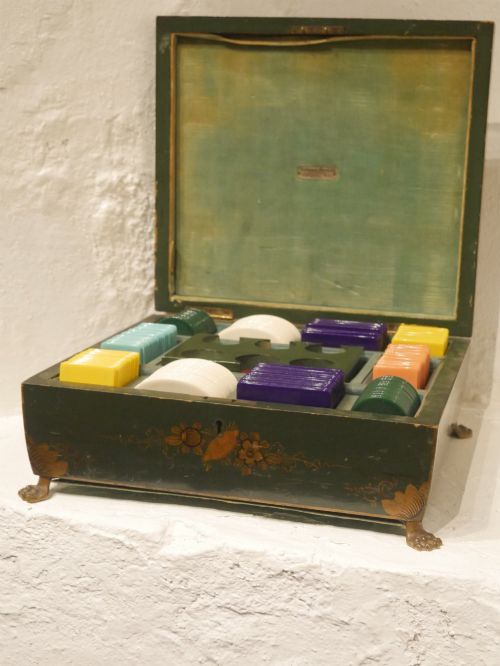
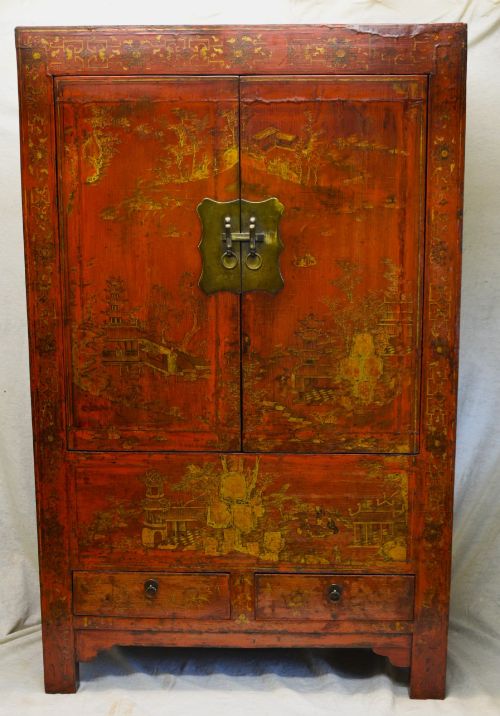
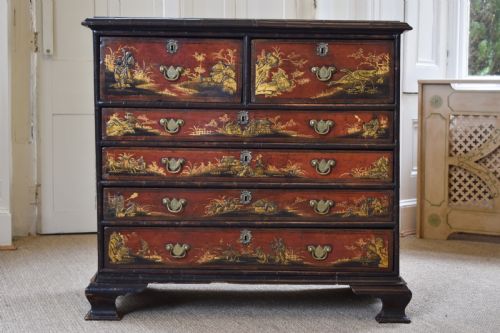
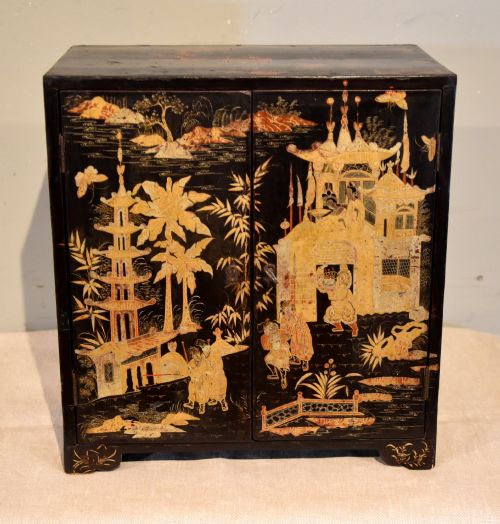
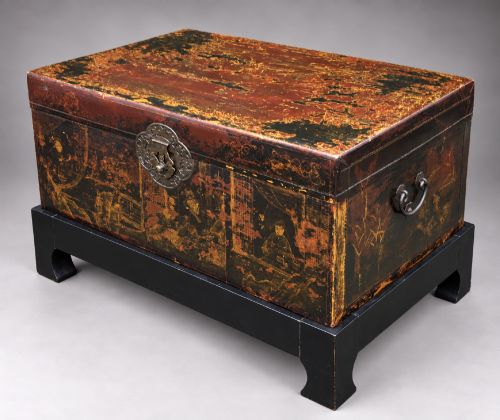
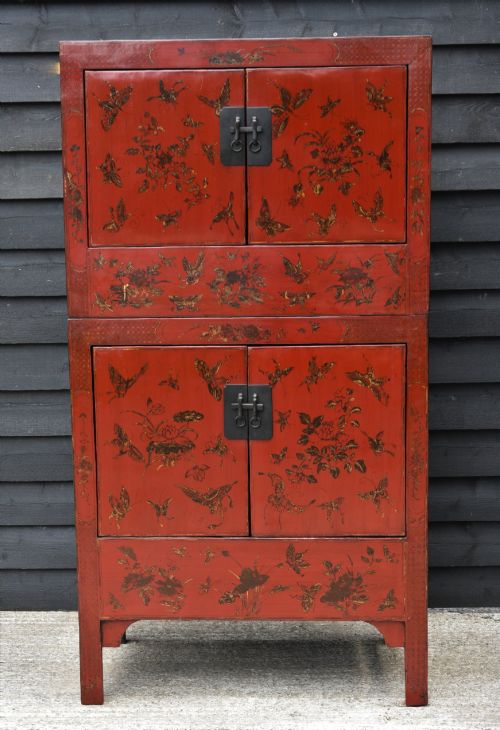
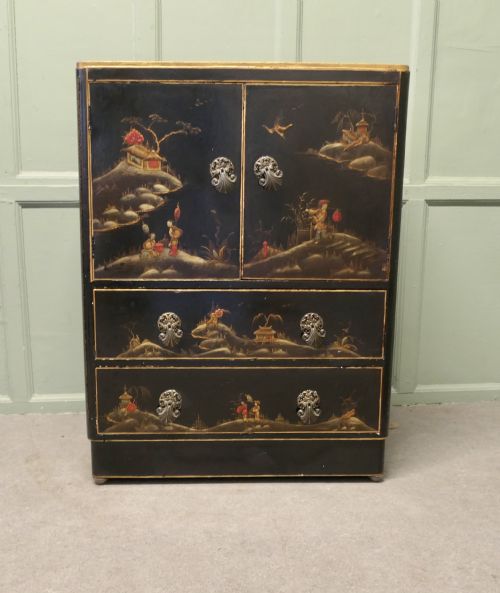
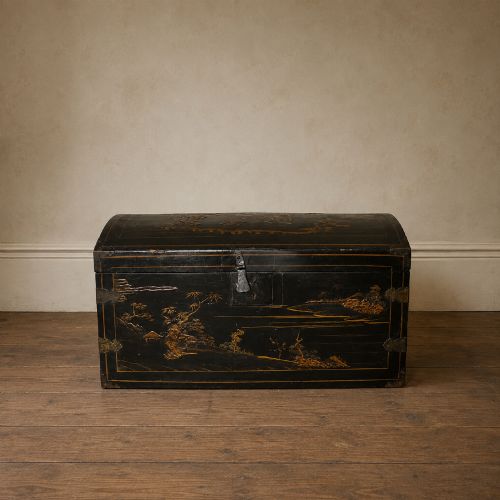
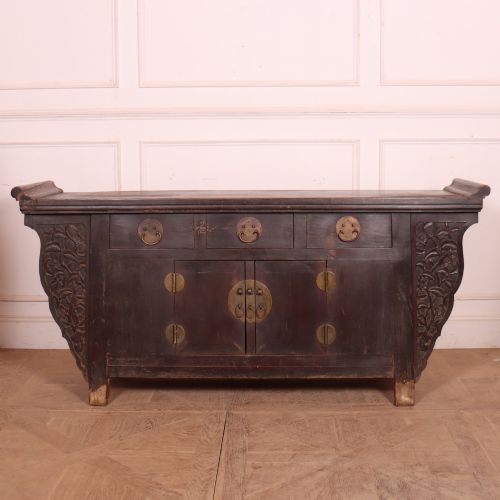
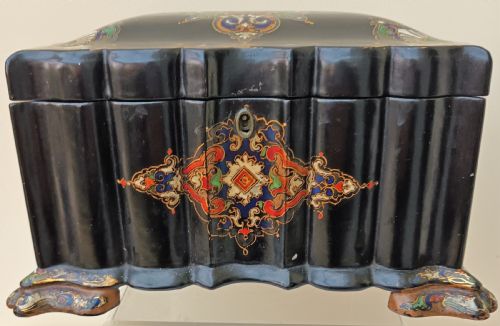
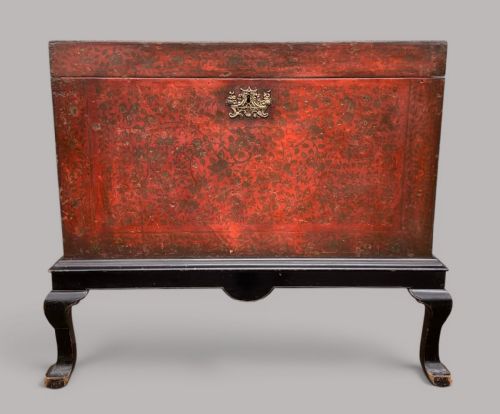
A lacquer storage chest is a heavy wooden box or cabinet designed for holding garments, documents, or household goods, finished with successive layers of tree sap or resin. These pieces span the eighteenth, nineteenth, and early twentieth centuries, drawing on Chinese Export, Japanese Meiji, Regency, and Victorian traditions. They appear in forms ranging from domed trunks and coffers on stands to tall wedding cabinets and low blanket boxes.
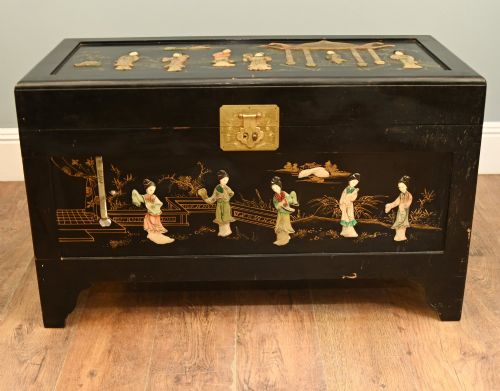
The versions most commonly met on this page are nineteenth-century Chinese export trunks and early twentieth-century Chinoiserie blanket boxes finished in black or red lacquer. Many pieces feature hinged lids or panelled doors opening to reveal deep interior compartments meant for textiles and valuables. Some sit directly on the floor while others rest upon carved wooden stands or low frames.
Makers and workshops across East Asia and Britain produced these chests for both domestic use and the export trade, incorporating diverse regional forms like Japanese tansu chests or Anglo-Indian trunks. The overarching phrase covers everything from small lidded caddies to monumental cupboards, united entirely by their polished, resin-coated exteriors and utility.
Materials and Technique
The construction begins with a sturdy timber carcass, typically using pine, camphor wood, or other native hardwoods joined with traditional corner bracing. Artisans then apply multiple coats of natural lacquer resin, sanding each layer smooth to create a durable, glossy protective shell that resists moisture and wear.
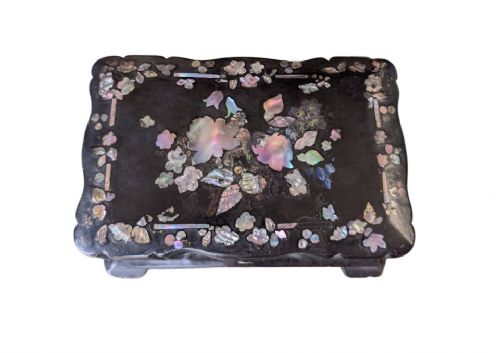
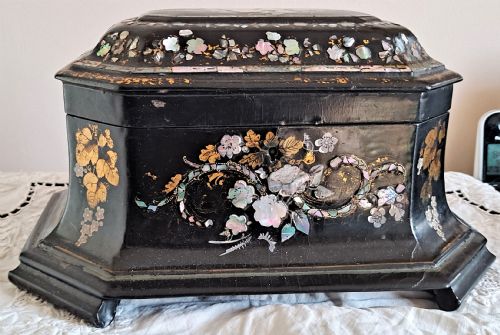
Decoration relies heavily on gold leaf, hand painting, and occasionally inlaid mother-of-pearl or metal mounts in brass and iron. Artisans build up motifs of landscapes, birds, flowers, and figures in raised gilt relief against the dark or red lacquer background, sealing the pigment beneath clear topcoats.
Lacquer Storage Chest Retail Price Guide 2026
Typical asking prices for lacquer storage chest among the pieces listed under this phrase on Sellingantiques today, from the lower quarter to the upper quarter. They describe what is for sale here now, not the wider market.
Some chests smell faintly of camphor wood decades after manufacture, acting as a built-in moth repellent.
Quality and Construction
The standard of a lacquer storage chest depends primarily on the depth and integrity of the lacquer surface and the skill of the hand-painted or gilt decoration. Finer examples display intricate, crisp pictorial work with minimal rubbing to the gold leaf, whereas lesser pieces show widespread cracking, flaking, or clumsy later repaint.
Structural joinery and original hardware dictate much of the value, distinguishing items with intact brass hinges, locks, and substantial timber frames from those with loose joints or replaced components. Pieces retaining their original carved wooden stands or internal fittings demonstrate superior preservation.
The Lacquer Storage Chest Glossary
- Chinoiserie
- European artistic interpretation of Chinese and East Asian decorative styles, prominent in furniture and lacquerwork during the eighteenth and nineteenth centuries. It relies on whimsical scenes of pavilions, figures, and flora.
- Coffer
- A large sturdy chest traditionally used for storing valuables or important documents. These pieces often feature a hinged domed or flat lid and heavy iron or brass mounts.
- Gilt
- Application of gold leaf or powdered gold onto a surface to create metallic decoration. On lacquer pieces, it provides high-contrast detailing against dark or red grounds.
- Tansu
- Traditional Japanese mobile cabinetry and storage chests built from woods like kiri. They incorporate multiple drawers and sliding panels designed for functional utility.
- Papier-mâché
- A composite material made from paper pulp or layers of paper bound with glue, heavily lacquered and polished. It is frequently found on smaller tea caddies and boxes.
Lacquer Storage Chest: Frequently Asked Questions
How were these chests used historically?
These chests served primarily for storing heavy garments, wedding linens, valuable documents, and precious household commodities in domestic settings. Larger cabinets and trunks held seasonal clothing, while smaller coffers secured currency and personal items.
In many households, they also functioned as prominent display furniture in reception rooms, signaling the wealth and global reach of the owner through their decorative surfaces.
What is the difference between export and domestic pieces?
Export pieces were manufactured in workshops in China and Japan specifically for the Western market, frequently combining traditional Eastern lacquering techniques with European furniture forms like commodes and sideboards. Domestic pieces followed local regional designs intended strictly for home use.
Consequently, export items often display hybrid stylistic elements, whereas purely domestic examples adhere strictly to regional traditions such as Japanese tansu architecture.
How do I identify the period of a lacquer chest?
Dating relies on examining the underlying timber construction, the type of hardware used, and the chemical composition of the lacquer. Earlier pieces from the eighteenth century typically exhibit hand-forged iron hinges and deeper, more oxidized resin layers.
Nineteenth and early twentieth-century examples often introduce machine-cut brass screws, standardised locks, and brighter gilt pigments applied over camphor wood or pine carcasses.