





Lacquer Room Divider
A lacquer room divider creates instant architectural division, bringing deep black surfaces, gilt highlights, and folding panels into a room.
Lacquer Room Divider
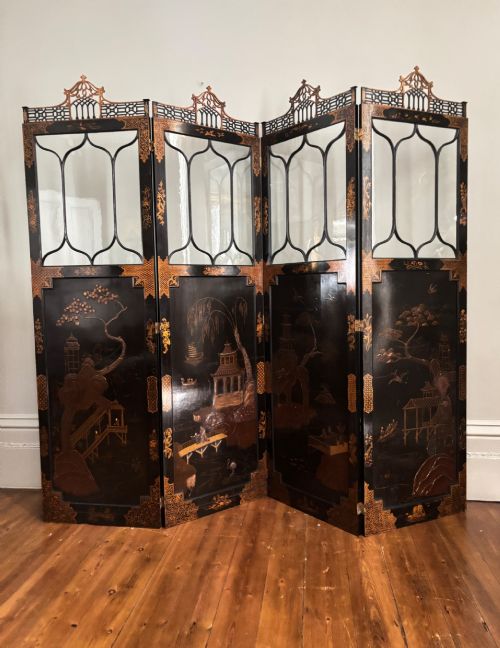
A lacquer room divider is a hinged folding screen designed to separate spaces, block draughts, or provide a decorative backdrop. These pieces range from substantial multi-fold Chinese Coromandel screens to lighter Victorian Chinoiserie dressing screens and Japanese folding panels.
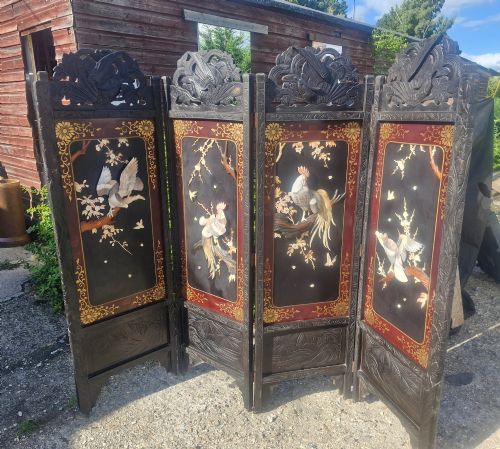
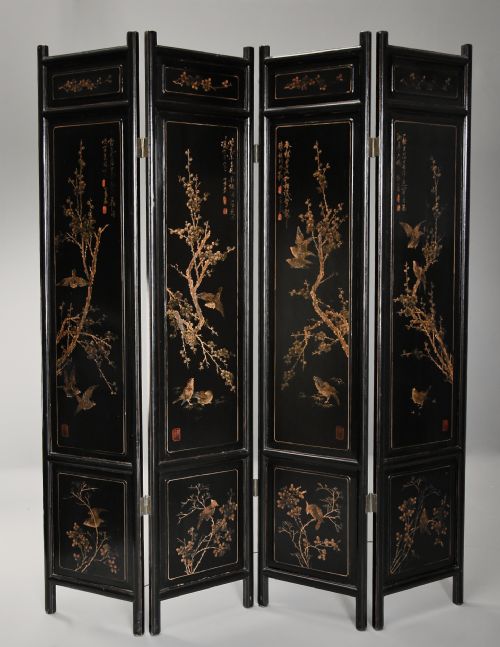
You will most frequently encounter black lacquered wood folding screens spanning four to eight folds, often decorated with Chinoiserie motifs, painted scenes, or carved details. The selection spans the eighteenth century through the mid-twentieth century, including Regency, Victorian, and Meiji period examples.
Formats extend beyond standard room dividers to include smaller dressing screens, fire screens, and individual wall art panels. Each version relies on hinged panels to alter its footprint and angle within a room.
What Defines Quality
Quality rests on the depth and execution of the surface decoration, from flat painted Chinoiserie scenes to deeply carved bone and incised Coromandel lacquer. Superior examples show crisp detail in figures, flora, and architectural elements across every fold.
The choice of underlying material and the complexity of the hardware set apart finer screens. Heavier hardwoods, substantial brass hinges, and intact multi-fold constructions distinguish the most accomplished pieces from simpler decorative panels.
Some screens double as fire shields, proving that stopping a draught looks better with carved bone figures.
The Lacquer Room Divider Glossary
- Coromandel
- A type of Chinese incised lacquer where the surface is carved away to reveal contrasting layers underneath. The resulting depressions are filled with pigments or gold leaf.
- Chinoiserie
- European decorative style imitating Chinese and East Asian artistic traditions. It appears frequently on Victorian and Regency lacquer furniture.
- Meiji
- A period of Japanese history spanning from 1868 to 1912, known for intricate decorative arts including folding screens with bone inlay.
- Fold
- An individual panel connected by hinges within a multi-section screen. Screens on record range from three panels up to eight panels.
- Hardstone
- Minerals and semi-precious stones cut and applied to the surface of a screen for relief decoration. This technique adds tactile dimension to lacquer panels.
Lacquer Room Divider: Frequently Asked Questions
How do I clean a lacquered screen?
Dust the surface gently with a soft, dry cloth to prevent scratching the finish. Avoid using water, chemical solvents, or modern furniture polishes on antique lacquer.
Keep the screen away from direct sunlight and strong heat sources to protect the wood and prevent the lacquer from cracking over time.
Can these screens support weight?
Folding screens are designed as architectural dividers and decorative partitions rather than load-bearing walls. They stand independently when angled correctly across their hinges.
Leaning heavy objects against the panels or hanging items from the top edge can strain the hinges and damage the wood frame.
How do I date a lacquer screen?
Examine the construction of the wooden panels, the style of the brass hinges, and the materials used for inlay. Victorian Chinoiserie and late nineteenth century pieces often combine European papier-mâché or softwood frames with Asian-inspired motifs.
Coromandel and Qing Dynasty pieces exhibit traditional Chinese carving techniques and specific pigment use associated with earlier centuries.
Where should I place a room divider?
Position the screen against a plain wall as a backdrop, or angle the folds to zone an open-plan living area or dressing space. Ensure the panels are slightly zigzagged so the screen remains stable under its own weight.
Allow enough clearance around the hinges so the folding action operates smoothly without rubbing against skirting boards or furniture.