





Lacquer Pedestal Table
A lacquer pedestal table brings hand-painted Chinoiserie and deep oriental finishes into a room, offering a functional surface with dramatic decorative presence.
Lacquer Pedestal Table
A lacquer pedestal table combines a central column or support with a finished surface treated in traditional oriental or European lacquer techniques. These pieces appear across various forms, including wine tables, tilt-top tables, plant stands, and torchere stands, with origins spanning the Regency, Victorian, and early twentieth-century periods.
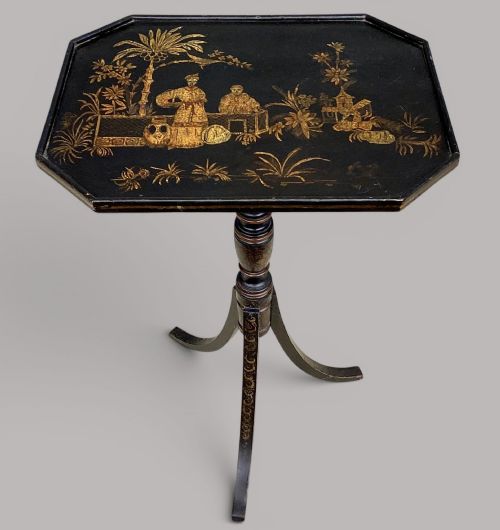
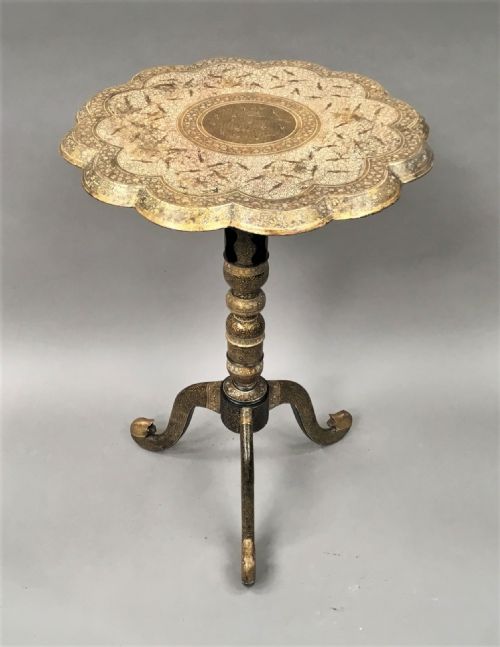
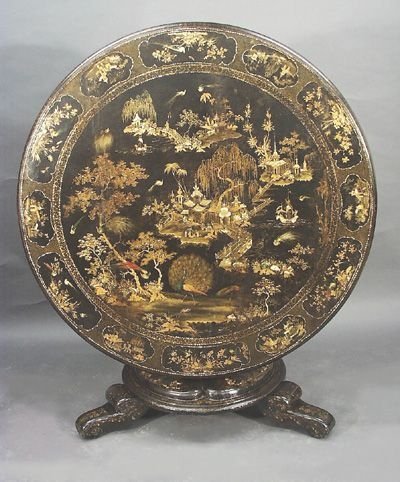
Buyers seeking a lacquer pedestal table will encounter examples decorated with hand-painted Chinoiserie scenes, gilt detailing, and japanned finishes. The selection ranges from nineteenth-century English interpretations to Chinese export pieces and Kashmiri carved wood designs, reflecting diverse global influences upon domestic furniture.
While traditional side and occasional tables dominate the offerings, the category also includes specialised display stands and work tables sharing the characteristic lacquer surface and pedestal support. Each variation offers a distinct proportion suited to holding small objects, plants, or serving drinks.
How they were made
Construction relies primarily on wood, papier-mache, and rootwood as structural bases, shaped into tilt-top mechanisms, turned columns, and tripartite or tripod legs. Artisans applied successive layers of lacquer, paint, and gold leaf to create hard, glossy surfaces capable of holding intricate painted details.
Surface decoration frequently utilises gilt, ink work, and hand-painted pigments to depict landscapes, figures, and floral motifs in the Chinoiserie or Aesthetic styles. Specialised variants incorporate carved wood elements, cinnabar layers, or applied brass fittings to complement the dark, reflective background.
Lacquer Pedestal Table Retail Price Guide 2026
Typical asking prices for lacquer pedestal table among the pieces listed under this phrase on Sellingantiques today, from the lower quarter to the upper quarter. They describe what is for sale here now, not the wider market.
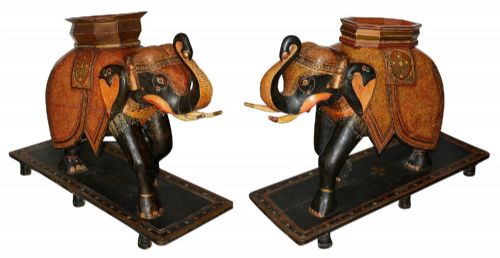
Some nineteenth-century tables feature elephants carved from wood with real lacquer hides, proving that Victorians loved bringing exotic fauna right into the parlour.
What varies in quality
The sophistication of the painted detail and the depth of the lacquer finish distinguish exceptional examples from standard production. Superior pieces exhibit crisp hand-painted Chinoiserie scenes with well-preserved gold leaf and minimal surface craquelure.
The Lacquer Pedestal Table Glossary
- Chinoiserie
- European theatrical interpretation of Chinese and East Asian artistic traditions, popular in furniture decoration and painting. This style relies on whimsical motifs, figures, and pavilions rendered in gold and dark lacquer.
- Japanned
- European imitation of East Asian lacquerwork, created by applying multiple coats of varnish and paint followed by heat curing. Artisans often decorated these surfaces with raised gilt figures and landscapes.
- Torchere
- A tall, slender stand designed to hold a light or a decorative object such as an urn or plant. In lacquer pieces, this form utilises a central pedestal to elevate display items.
- Tilt-top table
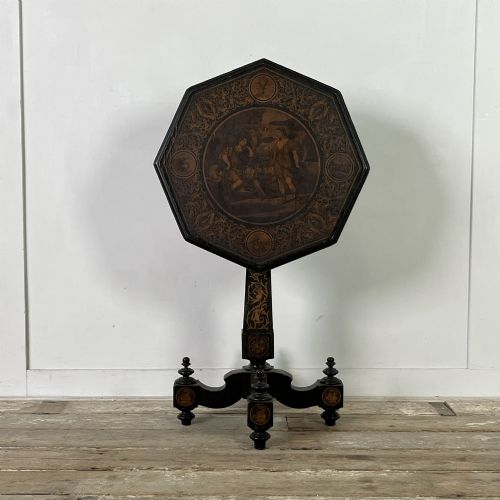
- A table featuring a mechanism that allows the surface to pivot to a vertical position when not in use. This design saved space in period interiors and showcased the painted table top as wall art.
- Papier-mache
- A composite material made from paper pulp or layers of paper bound with glue, then moulded and lacquered. It provided a lightweight, smooth substrate for Victorian tray tables and occasional furniture.
Lacquer Pedestal Table: Frequently Asked Questions
How do I care for a lacquer surface?
Keep these tables out of direct sunlight to prevent the lacquer from fading or becoming brittle over time. Dust gently with a dry, soft cloth and avoid chemical polishes that can damage the delicate finish.
Place protective mats under any objects, such as plants or vases, to prevent moisture rings and scratches on the painted surface.
Can I use a tilt-top table daily?
Tilt-top tables function well for daily use as occasional or wine tables, provided the locking mechanism remains secure. Avoid leaning heavily on the edges when the top is in the horizontal position to protect the central pivot.
Lower the top when the table is unattended to reduce strain on the catch and hinge components.
What is the difference between Chinoiserie and Japanned work?
Chinoiserie describes the overall decorative style inspired by Chinese art, featuring imaginative landscapes, figures, and pagodas. It can appear on various mediums including textiles, ceramics, and furniture.
Japanning specifically refers to the European lacquering technique used to imitate Asian lacquer finishes, typically executed in black or cream with raised gilt decoration.
Where should I place a pedestal stand?
These compact stands suit corners, hallways, or beside seating where they can hold a lamp, small sculpture, or plant. Their narrow footprints allow them to add vertical interest without crowding a room.
Ensure the floor is level so the tripod or tripartite base rests evenly, preventing any instability in the tall column.