


Lacquer Jewellery Box
A lacquer jewellery box provides a durable, decorative home for rings and brooches, spanning Georgian penwork to Japanese Meiji cabinets.
Lacquer Jewellery Box
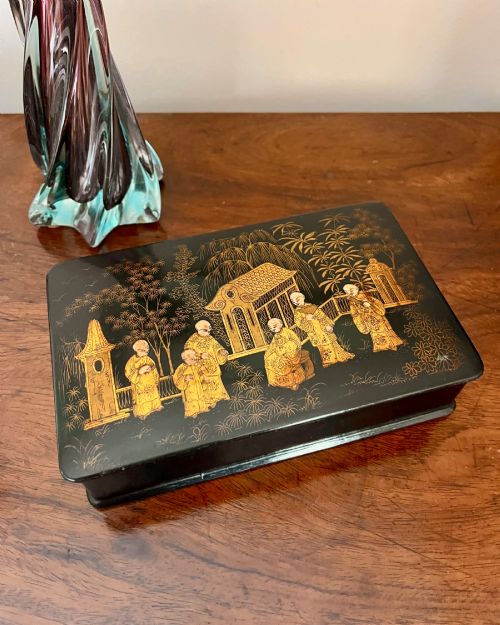
When you search for a lacquer jewellery box, you find a variety of lidded caskets, small table cabinets, and keepsake cases designed to hold small valuables. The selection ranges from English papier-mâché and penwork boxes to Asian export pieces created in Japan and China.
The most common examples on this page date from the nineteenth century, often showing Victorian or Regency influences alongside Chinoiserie and Japanese Meiji aesthetics. These pieces serve as functional storage while displaying intricate surface decoration.
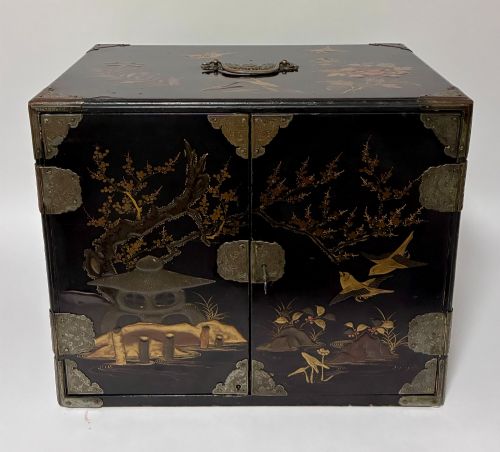
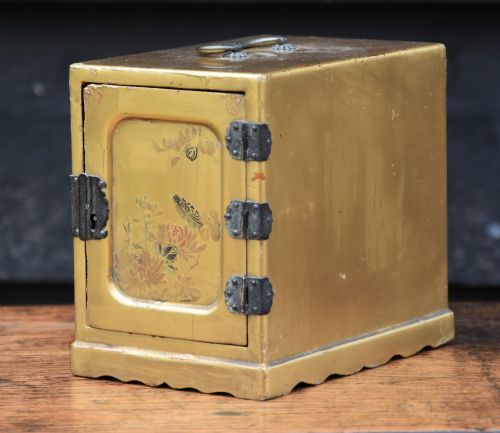
Forms vary from simple trinket boxes to multi-drawer table cabinets and travelling campaign cases. Each style reflects the specific region and period of its manufacture, using wood, metal, or papier-mâché as a foundation.
How they were made
Craftsmen built the foundations of these boxes using wood, oak, or moulded papier-mâché, applying multiple layers of lacquer to create a smooth, hardwearing surface. This base coating protected the core material and provided a deep ground for subsequent decoration.
Decoration relied on gold leaf, gilt, ink, and detailed hand-painting, often depicting figures, landscapes, or floral motifs. Some English examples utilised penwork techniques, while Oriental pieces incorporated mother of pearl inlay and brass fittings.
Several Victorian boxes feature hand-painted portraits of domestic dogs keeping a silent watch over your trinkets.
What varies in quality
Quality separates pieces through the precision of the hand-painted detail and the depth of the lacquer finish. Superior examples display crisp, clear gilding and secure, well-fitted internal trays rather than worn or faded surfaces.
The complexity of construction also dictates worth, distinguishing simple trinket boxes from intricate table cabinets featuring multiple drawers, marquetry, and mother of pearl inlay.
Jennens & Bettridge
The Lacquer Jewellery Box Glossary
- Papier-mache
- A strong composite material made from paper pulp or layers of paper mixed with glue, used as a foundation for moulded boxes.
- Chinoiserie
- European decorative style in the Chinese taste, featuring motifs such as pagodas, figures, and landscapes.
- Penwork
- A decorative technique using fine ink lines to create intricate designs on a light wooden or painted background.
- Kodansu
- A small Japanese table cabinet with multiple internal drawers, often finished in black lacquer and gilt.
- Japanned
- European imitation of East Asian lacquerwork, created by applying layers of varnish and metallic finishes to wood.
Lacquer Jewellery Box: Frequently Asked Questions
What were lacquer jewellery boxes used for?
These boxes stored precious items such as rings, brooches, and personal trinkets on dressing tables or inside bedchambers.
Travellers also utilised robust variants like campaign cases for safely moving valuables during journeys.
How do I tell a Regency box from a Victorian one?
Regency pieces often feature delicate penwork and neoclassical motifs dating from around eighteen hundred to eighteen twenty.
Victorian examples frequently employ papier-mâché foundations with mother of pearl inlay and heavier floral or Chinoiserie decoration.
Are Japanese Meiji period boxes different from Chinese export pieces?
Japanese Meiji pieces from the late nineteenth century tend to showcase specific lacquer techniques, sometimes taking the form of miniature table cabinets known as kodansu.
Chinese export items often combine black lacquer with intricate gold gilt depicting traditional figures and garden scenes.
How should I clean a lacquer surface?
Dust the exterior gently with a soft, dry cloth to prevent scratching the delicate lacquer and gilt layers.
Avoid using water, chemical sprays, or abrasive polishes, as moisture damages aged lacquer and painted decoration.