




Lacquer Frame Mirror
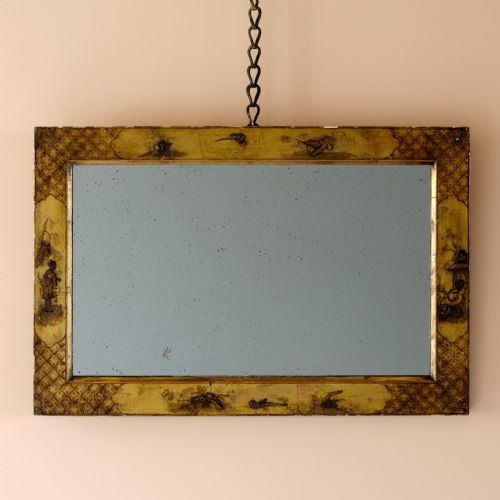
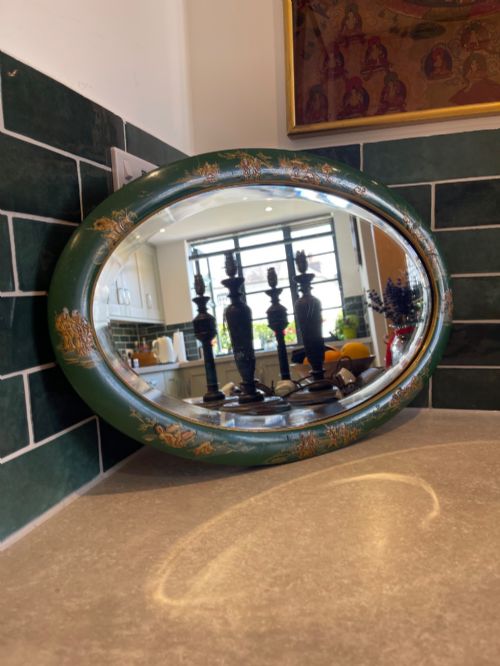
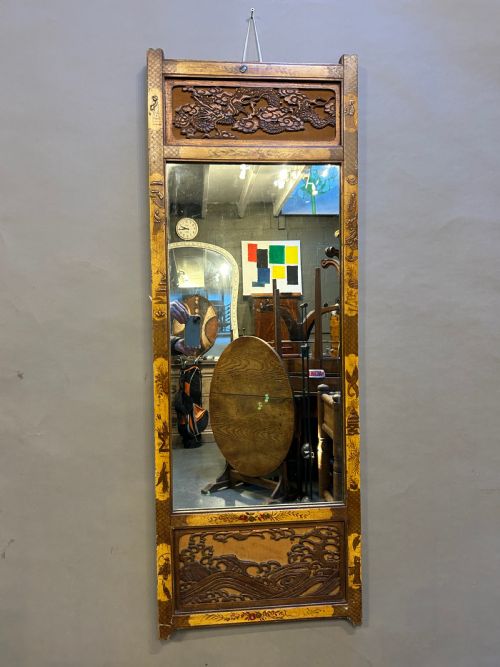
A lacquer frame mirror brings distinct surface depth and painted narrative to a room, drawing the eye through rich black, red, or gilt finishes.
Lacquer Frame Mirror
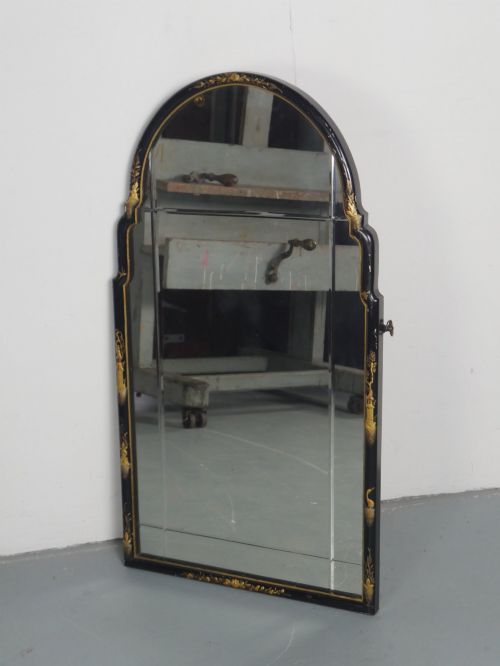
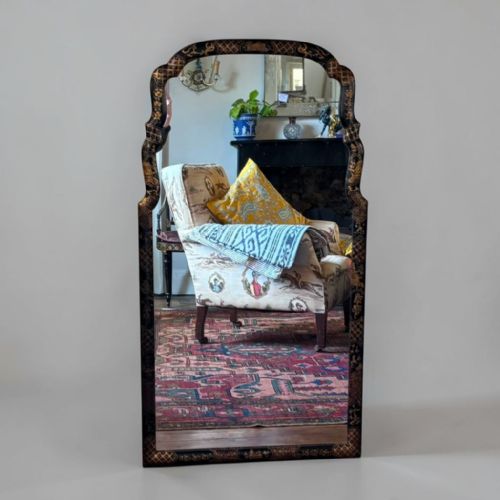
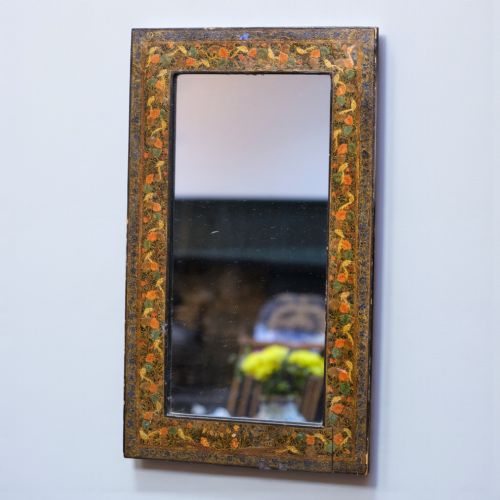
A lacquer frame mirror combines decorative surface coatings with reflective glass, appearing in forms ranging from compact wall hangings to substantial overmantels and dressing table pieces. When you search for lacquer frame mirror, you encounter items predominantly styled in Chinoiserie traditions, alongside Kashmiri or Anglo-Indian and French Empire interpretations.
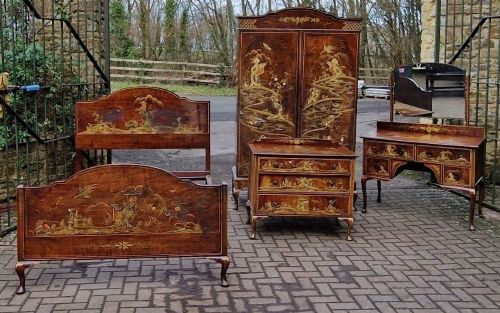
The pieces on this page span from the Victorian era and the nineteenth century through Edwardian times and into the nineteen-twenties and nineteen-thirties. Wall mirrors and oval wall mirrors dominate the selection, accompanied by table mirrors, an overmantel, and a bedroom furniture suite.
Origins stretch from English workshops producing japanned wares to pieces influenced by Qing Dynasty aesthetics. Buyers find both black and red lacquer grounds, often embellished with gilt details or figural scenes.
Materials and construction
Makers utilised wood as the primary substrate, shaping solid timbers and framing glass panels with ebonised wood, walnut, or applied mouldings. Surfaces received layers of lacquer to build a deep, glossy ground before decoration was applied.
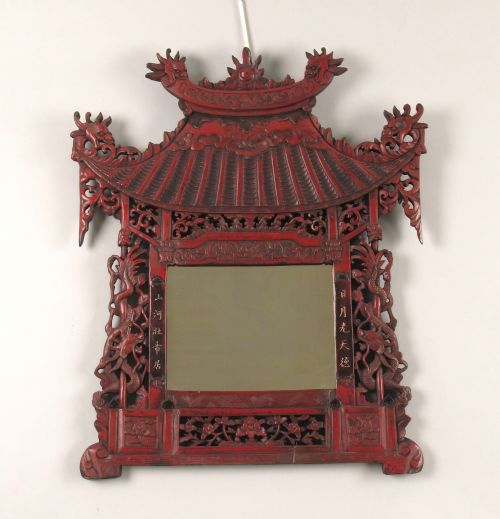
Gold leaf and gilt pigments highlight motifs on many frames, contrasting against black or scarlet japanned finishes. Mirror glass is set within these decorated surrounds, sometimes accompanied by gilt brass mounts or structural elements carved to resemble pagodas or architectural forms.
Lacquer Frame Mirror Retail Price Guide 2026
Typical asking prices for lacquer frame mirror among the pieces listed under this phrase on Sellingantiques today, from the lower quarter to the upper quarter. They describe what is for sale here now, not the wider market.
One Edwardian overmantel comes equipped with a heart-shaped mirror insert, proving that Edwardian decorators enjoyed a touch of romance with their Chinoiserie.
Evaluating craftsmanship and condition
Quality in these pieces rests upon the execution of the surface decoration and the integrity of the wooden substrate. Finer examples display meticulous hand-painted details and well-preserved layers of lacquer that retain their original lustre without excessive craquelure.
The depth of the framing and the quality of the mirror glass itself contribute to the standing of a piece. Earlier nineteenth-century and Victorian items often show superior joinery and more intricate carving, whereas later Edwardian and twentieth-century versions vary in the complexity of their painted Chinoiserie scenes.
The Lacquer Frame Mirror Glossary
- Chinoiserie
- European decorative style imitating Chinese artistic traditions. It frequently appears on furniture and mirrors through painted motifs of figures, landscapes, and pagodas.
- Japanning
- European imitation of East Asian lacquerwork. Craftsmen built up layers of varnish and resin, often heat-cured, before decorating the surface with gold and colours.
- Ebonised
- Wood treated to imitate ebony. This dark finish provides a contrasting ground for gilt and painted ornamentation on Victorian and Edwardian frames.
- Overmantel
- A large mirror designed to hang above a fireplace mantel. These pieces often feature shaped frames or integrated shelf structures.
- Gilt
- A thin layer of gold applied to wood or metal surfaces. It catches ambient light and brings definition to carved or raised details.
Lacquer Frame Mirror: Frequently Asked Questions
How do I hang a heavy lacquer wall mirror?
These mirrors require sturdy fixings suited to the weight of the wooden frame and glass. Professional picture hangers or wall anchors matching your wall type ensure secure placement.
Position the mirror at eye level to reflect light effectively around the room. Ensure the hanging wire or brackets are securely attached to the structural timber of the frame rather than minor decorative elements.
What is the difference between black lacquer and japanned finishes?
Black lacquer typically refers to resin-based finishes derived from or emulating Asian techniques, yielding a deep, reflective surface. Japanning is the specific European term for the varnishing and baking process used to create similar glossy, decorated panels.
Both finishes appear frequently on Chinoiserie frames from the nineteenth and early twentieth centuries. The distinction lies primarily in the regional terminology and the specific recipe of resins and varnishes applied to the wood.
How should I clean a lacquered mirror frame?
Dust the frame gently with a soft, dry microfibre cloth to remove particles without scratching the surface. Avoid using chemical sprays, abrasive pads, or excess water, which can damage the aged lacquer and gilt details.
Clean the mirror glass separately using a standard glass cleaner applied to a cloth rather than directly onto the glass. This prevents moisture from seeping behind the plate and harming the edges or the surrounding lacquer.
How can I tell an Edwardian Chinoiserie mirror from a Victorian one?
Victorian examples often employ heavier ebonised wood and denser, more sombre carving styles. Edwardian pieces frequently showcase lighter proportions, brighter gilt highlights, and occasionally scarlet japanned finishes.
Construction methods and backboards also offer clues, as nineteenth-century pieces tend to use older fastener types and hand-sawn timber boards. Comparing the style of the painted motifs helps place the piece within the wider chronology of revival periods.