


Kirman Medallion Area Rug
These kirman medallion area rug examples bring substantial Persian craftsmanship into a room.
Kirman Medallion Area Rug
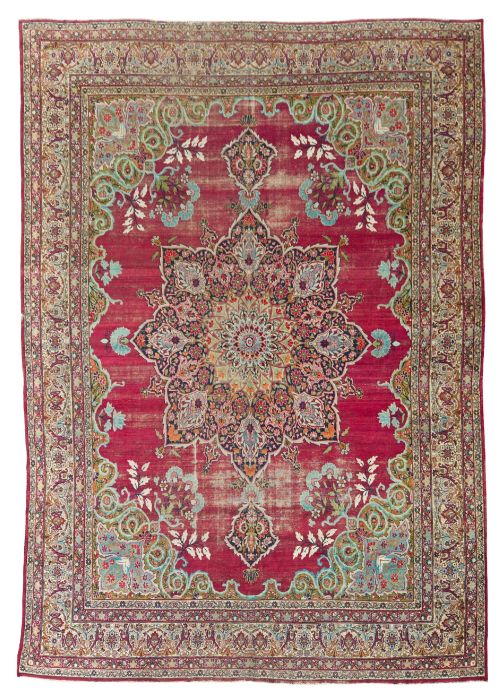
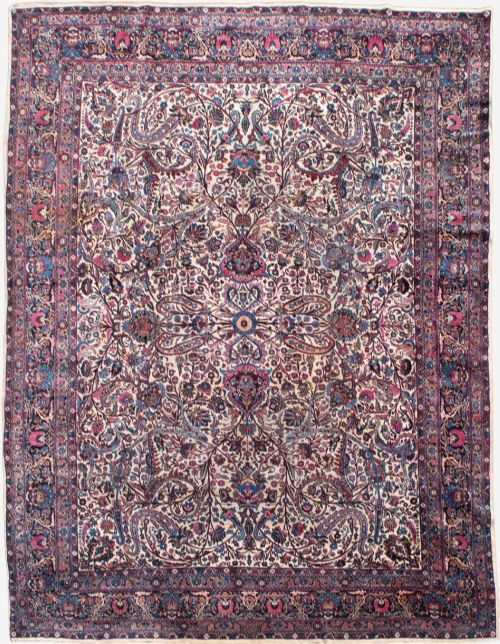
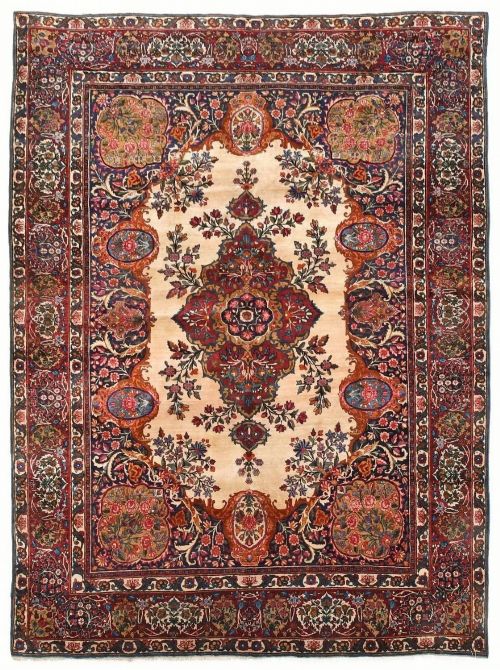
When you search for a kirman medallion area rug, you are looking at woven floor coverings originating from south-central Persia. These pieces include room-size carpets and smaller area formats suited to various interior spaces. The selection spans decades from the late nineteenth century through to the mid-twentieth century.
You will most commonly meet traditional Persian designs featuring central motifs executed in wool and cotton foundations. The inventory holds examples dated across the eighteen-seventies, eighteen-eighties, eighteen-nineties, and several decades of the twentieth century. These formats range from compact area rugs to large room-size carpets.
How they were made
These floor coverings are constructed using wool pile knotted onto cotton foundations. The combination provides both the soft surface texture necessary for daily use and the structural stability required for large room-size formats.
Traditional Persian weaving techniques govern the production of these pieces, ensuring dense knotting and durable construction. Artisans utilised locally sourced materials to achieve the distinct visual styles recorded across the nineteenth and twentieth centuries.
The listed pieces span production dates from eighteen-seventy through to nineteen-forty, utilising wool and cotton exclusively.
What varies in quality
The standard of execution separates everyday production from finer workshop output within this category. Finer knot density and precise execution of traditional Persian motifs elevate the visual coherence of the central design.
Condition and scale also influence the character of each piece, ranging from well-preserved room-size carpets to heavily worn examples. The handling of wool pile and the integrity of the cotton foundation determine the long-term durability of the textile.
The Kirman Medallion Area Rug Glossary
- Medallion
- A prominent central ornamental design motif placed in the field of a rug. It acts as the primary visual focus for traditional Persian compositions.
- Pile
- The vertical or diagonal loops of yarn that form the usable surface of the carpet. This soft upper layer is traditionally made from wool in these Persian examples.
- Foundation
- The underlying structure of a rug, comprising the warp and weft threads. Cotton is the standard material used for this supportive grid.
- Lavar
- A specific regional designation within Kirman production often associated with finely knotted nineteenth-century carpets. These pieces are distinguished by delicate floral details and high-quality wool.
Kirman Medallion Area Rug: Frequently Asked Questions
How do I care for an antique rug?
Vacuum gently without using a rotating brush roll to protect the wool pile from excessive wear.
Keep the textile out of direct sunlight to prevent fading of the traditional Persian dyes over time.
Where were these textiles made?
These pieces originate from Kirman, a historically significant weaving centre located in south-central Persia.
Master artisans in this region produced both large room-size carpets and smaller format floor coverings.
What materials make up these carpets?
The soft surface pile consists of wool, chosen for its resilience and texture.
The underlying structural grid uses cotton warp and weft threads to maintain stability across large dimensions.
How are different production dates identified?
Dating relies on stylistic markers, structural analysis, and historical records associated with Persian weaving.
Pieces in this category span from the late nineteenth century through to the mid-twentieth century.